
Friends and allies! For many years now, the commercial sport-hunting industry in our country has continued to expand — the number of hunters has reached around five million. To organize the shooting of live targets, one-third of all publicly accessible hunting grounds has been transferred into private hands alone, while since approximately 2018 numerous legislative measures have been adopted allowing more animals to be killed by various methods, including even hunting with bows and crossbows. So-called “enclosure hunting” has also been legalized, allowing animals to be shot within fenced areas without quotas or restrictions.
It was precisely during this period that lobbying groups within the government began actively trying to push through winter bear hunting — in other words, allowing bears to be killed “at the den” while they are hibernating. This is a particularly popular form of trophy hunting, especially among foreign trophy hunters who travel to our country for sport hunting. The bear is driven from its den with fire: burning material is thrown into the den, and when the frightened, drowsy animal rushes outside, a group of hunters shoots it.
To make this possible, the Ministry of Natural Resources has already made several attempts to push through legislation allowing bear hunting throughout the entire winter. Together with the country's entire conservation community, we fought against this insanity. We managed to stop these initiatives, but several years ago the hunting season was nevertheless extended: whereas bear hunting had previously been permitted only until November 30, before bears entered hibernation, they can now be shot through December 31. Many bears are already hibernating with their cubs, while female bears are pregnant and will give birth in the middle of winter. This is an extremely difficult and vulnerable period for them.
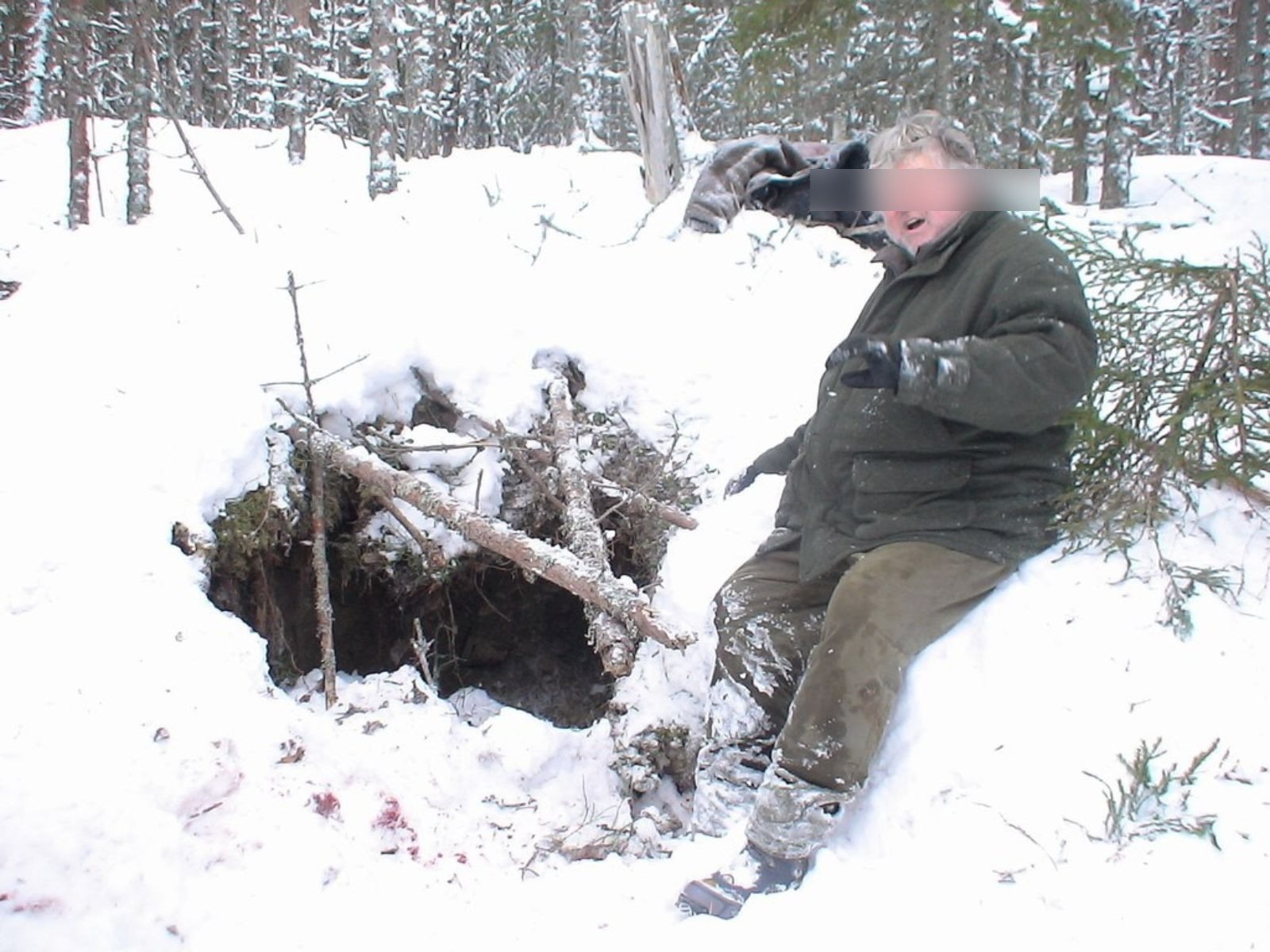
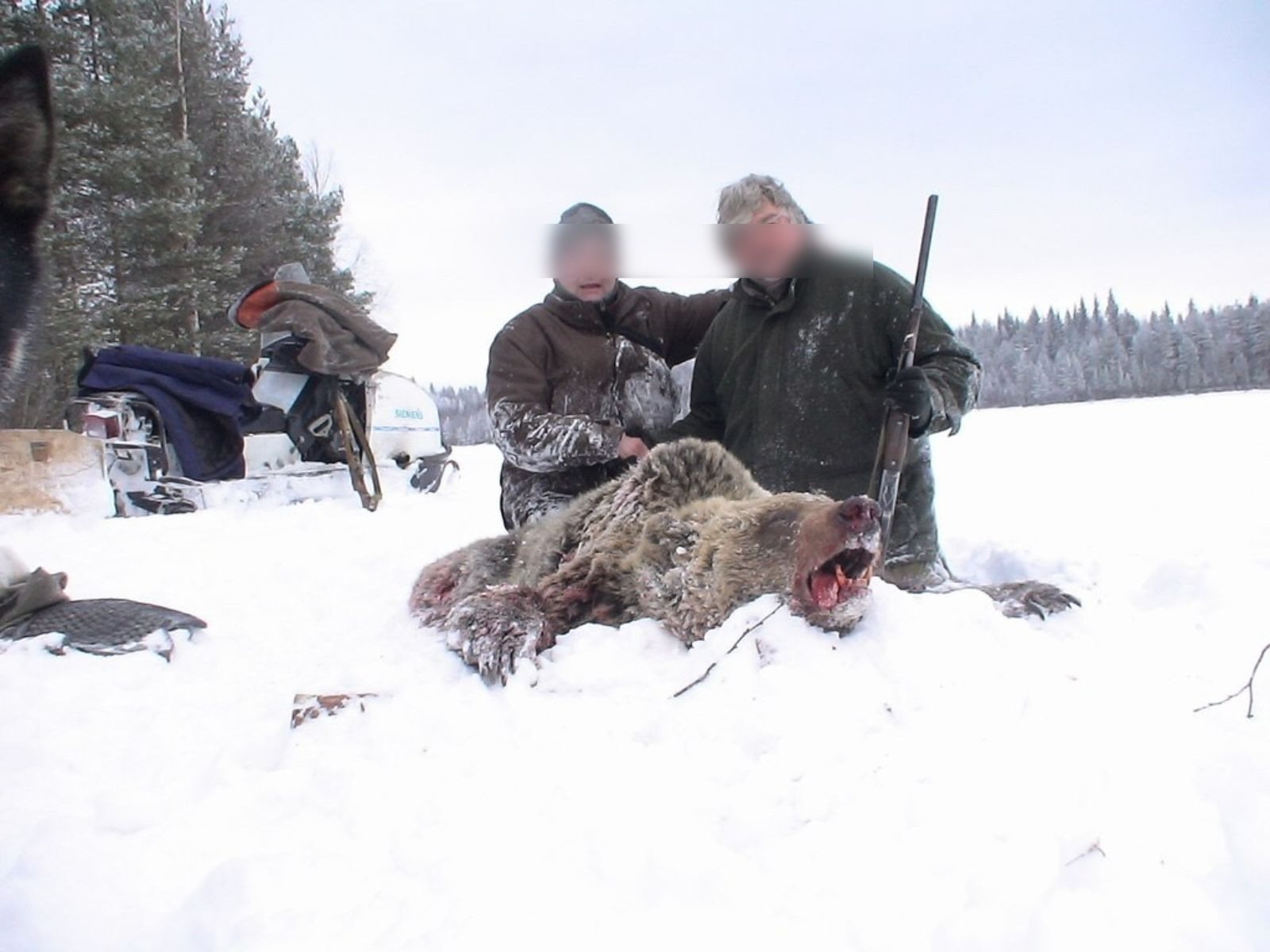
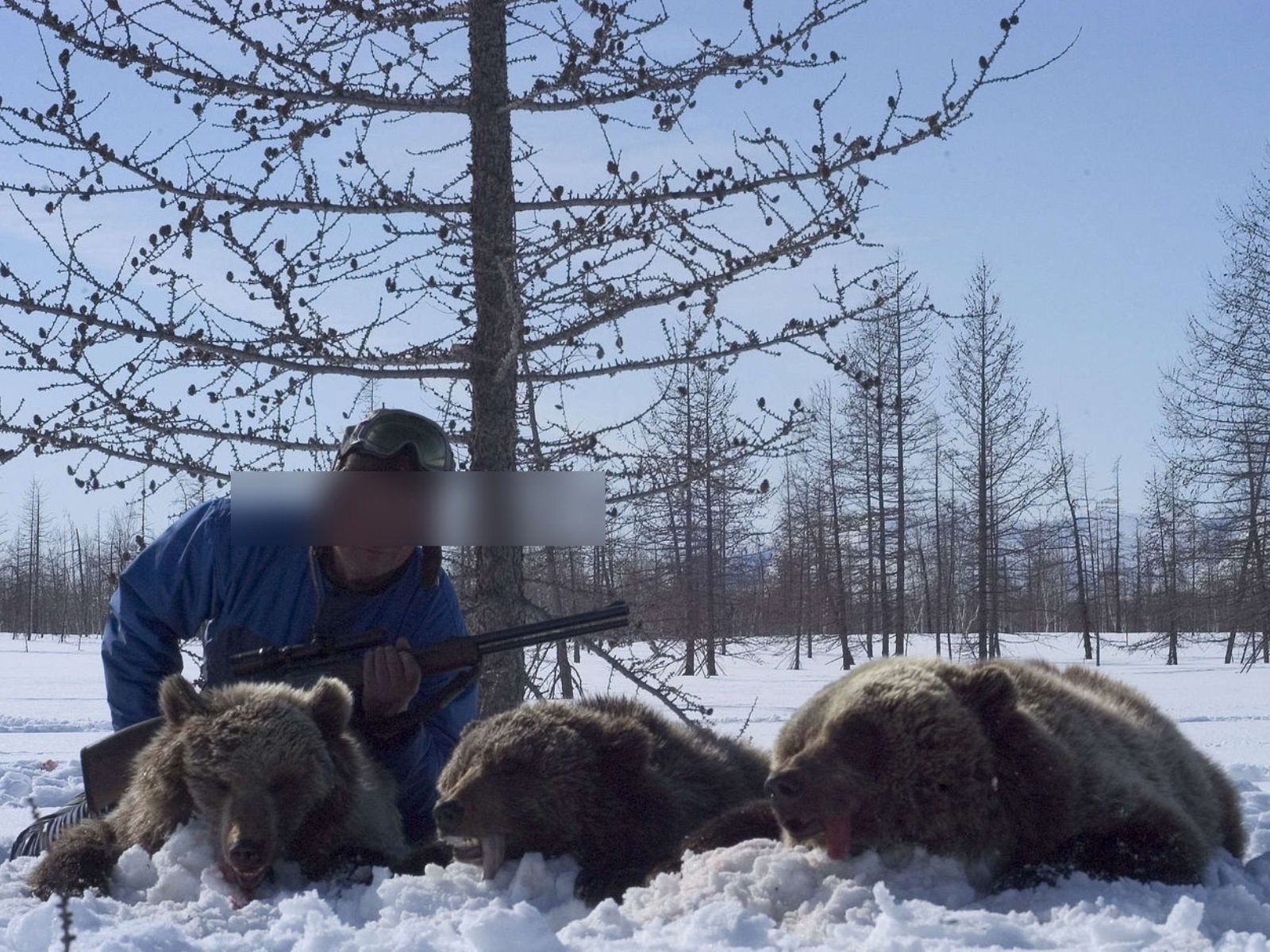
According to my information, no one intends to back down, and there are plans to legalize the killing of bears throughout the entire winter in the near future. We must be ready to defend these animals and fight for the Russian Taiga!
Now, here is the point.
In 2018, before the beginning of this large-scale expansion of the sport-hunting industry — an industry in which enormous amounts of money were at stake — the Prosecutor General's Office of the Russian Federation and the FSB of Russia immediately came to the defense of bears. The Prosecutor General's Office even called for bears to be included in the Red Data Book and reported that it had information indicating catastrophic levels of bear killing: the brown bear population had declined by 36% in just two years — from 225,000 animals in 2015 to 143,000 in 2017. The Prosecutor General's Office separately pointed out that despite the decline in population, the permitted harvest limit continued to increase, and it proposed listing the brown bear in the Red Data Book of Russia.
But the scandal was subsequently hushed up. By 2020, the Ministry of Natural Resources announced that Russia supposedly had around 300,000 bears. Such growth would be biologically impossible if we use the figure of 143,000 reported by the Prosecutor General's Office as the starting point, because we are talking about an animal with an extremely slow life cycle.
Yet when all of this is viewed in the context of the expanding industry of paid killing and the purely commercial interests involved — especially considering that the Ministry of Natural Resources itself cited “investment attractiveness” as one of the justifications for winter hunting of hibernating bears — serious questions and doubts arise regarding the data being presented.
It was from 2018 onward that regions suddenly began increasing bear-killing quotas at the same time. They have been doing this collectively and systematically. And each time, a new absolute numerical record is set! Meanwhile, the Ministry of Natural Resources has not backed down and continues lobbying for the legalization of winter bear hunting.
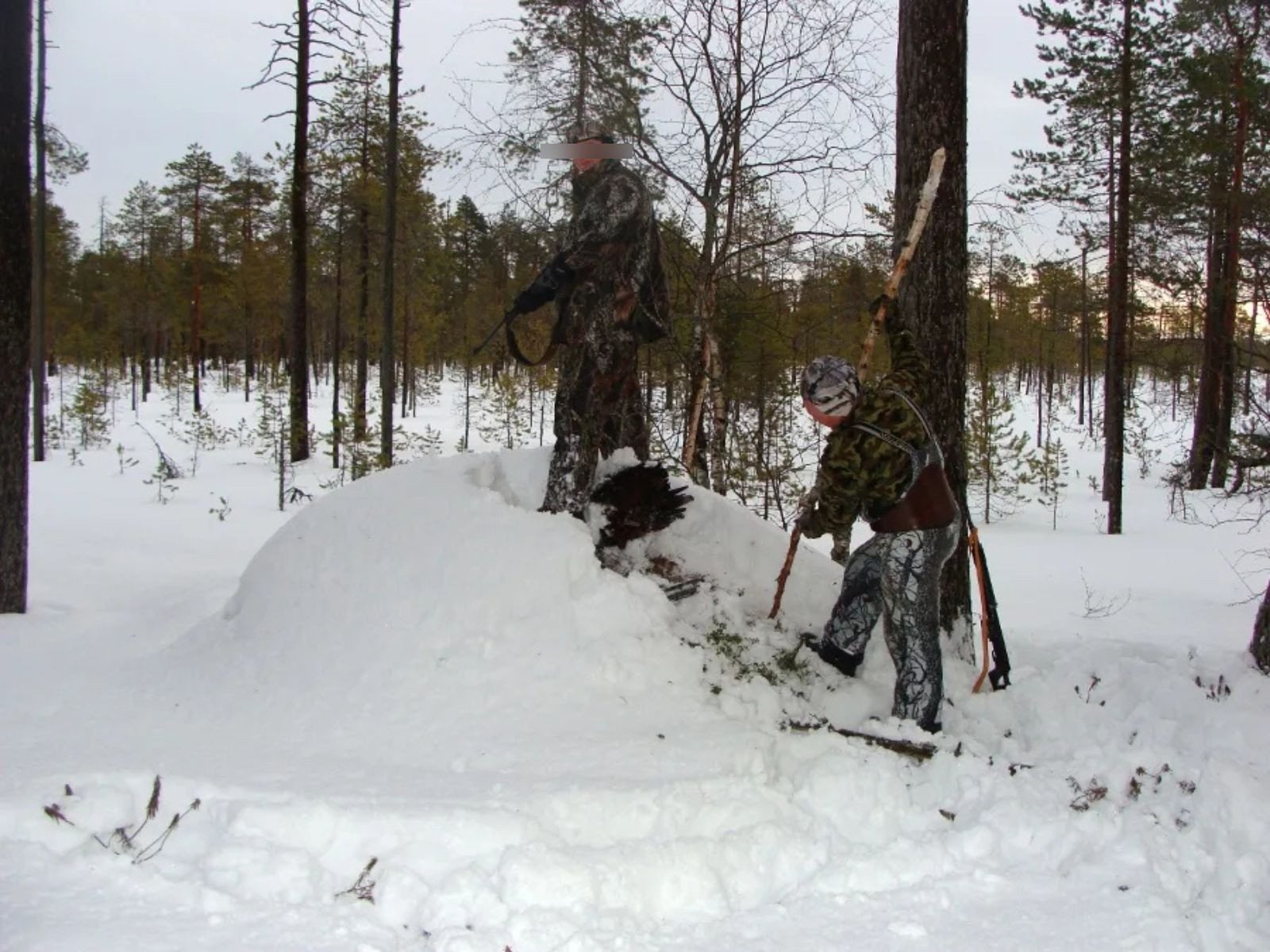
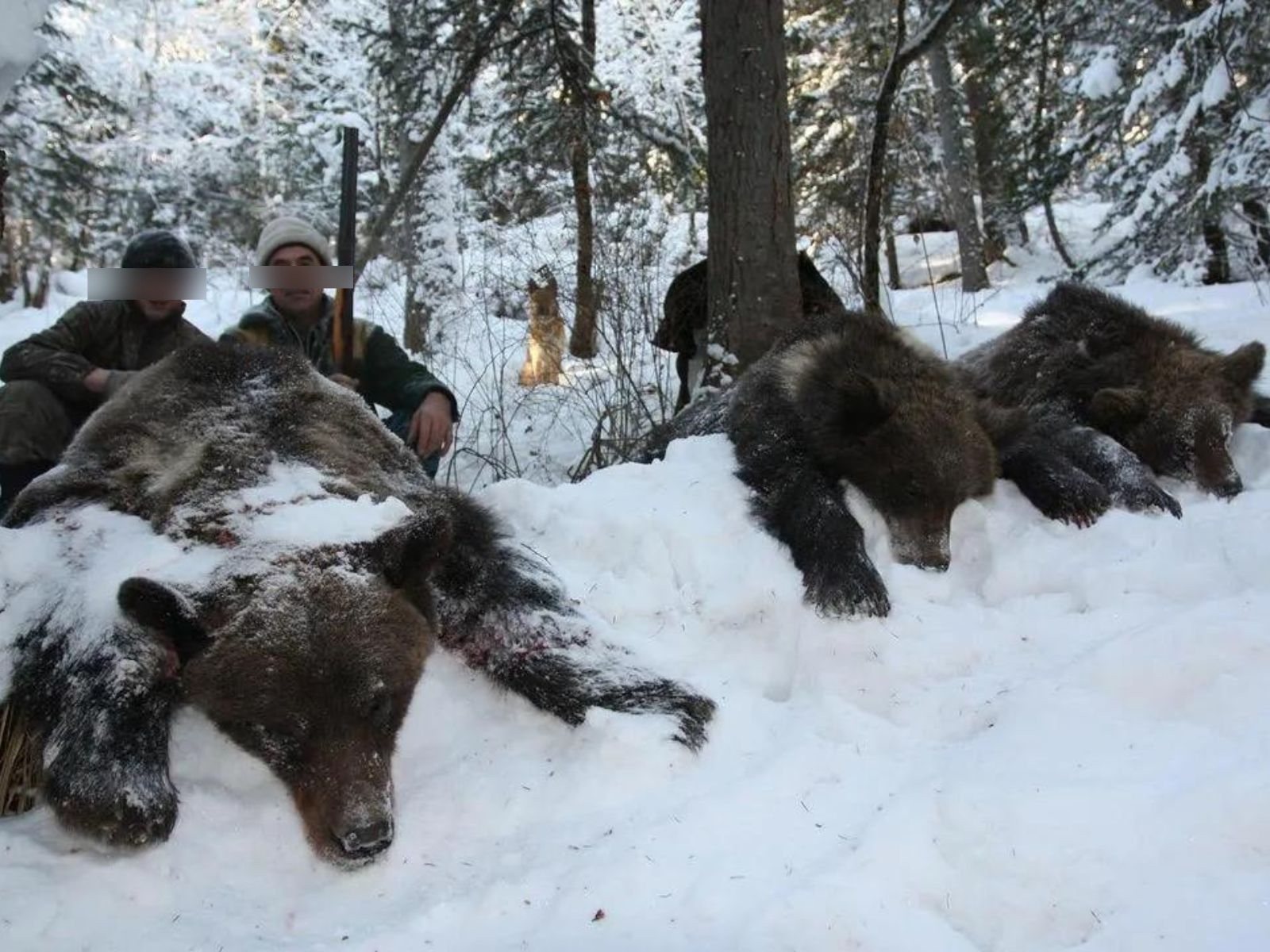
Each time, all of this is accompanied by a powerful media campaign across the press and social networks claiming that bears pose a threat to people, and this is often used to justify weakening their protection and increasing the scale of culling.
In 2026, the situation worsened. Because of the destruction of wild nature and the shrinking food base in some regions of the country, bears began appearing near people more frequently. There have also been attacks resulting from human–bear conflicts — I published a report on this just a few days ago: as of September 25, 2026, around 35 attacks had been recorded. This is a real problem and it must be addressed, especially since specialists and scientists have stated that the true number of bears remains unknown and that, in the Russian Taiga, they genuinely lack even the most basic food resources.
But alongside this real problem, someone is actively inflaming the information environment by claiming that bear attacks have broken all records. That is not true. According to official data, the record number of documented attacks was registered in 2014, when the figure reached 166 conflicts. The current number is several times lower.
And yet this is exactly how the information environment is being manipulated. A massive wave of fake content has also been confirmed: the situation has already led to court cases and official statements from police and regional authorities. The volume of false information is genuinely enormous. Someone is actively generating images and videos of bears using neural networks and then publishing them online.
I have written about all of this.
We have encountered the main problem: a complete lack of public understanding of what is happening. People are frightened and are demanding that even more bears be killed. In other words, they are publicly supporting the position of those who have spent so long seeking to expand the industry of recreational sport killing in the Russian Taiga.
How should we respond to this? How can we convey the full seriousness of the situation to society?
Every year, using our own resources, we have analyzed the bear-killing quotas issued across the regions. This makes it possible to demonstrate the scale of pressure on the population. The bear is a large predator found in approximately 55 regions of our country. To survive, it requires a stable food base and vast, continuous territories. If wild nature is brutally exploited, habitats are fragmented for logging and the shooting of animals, while massive forest fires close in from the other side, bears will move toward human settlements in search of food.
And if we are seeing bears more often, this does not mean that there are too many of them. What we can confirm is that reports of bear sightings have increased, even in areas where bears previously tended to avoid people.
So!
To analyze the scale of the problem, for the first time we are launching a full-scale interactive service containing a registry of bear-culling quotas issued by region. We have developed a complete infrastructure with a map showing the regions and the number of quotas issued for the upcoming hunting season: how many bears are legally permitted to be killed over the course of the year.
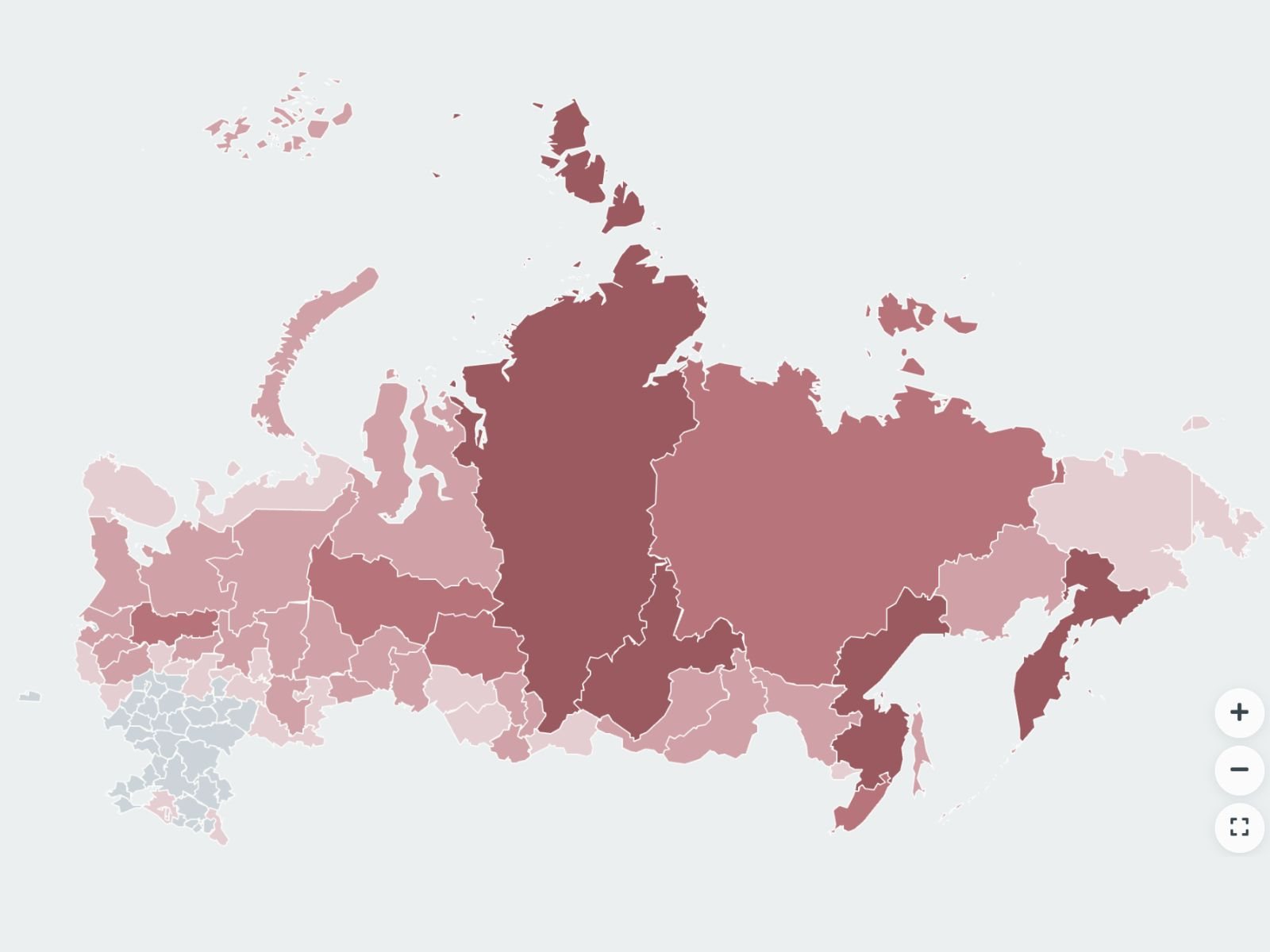
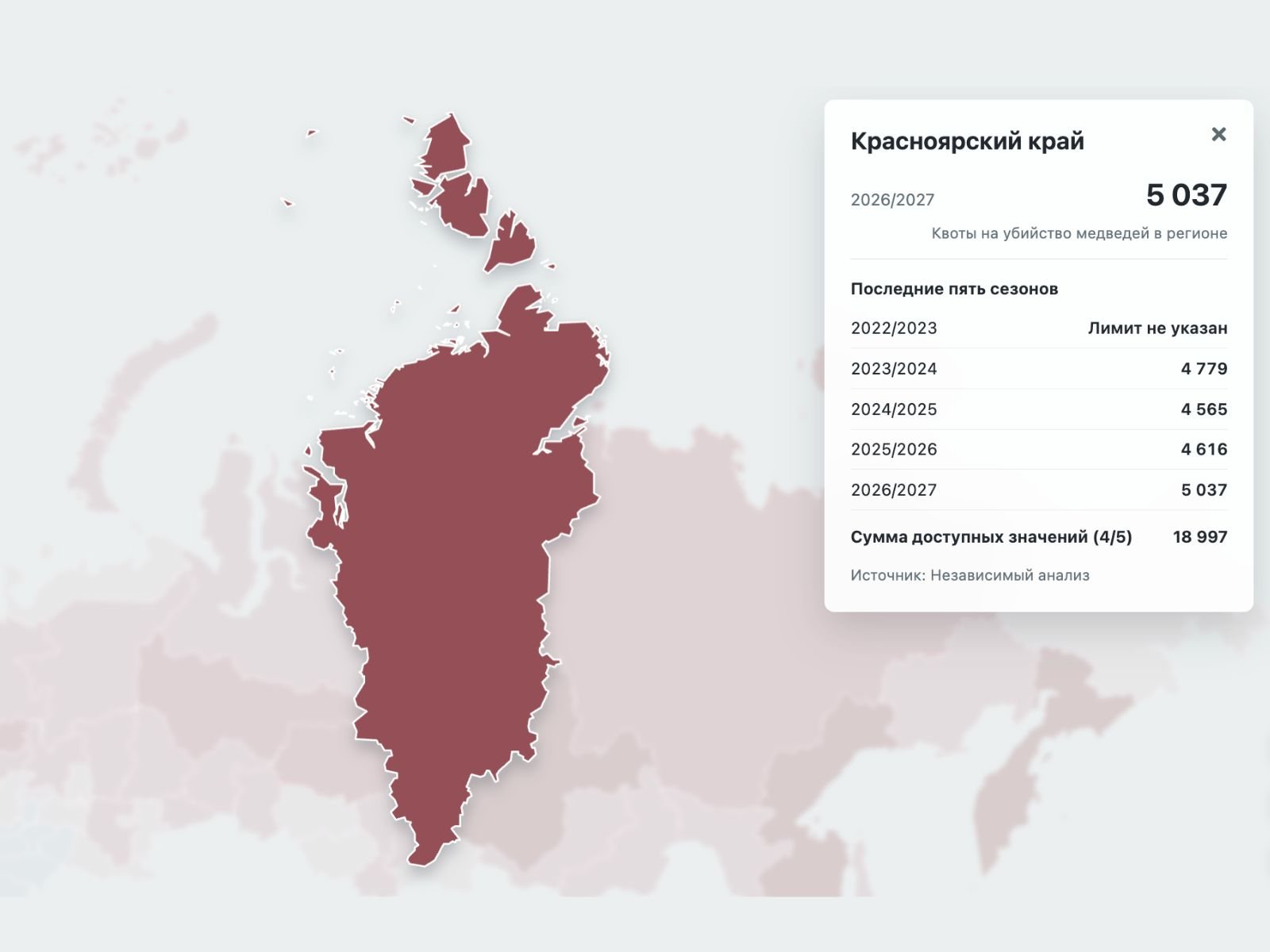
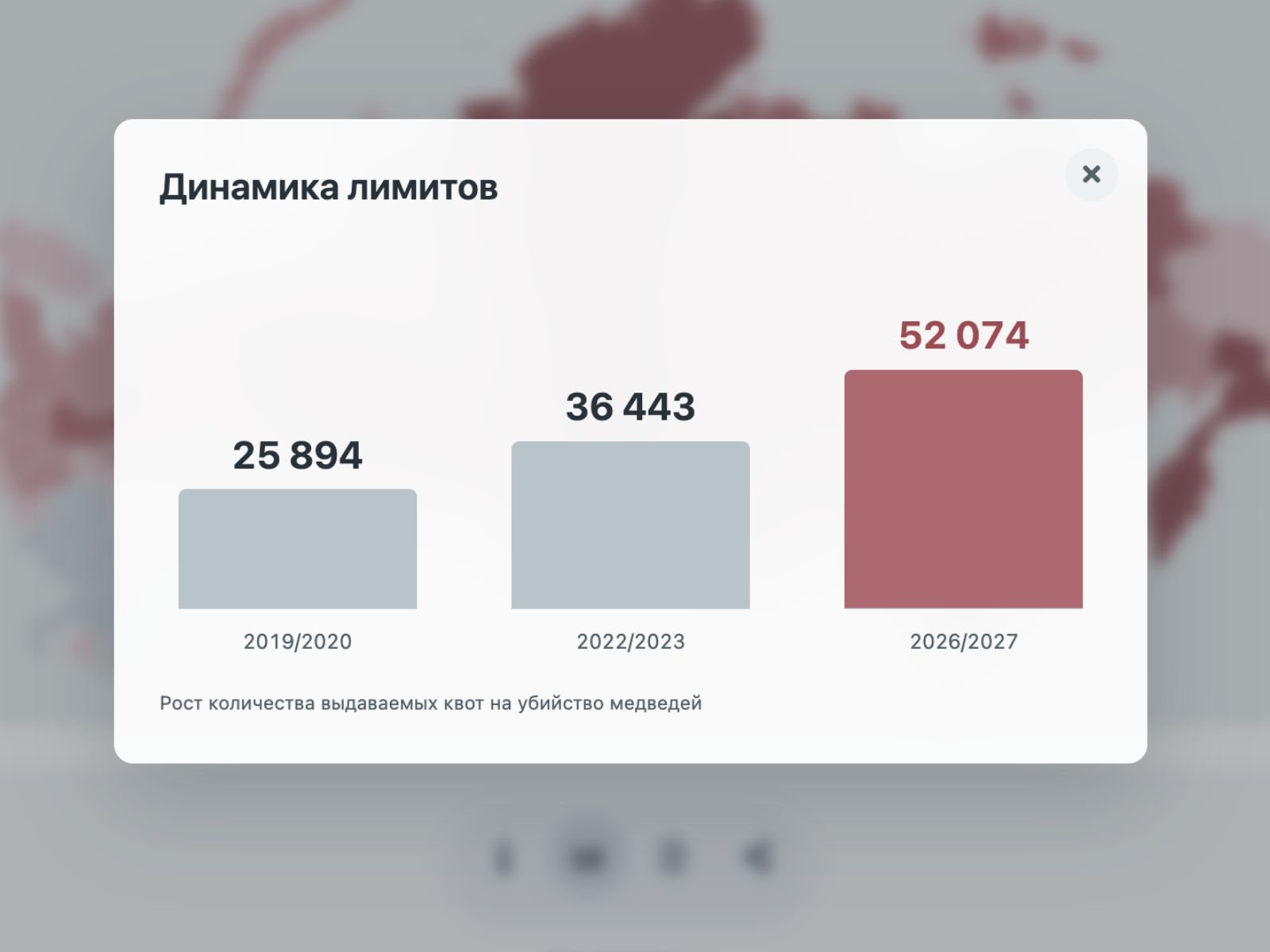
In addition, statistics are displayed by year so that you can see for yourself how the number of quotas is increasing. Click on any region on the map to view detailed information. The regions are also shaded with different intensities: the areas shown in the strongest red are those where the largest numbers of bear-culling quotas have been issued.
We have previously faced pressure because of our work compiling this registry. And I know perfectly well why. I also understand perfectly well that this pressure will intensify, especially after the launch of the interactive registry. But people must know the truth.
All data is collected manually, region by region: we search for official decrees issued by regional governments establishing wildlife harvest quotas, consolidate the data, compare it and enter it into the registry. It is long and difficult work.
But now every nature defender can obtain up-to-date information at any time and investigate the problem independently. It is very simple: look at the regions where the largest numbers of bear-culling quotas have been issued, and then compare them with the region's actual environmental problems — how much forest has been handed over for recreational hunting, how much illegal logging is taking place, what is the scale of legal logging, and how many forest fires occur in the region?
Take a look, for example: the absolute leader on our list is Krasnoyarsk Krai. Here is an analysis of the region describing what has been happening there for many years and how the Russian Taiga is being destroyed: https://pavel-pashkov.com/articles/en/krasnoyarsk-bear
And now we are seeing bears coming into contact with people while the quotas for killing them continue to rise. To me, the cause-and-effect relationship is absolutely obvious.
And now, pay attention!
In 2019, according to our registry, decrees were signed authorizing quotas totaling 25,894 bears. In other words, that is how many bears the authorities officially permitted to be killed. But in the current 2027 season, a new absolute numerical record has been set — 52,074 bears may be killed across the country.
We have completed the updated registry, and today I am announcing the next step in our fight for Life — the launch of an independent analytical service with an interactive map. It will be updated annually and made available to everyone as direct evidence of the continuing pressure on Russia's bear population.
In the registry, you can not only assess the scale of the problem visually and obtain current quota data, but also explore a section answering the most frequently asked questions — about the number of bears, about attempts to legalize their killing throughout the entire winter, and about the solutions that we ourselves propose for overcoming this crisis.
These are the measures I would take if I were in charge of the country's environmental authority and if the direct task were to PROTECT the natural heritage of future generations.
We continue our fight for Life! Let us not retreat from our Mission.
© PAVEL PASHKOV
Support the fight!
The hardest thing in our time is to remain independent from government and business! All activities are carried out independently. Stand with us and support our Mission to protect wildlife.
I want to support!Get involved
On an ongoing basis, we launch public initiatives together to protect wildlife and achieve real change. Join this work and help change the world for the better.
Explore the initiativesTFET Concept
We are working to transform the global protected-area system — Territories of Full Ecological Tranquility (TFET) must be created. Wildlife needs refuges from human pressure! This is one of the key paths out of the planetary ecological crisis and toward preventing further ecosystem collapse.
Learn more
