
In 2026, regional authorities in Russia signed decrees on allowable quotas for the shooting of more than 45 thousand bears, which is an absolute maximum. At the same time, quota levels had been growing year after year since around 2019, immediately after law enforcement agencies confirmed the total extermination of bears in the Russian Taiga and even calls were made to include them in the Red Book of the Russian Federation. But after that, the course sharply changed toward increasing the large-scale exploitation of wildlife, and sport hunting of living targets was made part of the economy, with promises to multiply profits from this by 2035.
In 2027, we will most likely cross the threshold of 50 thousand allowable bear killings. We have already begun this work of counting decrees and other documents in all regions of the country, and we will try to determine the scale of further pressure on the population.
Meanwhile, I want to draw the attention of our comrades to this fact: officials point to an “excessively growing population” of bears. Moreover, back in 2021, they stated that the bear population was around 300 thousand individuals, just four years after law enforcement agencies had provided completely opposite information — that there were about 143 thousand bears and that they required protection at the federal level. Biologically, for an animal with a slow life cycle, across the vast scale of Russia, it is impossible to double the population over such a period of time.
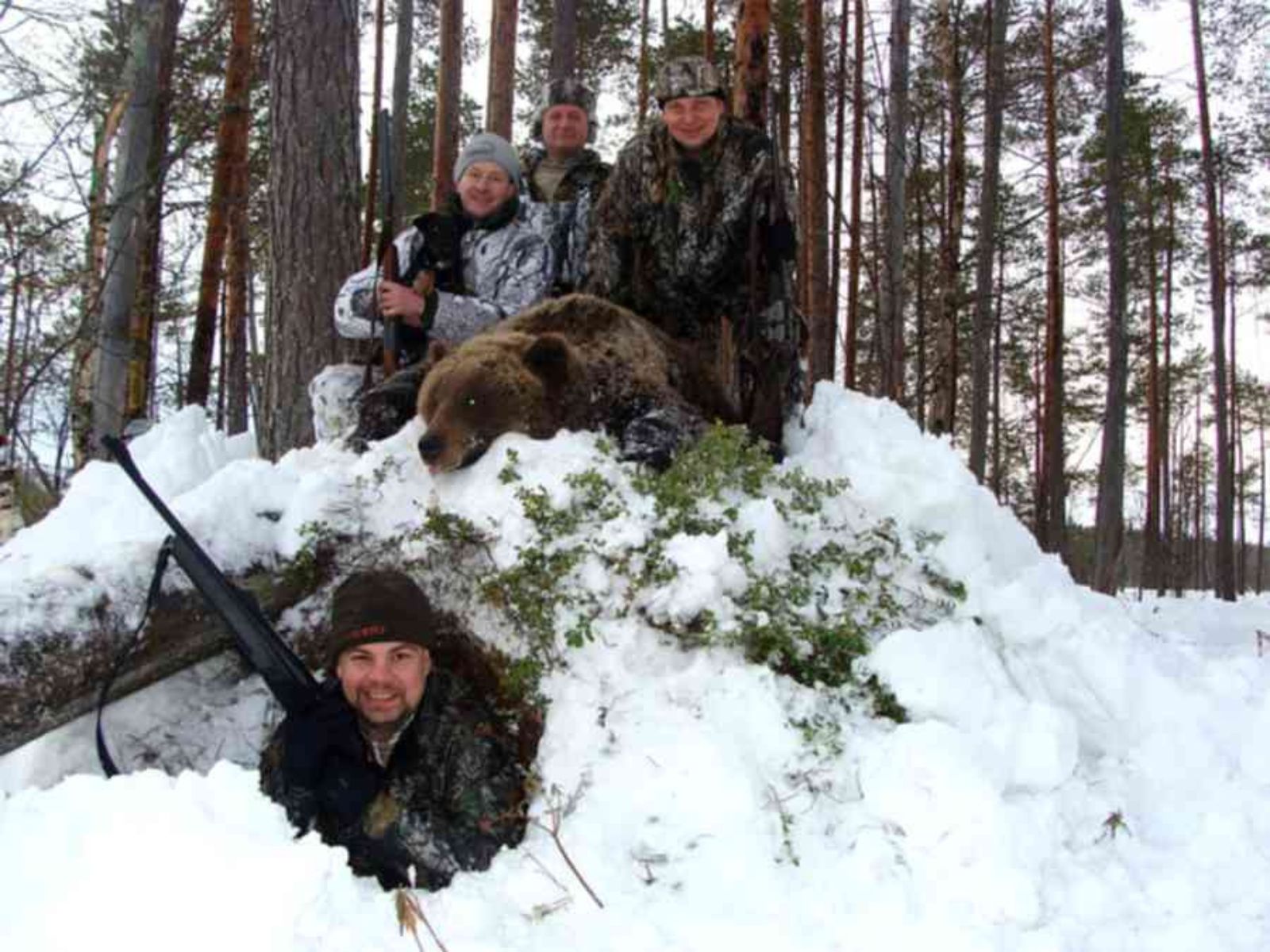
Is it even necessary to say that we do not have any truly objective count of wild animals? Most often, estimates are formed from the words of directly interested parties — hunting users and hunting grounds. The presumed number is also put on paper based on how often people have begun seeing animals. In principle, this is the main psychological measure: if people see animals more often, then apparently there must be many times more of them.
At the same time, the fact of catastrophic logging in Russian forests, which pushes animals toward human settlements, is ignored. Abnormal forest fires are ignored, and I remind you that in recent years millions of hectares have burned to the ground. And virtually no one talks about the sale of one third of all publicly accessible forest hunting grounds in the country into private hands for sport and recreational hunting — that is, people create pressure on wildlife by shooting “living targets” for money. In addition, as a rule, in hunting grounds, if they are not actively selling licenses to shoot predators, wolves, bears, and tigers are viewed as direct competitors in hunting. I have repeatedly heard from gamekeepers themselves, who today work in servicing hunting grounds, that when land is leased for the shooting of animals, they usually go through the territories and deliberately clear them of large predators. This is done to “ensure the safety of clients” who then want to shoot, say, wild boars or moose — and then there is a bear. A conflict. Who needs that? Naturally, no one does, so the territories are cleared in advance.
How this works in practice and on what scale, I do not know. But the question definitely requires study. What I do know for certain is that pressure on wildlife is already enormous, and that is exactly why we are seeing animals more often near populated areas. Not because their numbers have “suddenly exploded and they no longer fit in the wild.”
Let us carry out a small mini-study of the problem.
Since it is we who are doing the work of collecting data from the regions to form a register of bear extermination, we have the opportunity to rely on our own results going forward.
So, we have regions with the sharpest increase in bear shooting quotas. Let us take one of them as the basis for studying the problem — let it be Krasnoyarsk krai.
We pose an objective question: in parallel with this, is there an abnormal increase in forest fires and logging in this particular region, and is pressure on wildlife from the systemic apparatus being recorded? I understand that any data will be approximate and almost certainly understated by officials. I also understand that after the suppression of nature defenders, when everyone was banned, there became little data, and independent analytics even less so. But this data exists before the bans, say, on the horizon of 2019/2020 and beyond — precisely at the time when the Russian Taiga was being massively sold off for sites of sport and recreational hunting.
I think that for a mini-study with our comrades, it will be enough to analyze one large region where a sharp increase in the issuance of quotas for shooting bears has been recorded. It is logical that if pressure on ecosystems is recorded in the regions and the destruction of biogeocenoses is observed, animals will begin to come out to people. If there become too many predators, this will cause scandals, and people will start asking uncomfortable questions! Therefore, the growth of quotas will clearly make it possible to shoot the animals before they reach people.
Krasnoyarsk krai. According to our register, the bear harvest limit developed as follows:
- 2019/2020 — 1,567 individuals
- 2020/2021 — 1,942 individuals
- 2021/2022 — 3,145 individuals
- 2022/2023 — data was not found (we did not find the specific decree, but the shooting of bears continued)
- 2023/2024 — 4,779 individuals
- 2024/2025 — 4,565 individuals
- 2025/2026 — 4,616 individuals
So what do we get?
We make a simple calculation: 1,567 + 1,942 + 3,145 + 4,779 + 4,565 + 4,616 = 20,614 bears.
To simplify: over six years in Krasnoyarsk krai alone, permission was granted to shoot 20,614 bears. A total of seven years passed (one year has no data). How many were actually killed is unknown; we only know the number of quotas issued by officials. That is, how many they are calling to kill.
Now let us examine the pressure on nature in Krasnoyarsk krai. What preceded the increase in the mass shooting of bears in the region?
It was precisely in 2019 that abnormal, catastrophic, and destructive forest fires were recorded in Siberia. A huge number of these fires were concentrated precisely in Krasnoyarsk krai. Our regular comrades will surely remember how the then-governor Alexander Uss stated:
“When we have cold weather in winter and a blizzard arises, it does not occur to anyone to melt icebergs so that it would be warmer for us. Something similar, I think, applies to forest fires in the control zone. It is not only about the government; the point is that this is an ordinary natural phenomenon, fighting which is pointless, and perhaps even harmful in some places.”
This caused a public outcry, and he made this nonsense statement precisely in the summer of 2019, at the height of the strongest forest fires. In fact, independent analytics in those years showed that fires began precisely at logging sites and on forest roads leading to these logging areas, which were covered with deadwood. It is precisely in these places that, as a rule, “hunting users” stop to rest, light a small campfire, drink some vodka, and move on. Then the embers spread the fire, and abnormal fires begin!
Those who remember know that in 2019 Krasnoyarsk krai was catastrophically engulfed in flames. Smoke covered cities and villages; both people and wild animals suffered. In response, officials, represented personally by the governor, declared their inaction to be a matter of “economic inexpediency.”
So, in our mini-study, we are already bringing in data on the destructive forest fires in Krasnoyarsk krai in 2019: it was precisely from this time that the sharp increase in the issuance of bear shooting quotas began, after bears had, at the very least, lost habitat and their food base to fires and went toward people in search of food.
But what else happened here?
We add the next layer — forest crime and corruption. Already the following year, in 2020, the former minister of forestry of Krasnoyarsk krai, Dmitry Maslodurov, was arrested on charges of receiving multimillion-ruble bribes from the logging company Kraslestorg.
At the same time, a scandal erupted around the “Church of the Last Testament”: you probably remember how the media published reports about the detention, on September 22, 2020, of the leaders of this organization in the Kuraginsky district of Krasnoyarsk krai: Sergei Torop, known as Vissarion, Vadim Redkin, and Vladimir Vedernikov. Investigators charged them with creating a religious association whose activities involved violence, and with causing grievous bodily harm to two or more persons.
But something else remained behind the scenes: already on September 23, 2020, Kommersant reported that, as part of the investigation, the contacts of the CLT with the authorities of Krasnoyarsk krai were being studied. It is said that they received tens of millions of rubles from illegal logging and from building premium-class houses out of this timber, where, as alleged, regional officials lived.
Later, the contacts led directly to the organization’s connection with the same minister of forestry who had been detained. Moreover, it was mainly cedars that were cut down — the center of interspecies connection, the most valuable forests, which provide a food base for wild animals and form entire ecosystems. According to the investigation, a significant source of financing for the CLT was timber harvesting, primarily cedar, and house construction. Kommersant wrote that at least two individual entrepreneurs involved in buying timber were under the control of people from this circle, as well as dozens, if not hundreds, of private individuals who, according to the investigation, were engaged in logging without registration.


These individual entrepreneurs, as the publication wrote, periodically won tenders announced by the authorities. One of them built facilities for the 2019 Universiade in Krasnoyarsk — stages, log structures, and gazebos. It was also reported that one of the co-founders of the CLT headed a company that built bathhouses and premium-class country homes worth from 10 million rubles.
So what do we get? A FORMER minister of forestry personally took part in the destruction of the Russian Taiga. Dozens, if not hundreds, of regional officials were also tied into this. Their interests were served by unclear organizations, shady individual entrepreneurs, and so on. They cut down mother trees, which are the foundation of life in local forests in general. And in parallel — destructive forest fires, catastrophic ones.
Then came destructive forest fires again: already on May 7–8, 2022, fires in Krasnoyarsk krai affected 60 settlements; fire destroyed or damaged 518 residential houses, 309 other structures, and 61 vehicles. According to various updates, 7 to 8 people died; 19–20 people were injured. Earlier reports gave 5 dead, then the number rose.
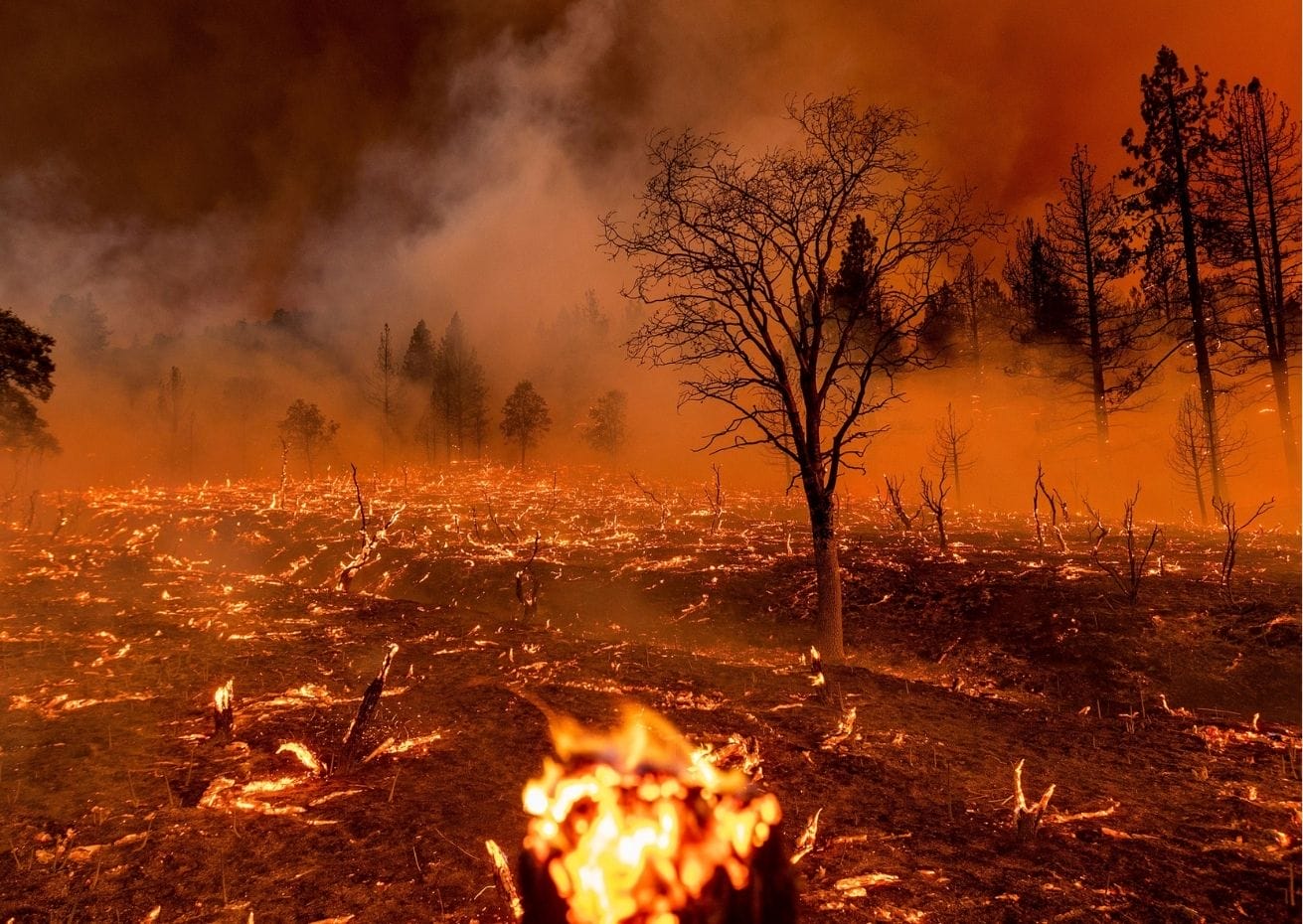
In fact, we can confirm that at the same time as there is a sharp increase in bear shooting quotas, the region is witnessing the SYSTEMIC destruction of the Russian Taiga, forest banditry involving the first officials of the region, and catastrophic forest fires. The governor says that nothing needs to be extinguished and that “it is even harmful,” apparently for the economy, while officials are simply collectively plundering the long-suffering taiga.
Now, in our mini-study, let us draw one more parallel — the development of the industry of paid killings of wild animals.
We pose the question: we know about the sharp increase in bear shooting quotas; this is taking place in parallel with catastrophic fires and forest banditry. At the same time, we know that during this same period officials were plundering the Russian Taiga (which has been officially confirmed), that the former minister of forestry was personally involved in this, and that the then-governor stated that extinguishing forest fires was “harmful.” Was there also an increase in the scale of the shooting of wild animals during this same period?
The key point for us is December 31, 2019: by decree No. 362-ug of that very governor Uss, the “Scheme for the placement, use, and protection of hunting grounds on the territory of Krasnoyarsk krai” was approved. That is, AFTER the scandal with the abnormal forest fires, he personally gave an order to begin the mass development of the hunting economy in the region.
Once again, the connection: abnormal forest fires, the scandal over his statement, then the decree on increasing the shooting of wild animals. And let us recall my words above about how the early shooting of animals BEFORE they come out to people makes it possible to avoid uncomfortable questions from citizens later on.
The development of the hunting industry became enormous: by 2025, the Ministry of Natural Resources of Krasnoyarsk krai published data stating that 218.3 million hectares had already been allocated as hunting grounds. Of these, as of April 1, 2025, 80.5 million hectares were assigned hunting grounds, and 137.9 million hectares were publicly accessible hunting grounds. These are gigantic territories, and the assigned ones, for those who understand, are the ones handed over into private hands.
- Private hunting grounds — 80.5 million
- Publicly accessible grounds — 137.5 million
The authorities called hunting a “traditional form of nature use” that “contributes to the development of entrepreneurship.” That is, the course was immediately and sharply defined: this is for profit.
I found data showing that registered hunters in the region numbered 130.2 thousand people in 2025. At the same time, NEW hunters arrive annually in the amount of 3.5–4 thousand people (they receive hunting tickets). Also, every year, about 60 thousand hunters receive permits to shoot animals in publicly accessible forest hunting grounds. The rest apparently go to shoot living targets in private grounds.
The data was provided by the region’s Ministry of Natural Resources itself. And what is interesting is that, in the same material, the authorities admit that many hunting users have a low level of organization and management of hunting operations. Among the reasons named are low profitability, some hunting users shifting to other sources of income, and “incompetent management” incapable of organizing a hunting business even in an economically favorable region.
That is, officials handed over colossal territories of the Russian Taiga in Krasnoyarsk krai for the shooting of animals, knowing that there is a completely ineffective and “leaky” management system there. That is called a mess!
Even more importantly: according to the Ministry of Natural Resources, the actual protection of hunting grounds is carried out by 63 state hunting inspectors. One inspector is responsible for up to 1.6 million hectares of controlled territory, and in northern districts — up to 6.9 million hectares.
Now I will summarize.
According to monitoring data in Krasnoyarsk krai, as of April 1, 2025, the main bear population was stated to be 25.3 thousand individuals. Every year, the number of quotas for their shooting grows, and in the region, since 2024, a mechanism has also been introduced under which a hunter who kills a wolf or bear in publicly accessible hunting grounds receives an additional advantage in the distribution of permits to kill ungulates. The system works as follows: 40% of permits for the harvest of ungulates are distributed among hunters who have harvested a wolf or bear, or who have participated in activities for counting, regulating numbers, and preserving resources, while 60% are distributed among the other hunters.
Thus, the authorities are encouraging people to kill as many bears and wolves as possible. At the same time, they say that the increase in quotas is caused by population growth and that “they no longer fit in the taiga.” But biologically, I consider this impossible, especially under conditions of colossal pressure.
Are we not now seeing the large-scale destruction of the forests of Krasnoyarsk krai, while in parallel the taiga has been surrounded by hunting enterprises as a buffer zone and an intensive shooting of animals is being carried out — animals that, having lost their habitat and food base, are trying to come out to people in search of food?
© PAVEL PASHKOV
Support the fight!
The hardest thing in our time is to remain independent from government and business! All activities are carried out independently. Stand with us and support our Mission to protect wildlife.
I want to support!Get involved
On an ongoing basis, we launch public initiatives together to protect wildlife and achieve real change. Join this work and help change the world for the better.
Explore the initiativesTFET Concept
We are working to transform the global protected-area system — Territories of Full Ecological Tranquility (TFET) must be created. Wildlife needs refuges from human pressure! This is one of the key paths out of the planetary ecological crisis and toward preventing further ecosystem collapse.
Learn more
