
In October last year, I wrote a separate article about our country’s plans to build, together with the United States, a tunnel across the Bering Strait — directly from the Russian Far East to Alaska. The main interest there lies in large-scale industrial development: major infrastructure projects and the extraction of natural resources. The fourth technological revolution, for which the world is now racing, fighting and tearing itself apart, involves a transition to the digital and “green” technologies of the future. These are electric vehicles, artificial intelligence and other such sectors. But to produce them, rare-earth resources are needed on a colossal scale — and many of them remain beneath protected natural territories. For this reason, states have begun rapidly lowering the protection status of these areas, legalizing the industrial development of wildlife refuges and reserves.
I have already explained what is happening in our own country. I also recommend reading my earlier article about the tunnel beneath the Arctic: what exactly is being planned and why.
Now the project has entered an active stage.
Kirill Dmitriev, head of the Russian Direct Investment Fund and Special Presidential Representative for Investment and Economic Cooperation with Foreign Countries, stated on June 4, 2026:
“Tomorrow we are signing an agreement that we will continue designing the tunnel. The tunnel will happen. It will be one of the major infrastructure projects between our countries.”
In other words, the plans to build the tunnel are being officially confirmed.
And I want to clearly show all our allies how, at this same moment, the United States is weakening the protection status of wild nature and protected natural territories ahead of preparations for the construction of this tunnel. The main blow has fallen precisely on Alaska, and the current administration of Donald Trump is beginning a broad-scale industrial opening of wild nature in the interests of big business.
The dismantling of basic nature protection in the United States
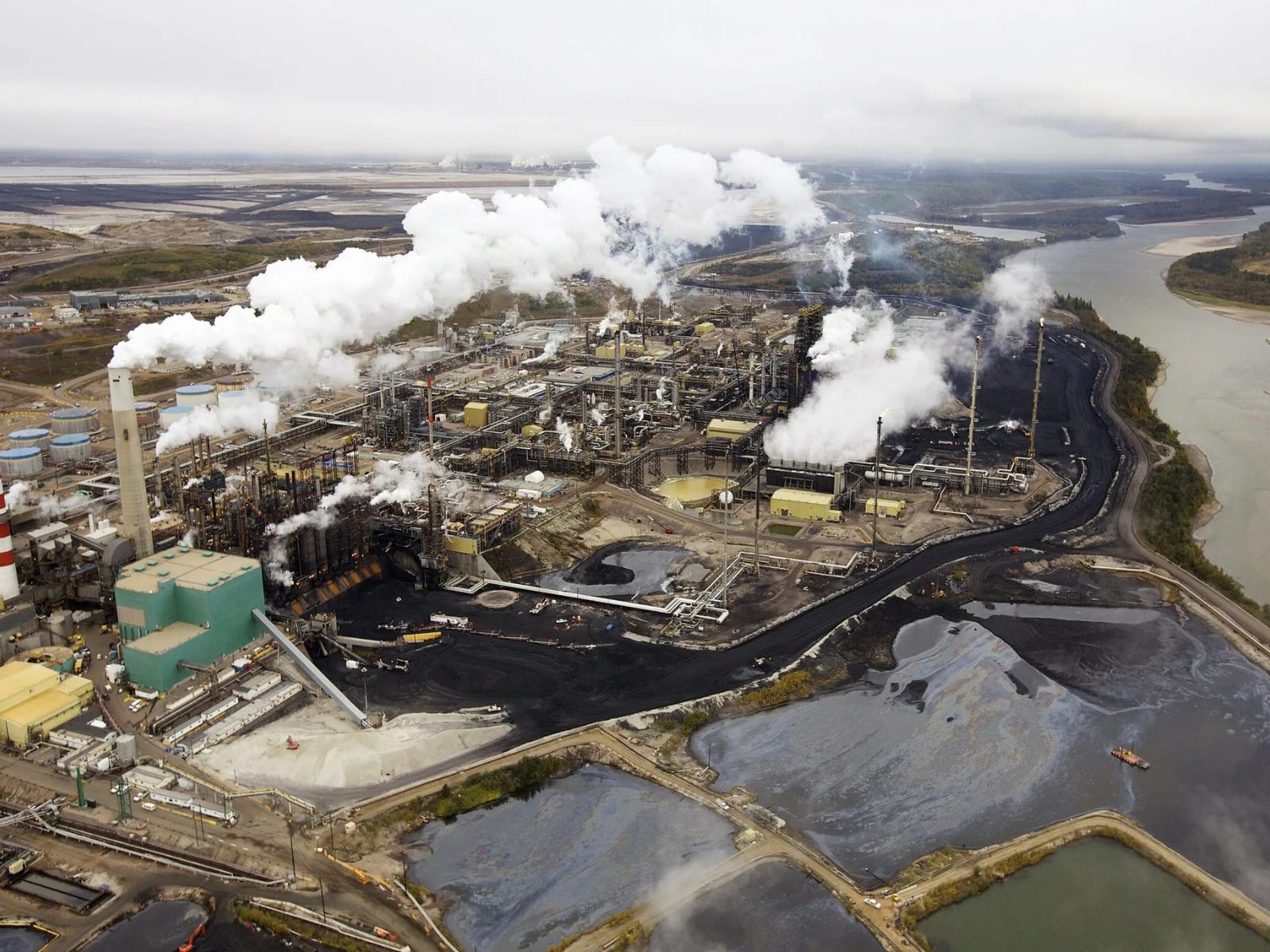
Alaska, which they want to connect with the Russian Far East, is one of the largest resource regions of the United States. According to the U.S. Energy Information Administration, by the end of 2024 Alaska had 3.1 billion barrels of proven oil and gas-condensate reserves. In other words, this is what operators consider extractable right now. But the estimated oil potential is considered many times higher than the confirmed reserves: for example, the U.S. Geological Survey indicates that if protected territories and lands belonging to Indigenous peoples are “developed,” an average of 8.7 billion barrels of oil and 25 trillion cubic feet of gas could be extracted.
At the same time, the most important thing now drawing the attention of the United States in Alaska is the extraction of rare-earth elements, without which leadership in the fourth technological revolution is impossible. I have written about this many times before. Alaska has potential across a wide range of critical minerals, including graphite, lithium, tin, tungsten, rare-earth elements and platinum-group metals.
But although the United States has rare-earth resources, it cannot dominate either in reserves or in the industrial supply chain. This means it remains dependent on those who confidently hold the lead. Moreover, what it needs is not simply ore, but processed compounds, metals and magnets. In reviews for that same year, 2024, it was noted that U.S. import dependence for rare-earth compounds and metals was around 80%, while in 2020–2023 the main source of imports of rare-earth compounds and metals was China — around 70%.
There is one more problem. There are light rare-earth elements, such as lanthanum, cerium, neodymium and praseodymium. And there are heavy ones: dysprosium, terbium, yttrium and others. For defense, electric motors, wind power and high-temperature magnets, neodymium, praseodymium, dysprosium and terbium are especially important.
In real industrial quantities, they are found in other countries. This is where Donald Trump’s calls to annex Canada and Greenland to the United States come from, as well as the wars breaking out around the world. In fact, for a long time now, high-ranking officials from different states have been openly speaking about coming — and already unfolding — wars for rare-earth resources.
I recommend, allies, that you read the following materials on this subject:
- Minister: the world faces wars over rare-earth resources and water
- The Russia–Alaska tunnel beneath the Arctic for the extraction of rare-earth resources
- Wars over rare-earth resources, or why Trump threatens to seize Greenland
- China’s rare-earth empire
After reading these materials, I think the general picture of what is happening will become clear to everyone. Find the time.
Thus, here is what we have: Alaska has a great deal of oil and gas, and it also has rare-earth resources, but real industrial volumes must be taken from somewhere else. And in countries across the world, these resources often remain beneath protected natural territories; hence the many bills and regulatory changes that amount to the seizure and downgrading of wildlife refuges and protected areas.
Naturally, in such a struggle for power and money, for control and leadership in the new technological race, anyone who tries to PROTECT NATURE becomes an obstacle. That is why we have not yet even seen the real suppression of nature defenders: in the coming years, everything living in the path of this machine — and those who try to fight for that life — will be swept aside.
Now look. This is extremely revealing. Simply to understand the depth of the problem.
Quite recently, there were still attempts in the United States to protect nature at the state level.
In 2015–2017, restrictions were introduced on federal natural lands in Alaska, aimed at strict regulation of hunting and, even more importantly, trapping. These measures were introduced specifically in national preserves, where, on the one hand, traditional and recreational use is allowed, while, on the other, the importance of conservation functions is preserved.
In essence, this was the RIGHT step: it was aimed at preventing federal natural lands from turning into grounds for the mass killing of animals. For Alaska this is especially important, because it is a refuge of wild nature, and it is here that large areas of relatively undisturbed wilderness still remain. Many species — bears, wolves, caribou, migratory birds — depend on large and connected territories. If I were leading a state, I would immediately place such territories under a special biospheric protection status.
We, allies, have been protecting nature for many years. Have you ever asked yourselves why the expansion of the killing of wild animals usually happens just before laws are introduced for the large-scale industrial development of protected areas? Why do we first see the expansion of the paid-killing industry?
It is very simple: if forests are cut down first, animals lose their habitat and begin coming out toward people, making the problem visible. People start asking questions and demanding answers, conservation organizations begin to rise up, and scandals follow. Thin and exhausted animals start appearing near settlements; wolves and bears begin searching through garbage dumps. It becomes impossible to hide, and the cause-and-effect relationship is immediately identified by society.
Therefore, laws expanding the scale of animal killing are adopted first, and only then is the protection status of reserves and protected territories weakened, allowing heavy machinery to enter and destroy nature. There will be no visible movement of animals toward people, because they will already have been shot. And since these natural territories are far from human settlements, there will be no obvious signs of the problem. No one will be able to understand the scale of the catastrophe.
Now look further. I return to Alaska.
In 2024, a rule was adopted on the conservation of natural lands, strengthening the protection of federal lands. This was an extremely important step, because the U.S. Bureau of Land Management administers approximately 245 million acres of federal land. Therefore, changing such a rule affects not one site, but an enormous expanse of territory.
In effect, this rule balanced industrial land use with ecological value, preventing big business from destroying the very framework of biological systems.
It was also a logical and understandable step.
And then Donald Trump returned to power for his second presidential term — the same Trump who, during his first term, had already weakened the protection status of wild nature in the interests of transnational corporations. I think it is no secret to anyone that Trump himself is a businessman and represents the circle of the richest people in America.
As soon as he returned to power, a large-scale weakening of wildlife protection began across the country; moreover, it was stated openly that this was being done in the interests of big business. The main blow fell on Alaska.
In February 2025, the U.S. Department of the Interior launched a package of orders aimed at the maximum expansion of domestic energy and mineral production. At the same time, it began searching for emergency powers to accelerate projects and eliminate rules that the administration considered the main obstacle to the country’s economic development.
At that moment, the entire course of the state shifted toward prioritizing leadership in the race to control the new technological market — and that means colossal volumes of rare-earth resources are needed. Any conservation projects and procedures became a problem.

In any conservation model, an industrial facility must first prove that it will not disturb the habitat of animals and plants or endanger rare species. In the new global model, however, states have begun to treat all of this as an obstacle, and those who try to protect nature as enemies.
In March 2025, the White House formulated a policy to expand domestic extraction of critical minerals. The justification was built around national security, the resilience of supply chains and reducing dependence on external sources of raw materials. In short: victory in the global race at any cost.
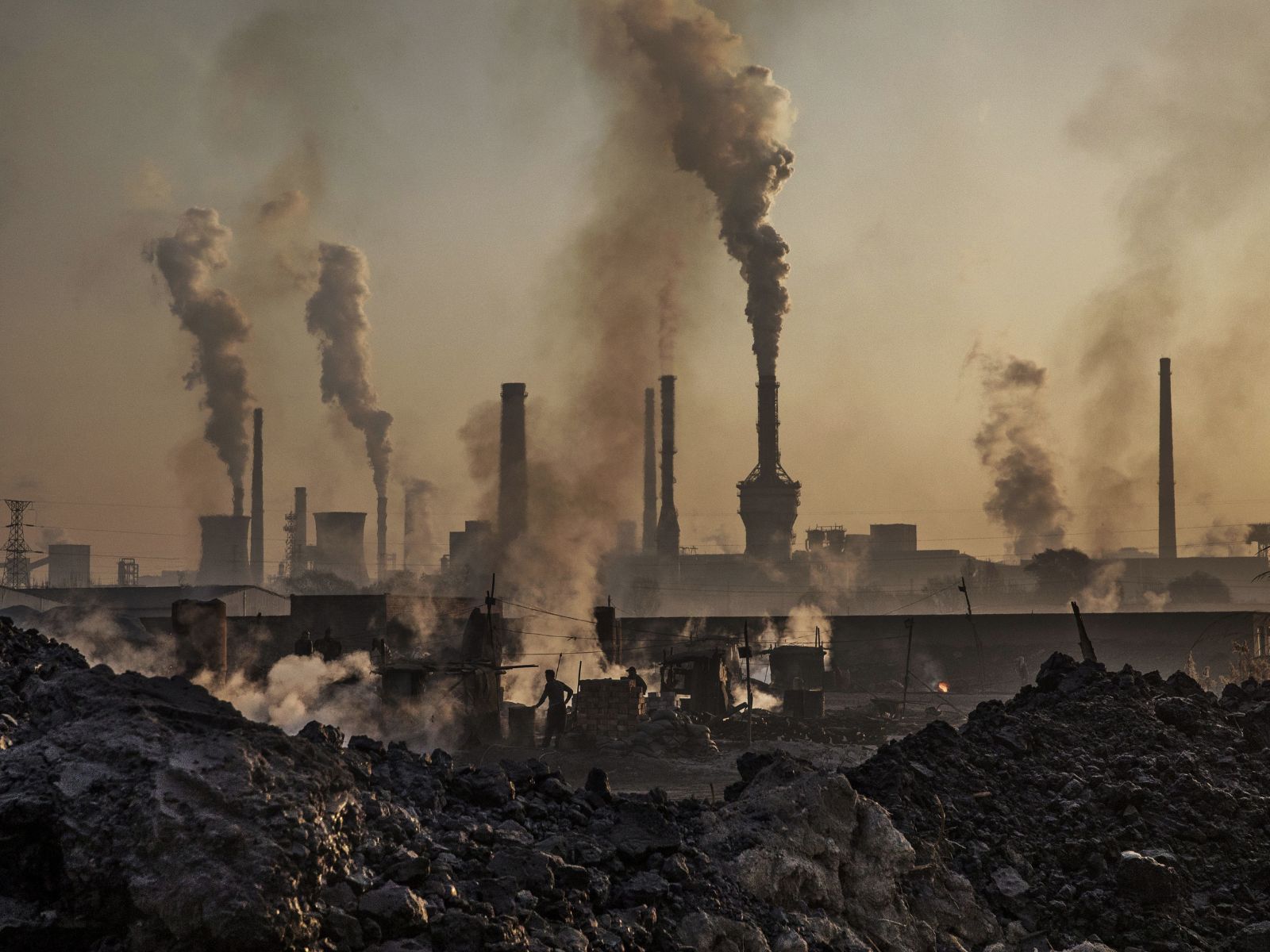
That same March, reports appeared that the U.S. Department of the Interior intended to clear the way for the Ambler industrial road. This road is supposed to provide access to an area rich in copper and other critical minerals. Previously, this project had been rejected many times. The reason is that the road will cut through one of the largest untouched corners of wild nature in North America. It will cross 11 major rivers and thousands of streams, where animal migration routes and salmon rivers pass. This is a hidden refuge of wild nature, where animals and plants can still hide from humans.
And now a huge industrial road will be built there; moreover, it will not be a public road, but one intended exclusively for industrial corporations exporting resources. This road will be in northwestern Alaska, south of the Brooks Range. Its length is about 360 kilometers through little-disturbed Arctic and subarctic natural lands. Its main purpose is access to the Ambler mineral belt. This area contains deposits and prospective sites of copper, zinc, lead, silver, gold, cobalt, germanium, gallium and other critical minerals.
Just one month after the order to begin building this transport artery, in April 2025, the U.S. Fish and Wildlife Service and the National Oceanic and Atmospheric Administration proposed removing from the rules of the Endangered Species Act the definition of “harm,” which for decades had included substantial degradation of habitats.
Previously, the law operated according to a clear logic: if the destruction of habitat actually kills animals, injures them or deprives them of the ability to reproduce, feed and shelter, then this is harm to a protected species. Now they want to separate direct physical harm from the destruction of the place without which a species cannot exist.
And, as you know, protecting a species without protecting its habitat loses even the most basic ecological meaning. Almost all threats to animal and plant species are connected precisely with the destruction of their habitats. Now the law is being pushed toward no longer recognizing habitat degradation as a form of harm.
In that same April 2025, the U.S. Department of the Interior introduced emergency approval procedures for energy and mineral projects. These allow years-long environmental and administrative reviews to be shortened to no more than 28 days. No lengthy procedures — only a pure formality that must be completed within a month. And, as you have already understood, this scheme applies not only to oil and gas, but also to coal, uranium, geothermal energy and critical minerals.
Here I want to note that a real environmental assessment requires time. Especially when assessing the impact of major projects on vast territories of wild nature, water systems, migration routes, rare species and so on. It is impossible to assess risks quickly, but now this will be done in record-short timeframes, which will naturally lead to superficial conclusions, errors and a complete misunderstanding of the real damage to nature.
A couple of months later, in June 2025, the U.S. Department of Agriculture announced the cancellation of the rule that had prohibited road construction, logging and similar activities in national forests. American oligarchs had been seeking this cancellation for many years. We are talking about a record area of almost 59 million acres of national forests.
I should clarify that these are the last untouched forest areas, serving as refuges for wild nature. The overwhelming majority, as you have already understood, are again in Alaska. Now these forests can be cut down, handed over to big business for resource extraction and carved up by roads.
Then, several months later, in October 2025, the U.S. Department of the Interior officially opened the entire coastal plain of the Arctic National Wildlife Refuge in Alaska for oil and gas leasing. This concerns 1.56 million acres. Yes, this is where polar bears, caribou and migratory birds live. This coastal territory is extremely important for wild nature, as it is used for reproduction, calving, migration and seasonal habitation. Now all of this is being handed over to business.
It is worth mentioning here — I wrote about this very recently — that the U.S. authorities additionally allowed the “incidental” killing of animals during oil extraction.
I will not repeat the whole story, but bears that are on the brink of extinction can now be “incidentally” killed. Read about it here: https://pavel-pashkov.com/articles/en/polar-bears
Then, a few months later, in December 2025, it suddenly turned out that rare-earth resource extraction was being obstructed by a grouse. Yes, you heard that correctly: the greater sage-grouse lives there, a bird that depends on specific steppe and semi-steppe habitats. This is no longer Alaska, but western states such as Idaho, Montana, North Dakota, South Dakota, Nevada, California, Utah and Wyoming.

The point is that natural resources are also found there, and large-scale development is planned. In short, the Bureau of Land Management announced plans to weaken bird protection in eight states and remove restrictions from more than 4 million acres in Utah, while expanding opportunities for oil, gas and mineral extraction.
Other animals also get in the way. Therefore, already in January 2026, Secretary of the Interior Order No. 3447 established new rules: lands and waters administered by the Department of the Interior must be open to hunting and fishing unless there is a specially justified prohibition.
After that, in March 2026, the U.S. Department of the Interior and the National Park Service proposed canceling the changes of 2015, 2017 and 2024 and bringing federal hunting rules in Alaska’s national preserves closer to state rules. In particular, they proposed lifting the ban on hunting bears using bait.
In other words, look: once again Alaska, and the subject of discussion is bears — just as in our own country. A direct chain: territorial development — bears coming out toward people — increased quotas for shooting them.
Moreover, in the United States this concerns Alaska’s national preserves. Behind the word “bait” lies a special method of attracting bears for subsequent shooting: hunters place a pile of strong-smelling food in one location, making bears repeatedly come there in search of food. Armed people are already sitting in the trees, shooting trusting bears almost at point-blank range.
No tracking is needed. Imagine the situation: when habitat has been destroyed, bears have nothing to eat, and then there is a smell in the forest. They go to that place in search of food, and they are simply shot on the spot. That is all.
Moving on. In March 2026, quite recently, the Endangered Species Committee unanimously exempted certain oil and gas operations in the Gulf of Mexico from part of the requirements of the Endangered Species Act.
After that, in April 2026, the Bureau of Land Management scheduled a new auction for the sale of oil and gas development rights on the coastal plain of the Arctic National Wildlife Refuge for June 5, 2026. Precisely today, on the day my article is being published, this auction is supposed to take place in the United States.
But even that is not all. In May 2026, the U.S. Fish and Wildlife Service proposed the largest expansion of hunting and sport fishing in its history: more than 1,450 new or expanded opportunities at 111 sites in 32 states. Once this is fully legalized, more than 92 million acres will be opened to hunting and fishing — more than 95% of the lands and waters of the National Wildlife Refuge System.
And, as is well known, national wildlife refuges were created first and foremost to conserve species and habitats.
Immediately afterward, in May 2026, the Bureau of Land Management finally canceled the 2024 rule on the conservation of natural lands and ecosystem health. The agency stated directly that the previous rule had created a bias in favor of nature protection, and that the cancellation was consistent with national energy policy.
It should probably also be noted that on June 4, 2026, Reuters and Associated Press reported that the White House was preparing nearly $700 million in new support for the coal industry. It is worth paying attention to the fact that among the justifications was the growth of electricity consumption due to data centers for artificial intelligence. In other words, the demand for “technologies of the future” is so great that even coal is being prepared for use — despite its association with high emissions, air pollution, the destruction of natural areas during extraction and impacts on water systems.
Let me sum up.
I understand that this article has turned out very long. But I do not know how to shorten all of this while still conveying the information and showing the scale of the madness now unfolding. The same thing is happening in our country: the radical weakening of the protected-area system, the expansion of the sport and entertainment hunting industry, the legalization of clear-cutting ancient forests in mountain ecosystems, and more.
Many people write to me saying that such things happen only in our country. But that is not true. It is a lie. This insane global race has only just begun, and the whole world is copying one another’s actions. In the coming years, as economic decline drags states into wars and chaos, such systematic destruction of wild nature will begin that the world has never before seen such a rapid planetary crisis.
This is, quite literally, the destruction of our only habitat in an attempt to prolong the life of the global capitalist system.
A tunnel between our countries is now being planned. It is a historic project, and people have wanted to implement it for a very long time. But only now has it become possible. A direct industrial crossing will be built between the Russian Far East and Alaska.
At the same time, a proposal has already been made to the United States to jointly develop and extract rare-earth resources on our territory. This is the main interest, and this is why the tunnel is being planned: our Far East is rich in rare-earth elements lying beneath protected refuges of wild nature. We also have vast undeveloped territories where global industrial zones for processing rare-earth resources can conveniently be placed and expanded.
I will correct myself: the Russian Far East is not merely “promising” in terms of rare-earth deposits; in essence, it is becoming a core area of future development, especially in Yakutia. And wherever these resources are extracted next, all that is needed is a network of transport arteries leading to the new tunnel, so that everything can be shipped without interruption to Alaska, where the protection status of wild nature has already been “thoughtfully” demolished — and continues to be dismantled at an accelerating pace.
© PAVEL PASHKOV
Support the fight!
The hardest thing in our time is to remain independent from government and business! All activities are carried out independently. Stand with us and support our Mission to protect wildlife.
I want to support!Get involved
On an ongoing basis, we launch public initiatives together to protect wildlife and achieve real change. Join this work and help change the world for the better.
Explore the initiativesTFET Concept
We are working to transform the global protected-area system — Territories of Full Ecological Tranquility (TFET) must be created. Wildlife needs refuges from human pressure! This is one of the key paths out of the planetary ecological crisis and toward preventing further ecosystem collapse.
Learn more
