I have already written about this in a separate article, and I will repeat: governments around the world have hurriedly begun to reduce the protected status of the last refuges of wildlife, reserves, handing them over to big business. Some hide behind 'tourism,' while others openly state their plans to start resource extraction. And all this race is ongoing solely because the race to transition the world to digital capitalism has begun.
All these 'green technologies,' electric vehicles, artificial intelligence, robotic equipment, millions of digital surveillance cameras, and global data centers require colossal amounts of rare earth resources. These resources are industrially located under reserves that urgently need to be 'decommissioned.'
This is why REE (rare earth elements) have become strategic raw materials today, comparable or even exceeding in importance to oil. These elements are used in virtually all high-tech industries: they are necessary for producing powerful magnets, which form the basis of electric vehicles, wind turbines, smartphones, computers, and navigation systems, and are also critically important for the defense industry (e.g., in missile systems).
It's worth remembering the words of Chinese leader Deng Xiaoping, who said in 1992: 'The Middle East has oil, and China has rare earth elements.' That is, even then, they understood the inevitability of the global race for rare earths.
And what we see now: with the transition of the world economy to digital capitalism and 'green energy,' the demand for these minerals is rapidly growing. According to some estimates, humanity will need to extract more metals in the next 30 years than in the last 70,000 years.
And in 'sacrifice' to digital capitalism, the last refuges of wildlife will be offered. Moreover, the extraction and processing of rare earths are fraught with enormous difficulties! First, their processing is extremely toxic – requiring aggressive chemicals and resulting in radioactively contaminated waste. Second, the extraction and enrichment of REE require significant infrastructure investments and time, which is often within the capacity of only states or large corporations. As a result, China practically occupies a monopolistic position in this field today: it boasts the largest reserves (about 44 million tons of REO) and controls up to 90% of global rare earth production.
Again, quoting the 1992 statement by the Chinese leader: they perfectly foresaw the horizons of future struggle! And they have taken a leading position while the rest of the world fought over oil.
In 2021, China provided about 60% of the world's rare earth output and up to 91% of its industrial processing. Western countries, in turn, are heavily reliant on these supplies: for example, the USA imports most of its rare earths from China (about 72%), and the European Union depends 98-100% on Chinese supplies for certain raw materials.
Now imagine how global the dependence is! At this point, with the eruption of the Fourth Technological Revolution, the emergence of artificial intelligence, the onset of global digitization, and much more. When you depend on someone, in a moment of economic and technological race, you will lose. Just for example: in 2010, China actually ceased rare earth resource exports to Japan during a territorial dispute, or during the height of the trade war with the USA, Chinese authorities restricted their export to America.
GREENLAND.
Now I want to show you what’s happening right now using Greenland as an example. This is an autonomous territory of Denmark, covered by an ice sheet. A huge island, gigantic! Beneath its melting glaciers lie rich deposits of rare earth elements. According to estimates by the Geological Survey of Denmark and Greenland, the island may contain around 36-38 million tons of rare earth oxides. And even if these estimates are lower, the potential is colossal — some projections even suggest there could be much more rare earths hidden here (up to 42 million tons). If verified, Greenland would rank second in the world for rare earth reserves, behind only China.
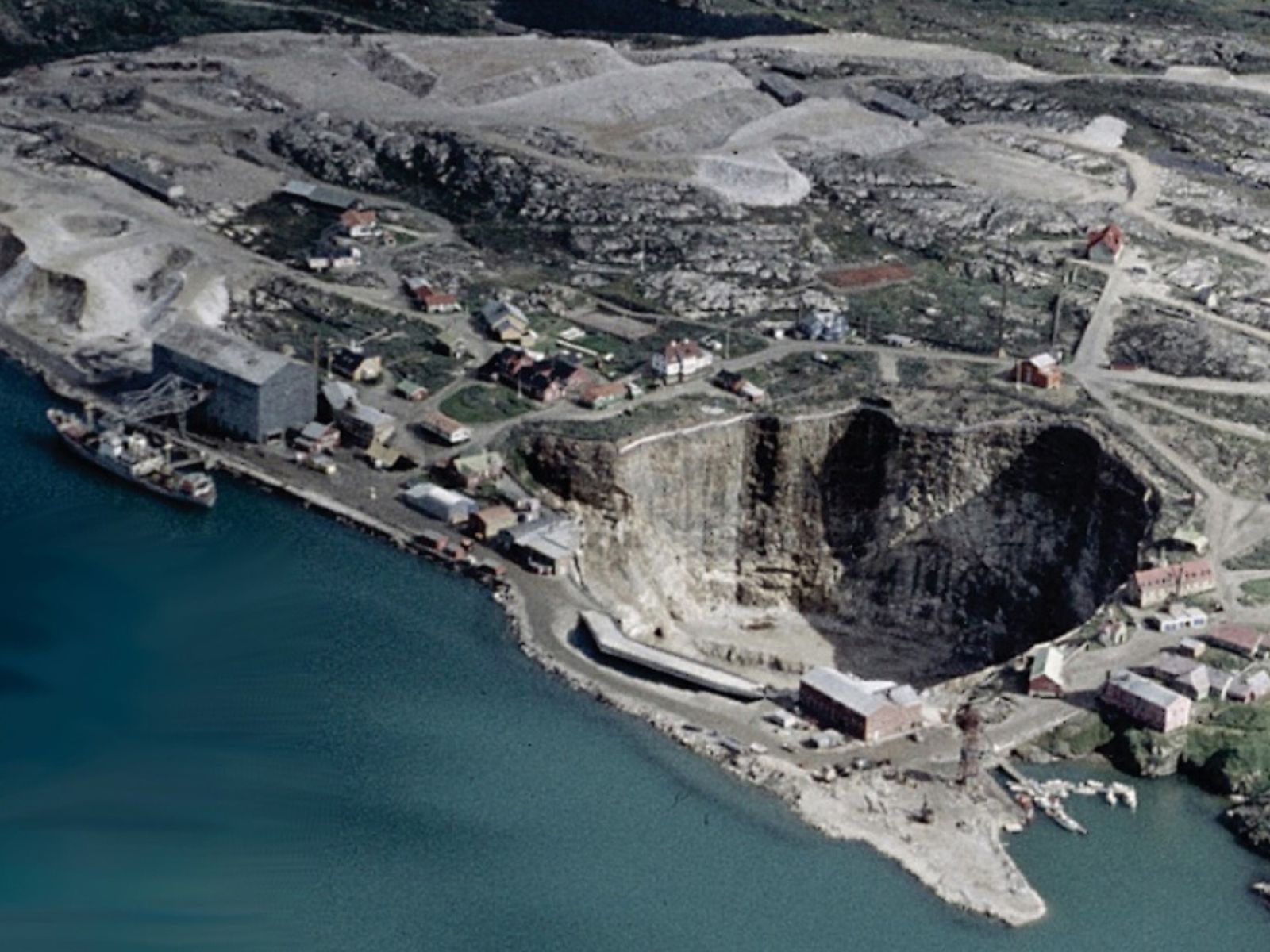
I studied what data is available on Greenland. It turns out that in the southern part of the island, in a relatively small ice-free land area, lie uniquely large rare earth deposits. One of them, Kvanefjeld near the town of Narsaq, is considered the third-largest rare earth deposit on the planet. The ore bodies of Kvanefjeld contain a whole range of rare earth metals (neodymium, terbium, dysprosium, etc.), as well as significant associated reserves of uranium and zinc.
And this is just one deposit! Nearby, there are others. For instance, Tanbreez — also located nearby — already has preliminary estimates indicating colossal amounts of rare earth elements. Interestingly, Tanbreez is particularly rich in heavy rare earth elements, whose value is higher due to their scarcity in the market. Apart from these giants, other rare metals necessary for the transition to the 'green' economy have been found in Greenland’s depths: large resources of graphite (for EV batteries), cobalt, copper, nickel, platinum, and more. According to a recent study, the island hosts 25 out of 34 types of critical minerals recognized by the European Union as essential for industry.
Now do you understand why the USA has started actively insisting on annexing Greenland and making it a new state? As early as the start of the Cold War, in 1946, the USA secretly offered Denmark to buy the island for 100 million dollars. But the motive then was military strategy (establishing bases against the USSR). Things have since changed; the motives are now solely economic — understanding that Greenland is a true treasure trove in terms of rare earth elements.
In 2019, President Donald Trump tried to buy Greenland. But nothing came of it! Already, a new U.S. administration in 2020 opened a consulate in Nuuk, Greenland's capital, for the first time in several decades, and allocated grants for development projects. As you understood, these 'development projects' mainly concerned geological explorations. High-ranking delegations started flocking to Greenland: according to media reports, Biden administration representatives visited in 2023, persuading local authorities and businesses to accept Western investments instead of Chinese ones.
In March 2025, after Donald Trump's return to power, there began an increase in exertion of force and threats towards Greenland. Trump stated that this would benefit Denmark and the island itself; otherwise, Greenland risks 'falling under the control of China or Russia' — that the local 'defense consists of just two dog sled teams.' After Greenland and Denmark's refusal to cede the island, Trump declared: 'One way or another, the island will be ours.'
It is not yet known what will happen next, but the USA does not plan to step back. In fact, Washington views the development of Greenland’s resources as part of ensuring its own national security.
President Donald Trump is not wrong when he mentions China. For China, which dominates the rare metal market, Greenland has long been of dual interest — it is a resource source and a key point in the Arctic. I have mentioned this before: as early as 2018, Beijing officially announced its Arctic strategy and referred to itself as a 'near-Arctic state' — those interested in China's geographic location should open a map and see that it is not even close to the Arctic. Nonetheless, this did not stop China from proclaiming the concept of the 'Polar Silk Road.' Under this strategy, China seeks to strengthen its presence in polar latitudes through scientific expeditions, infrastructure projects, and resource extraction. Greenland, being the largest landmass in the Arctic, naturally caught Beijing's attention.

Over recent years, Chinese companies have actively tried to enter the Greenland market. The most notable player is the state-owned rare earth corporation Shenghe Resources, which in 2016–2018 acquired 12.5% of the Kvanefjeld project shares. Shenghe signed a future agreement for the processing and sale of the site's products, aiming to extract tons of in-demand metals from Greenland. Concurrently, other Chinese firms have shown interest in infrastructure: in 2016, General Nice Group wanted to purchase a decommissioned Danish naval base in Gronnedal, southern Greenland. This old U.S. base was put up for sale, and the Chinese planned to transform it into a logistical hub. But Copenhagen abruptly canceled the deal, deciding to occupy the location itself — essentially vetoing it on security grounds. As a source in the Danish government admitted, 'Denmark cannot allow two superpowers to play hide-and-seek on Greenland territory. The US would hardly be pleased if China obtained a foothold there.'
Despite attempts to enter Greenland and gain control of rare earth resources, the Chinese are actively being 'ousted' from there. Over the past decade, China has invested in several mining projects in Greenland, but none have yet transitioned into the extraction stage. Projects are stalling, blocked by geopolitical sanctions, and so forth. Nevertheless, China is not abandoning its plans. Greenland continues to feature in Beijing's strategies as a key node of the 'Polar Silk Road.'
Therefore, Donald Trump is undoubtedly correct: if the USA does not take Greenland, it will inevitably fall to other powers, which also aim to take control of rare earth resource deposits.
This was a bit of a political discussion, companions! Using Greenland as an example, I merely illustrate how global interests are clashing over the extraction of rare earths and what will happen to all the other untouched wild corners of nature on the planet. They will really be torn apart. Hence all these large-scale bills reducing the protected status of reserves. In Russia alone, a bill on clear-cutting protected mountain forests is being adopted, a law on clear-cutting around Lake Baikal was passed, and now an 'urgent-urgent' bill has been launched, which would practically allow the 'development' of any SPNAs (Specially Protected Natural Areas) of the country.
Guess why?
Using Greenland as an example. The island’s arctic ecosystem is extremely vulnerable; a large part of Greenland is tundra, coastal waters, and icy fjords inhabited by walruses, seals, whales, and sea birds. Untouched corners of wildlife, where humans have not yet reached with large-scale 'development.'

For local Inuit, nature is the basis of traditional lifestyle and sustenance. The start of industrial rare earth mining threatens serious ecological consequences. The primary danger is waste from ore processing, the so-called tailings. In the case of Kvanefjeld, it was planned to open pit develop the mountain with subsequent chemical leaching of rare earth concentrates. This would mean mountains of pulverized rock impregnated with reagents, part of which is radioactive due to uranium impurities. Residents of Narsaq feared that toxic tailings would enter drinking water, local sheep pastures, and the sea. Dust from tailing storage could spread by wind across the region. Greenland already had negative experiences: several lead and zinc deposits developed in the 1970s were abandoned without proper reclamation, and 50 years later, increased lead and other toxins are still found in fish, mussels, and algae. Thus, pollution can be long-term, practically irreversible. Around Narsaq, the sea is rich in fish, seals, and whales — it's a food base for hundreds of hunter and fisher families. The prospect of losing these resources for a mine is unacceptable for many, as you understand.

In general, Greenland, as one of the most sacred untouched sites of wild nature on the planet, is targeted to become a global mine. And whoever gains control can maintain leadership in the fourth technological revolution, providing for the transition of its economy to digital capitalism.
Donald Trump’s words that Greenland risks 'falling under the control of China or Russia' are false. The scuffle over the island is mainly only with China, which is pursuing its 'soft power policy.' Meanwhile, Russia has many rare earth reserves, moreover, previously we have also imported raw materials from China (up to 98% of rare earth imports). We did not extract them ourselves. Now the Russian government plans to start extracting and processing rare earth resources independently!
In 2021, the authorities approved a 'roadmap' for increasing REE production by 2030, including the development of deposits on the Kola Peninsula, in the Irkutsk Region, and others. Russian geologists assure that the country's real reserves are much greater than official ones – up to 28.5 million tons of REE (considering all resource categories). Moscow’s main goal is self-sufficiency and the cessation of dependency on China in this area.
This is the problem: a paradox, but to transition the world to 'green energy' and global digitalization — the last refuges of wildlife on the planet must be destroyed.
Now, at the end of this material, comrades, ask yourselves the question: where does China get so many rare earth resources? And how did it become the leader in this field?
Let’s prepare the second part of this material, where I will tell you about rare earth resource extraction in China and what had to be sacrificed for market monopoly. I think it is necessary to understand what states are willing to do.
© PAVEL PASHKOV
Support the fight!
The hardest thing in our time is to remain independent from government and business! All activities are carried out independently. Stand with us and support our Mission to protect wildlife.
I want to support!Get involved
On an ongoing basis, we launch public initiatives together to protect wildlife and achieve real change. Join this work and help change the world for the better.
Explore the initiativesTFET Concept
We are working to transform the global protected-area system — Territories of Full Ecological Tranquility (TFET) must be created. Wildlife needs refuges from human pressure! This is one of the key paths out of the planetary ecological crisis and toward preventing further ecosystem collapse.
Learn more
