TFET Concept / 6 of 10
Part 5. Kamchatka Refuge
Contents
- Introduction
- Part 1. Environmental problems and scientific justification
- Part 2. The inefficiency of the existing nature reserve system
- Part 3. Ecological Revolution
- Part 4. The essence of the Concept of TFET
- Part 5. Kamchatka Refuge
- Part 6. TFET Economy
- Part 7. International cooperation and the TFET Union
- Part 8. TFET - A necessity for all humanity
- Appendices
I will illustrate an example of how the plan to protect Earth’s biosphere could be implemented using a real region that should already be designated as a Territory of Full Ecological Tranquility. Instead, we are witnessing the accelerating exploitation of this wildlife refuge and even greater pressure from human activity.
I am referring to the Kamchatka region of the Russian Federation.
Kamchatka is a peninsula in eastern Russia, within the Far Eastern Federal District. It is bordered by the Pacific Ocean to the east and the Sea of Okhotsk to the west. The peninsula covers approximately 270,000 km². As of 2023, the population of Kamchatka Krai was only around 300,000 people, the overwhelming majority of whom live in the regional administrative center, the city of Petropavlovsk-Kamchatsky.
The peninsula stretches 1,250 km from north to south. This region is known throughout the world for its unique natural environment: volcanoes, hot springs, and exceptionally rich flora and fauna.
From the perspective of Earth’s biosphere, Kamchatka is a wildlife refuge of global importance. Scientific terminology includes the concept of a “refugium” — a place from which biological systems may recover in the future. In other words, if abnormal catastrophes occur around the world, nature may later begin to regenerate from these centers of recovery.
But what if the greatest catastrophe on the planet today is humanity itself? What if people are consciously seeking to “develop” and exploit wildlife refuges?
Kamchatka is precisely the kind of refuge whose protection should be a priority for the entire world and for Earth’s biosphere as a whole.
The human population here is low, which allows ecosystems to recover and maintain the necessary balance.
The terrain is difficult to access, creating the conditions required to maintain a high level of biodiversity.
Kamchatka is surrounded by ocean waters, making it possible to create refuges not only for terrestrial flora and fauna, but also for marine and coastal ecosystems.
Very few regions like this remain in the world. Almost everything else that humanity has been able to reach has already been destroyed.
Unfortunately, however, the Kamchatka region is facing growing pressure and openly reflects the predatory interests of large businesses.
I will try to explain this in detail.
Several years ago, the authorities in Kamchatka officially removed all limits on the killing of wolves, even though wolves serve essential ecological functions and help maintain the health of natural systems. According to the authorities, fewer than 200 wolves remained in the region, but even this number was considered excessive, and unlimited killing was authorized by any available means. The authorities also announced a reward of several hundred dollars for every wolf killed, encouraging hunters to destroy as many predators as possible.
A major public scandal followed. I personally spoke out in defense of the wolves and attempted to defend their right to live. I also proposed using modern technologies, based on international experience, to track predators and prevent conflicts with people through humane methods. Such technologies are already being successfully used in many regions of the world.
The issue generated a strong public response, and my initiative received broad support. Soon afterward, the Minister of Natural Resources of Kamchatka issued a public response in which he attempted to ridicule the idea of using modern technology. To him, it appeared to be something unimaginable and nonexistent. In other words, the person responsible for managing the natural environment of an entire region had no understanding of the technologies that already exist and are being used to protect wildlife. He knew nothing beyond the crude killing of animals.
At the same time, speaking on behalf of the state, the Minister expressed confidence that wolves must continue to be killed and stated that the killings would not stop.
This demonstrates a deeply flawed system of governance trapped in appalling archaic thinking and incapable of recognizing or understanding global ecological problems.
After the scandal involving the wolves, I personally traveled to Kamchatka and studied the location of protected areas, as well as the human impact on this wildlife refuge.
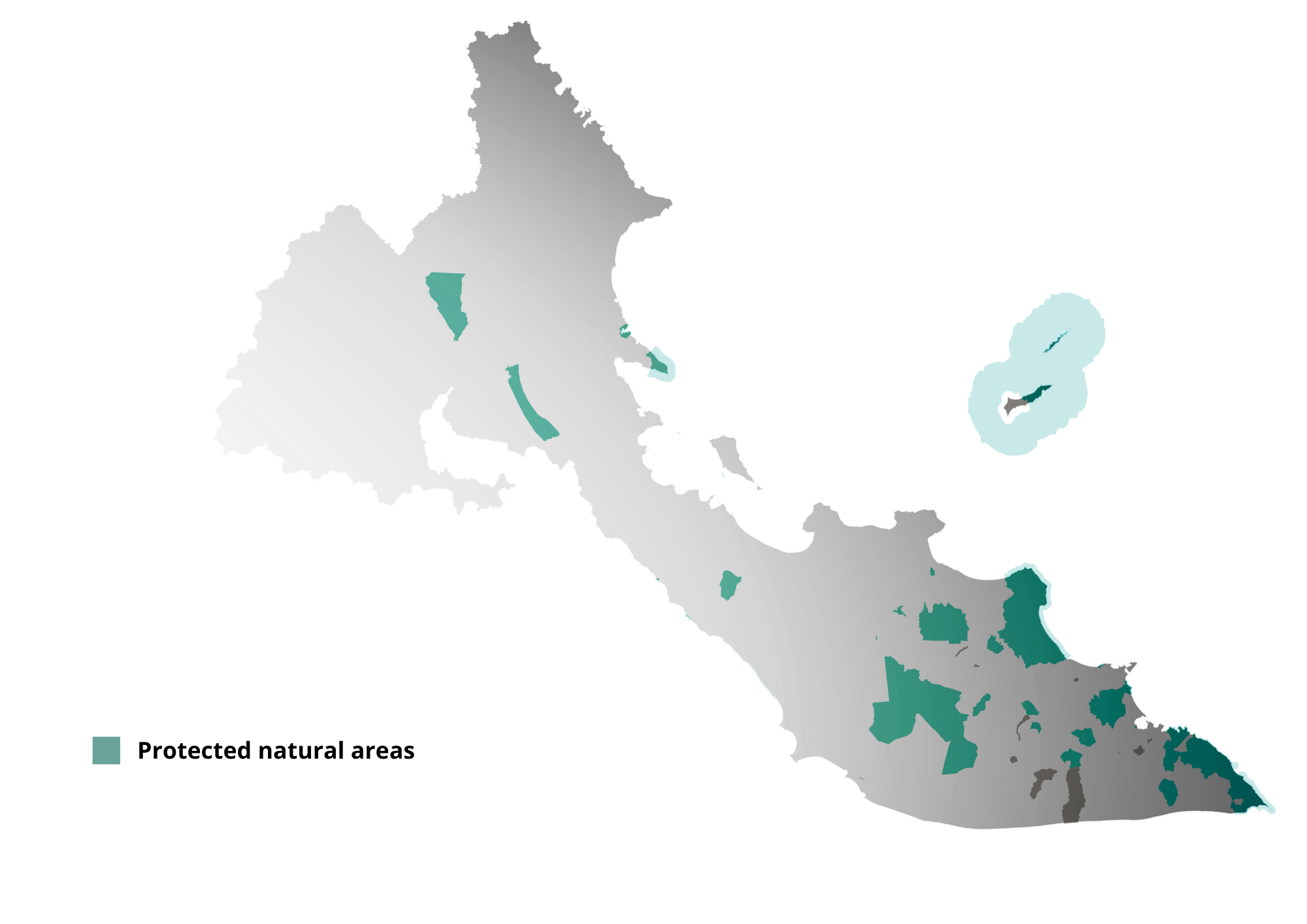
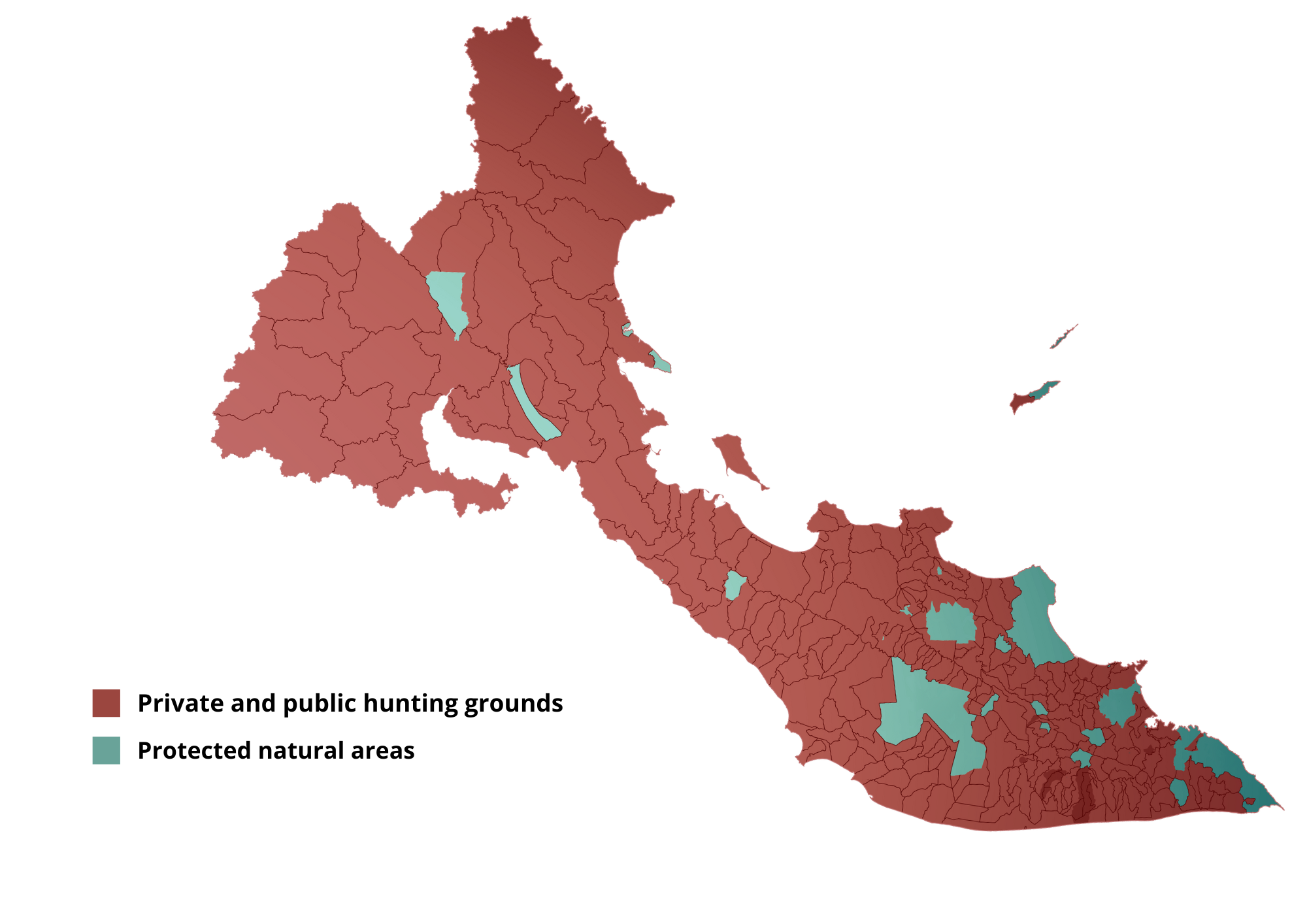
And this is what I saw. Specifically for the Concept of Territories of Full Ecological Tranquility, we prepared maps. Let us examine them together.
First figure.
Here are the existing reserves of Kamchatka, that is, the areas protected by the state in one way or another.
Second figure.
Now look at where the hunting grounds are located. The entire territory of Kamchatka — a wildlife refuge — has been divided into hunting areas, the overwhelming majority of which are privately controlled. In other words, the land is leased to large businesses for the organization of an industry of paid killing.
I began examining the problem more closely. And this is what I discovered!
For several years, the authorities of the Kamchatka region have pursued a policy of developing the paid-killing industry. They even created a mobile application for hunters who travel here from around the world to kill wild animals in their refuges.
The nature reserves located here are literally surrounded by the hunting industry. These animals are not being killed for food or out of urgent necessity — this is about serving the interests of hunters from around the world who call killing a “sport” and fly here to shoot living targets and receive trophies as rewards.
This is happening despite the fact that the same approach has already produced disastrous results in different parts of the world that chose to build their economies around killing wild animals. Consider African countries, where competition continues to attract people seeking opportunities to kill animals through trophy hunting.
What people call tradition is simply “killing for the sake of killing.” Traveling to a distant country, booking a “hunting tour for the white sahib,” killing rare animals, and taking a trophy home in order to assert oneself and display a private collection of wild animal body parts.
At the time of the European colonization of Africa, approximately 20 million elephants lived freely across the continent’s open landscapes. They were deeply integrated into local ecosystems and performed essential biological functions. These elephants were then slaughtered on a massive scale, and today only around 400,000 remain across the entire continent — approximately 2% of the original population.
Yet even this number seems excessive to some people. For example, in 2024, when Germany was considering legislation to restrict the import of hunting trophies, the president of Botswana threatened to send 20,000 elephants to Germany, claiming that these animals urgently needed to be killed because they posed a threat to agriculture.
A further precedent was set in 2024, when several African countries announced that animals would be killed inside protected areas, butchered, and used to feed local residents. Namibia made the first announcement, followed by Zimbabwe. In other words, under the pretext of humanitarian necessity, governments began killing animals within protected natural territories.
This creates an opportunity to organize legal wildlife safaris, generating additional profit. Nevertheless, sport hunting in Africa is gradually declining: there are fewer animals, while the risks and difficulties continue to increase. New dangerous diseases have emerged, the geopolitical situation is becoming more complicated, and military conflicts and social problems are intensifying.
At the same time, Russian regions have begun developing hunting tourism, attempting to attract hunters who want to kill animals in the boreal forests and offering bears and wolves as trophies.
Kamchatka is confidently taking a leading position, and people are already traveling here from around the world simply to kill animals.
These killings are constantly justified by the supposed need to “regulate animal populations.”
But why is such regulation necessary in a wildlife refuge where almost no people live?
Not far from Kamchatka, on Japan’s Shiretoko Peninsula, scientists observed bears for more than 50 years in an area where hunting is prohibited. Their long-term research revealed the following:
1. Bears approach human settlements exclusively because of hunger, when they are forced to compete with people for resources. When food is scarce, bears search for it near places where humans live.
2. Scientists found no evidence of uncontrolled bear reproduction — their population is regulated by natural biological processes.
Similar scientific conclusions were reached in the Chernobyl Exclusion Zone, from which people were forced to leave following the nuclear power plant disaster on April 26, 1986. Since then, only animals and radiation have remained there.
Scientists found that animal populations, including wolves, had fully recovered, yet no excessive reproduction or threat to other species was observed. An ecosystem without human interference regulates itself through natural processes, maintaining balance and order.
Kamchatka can also become a refuge for wildlife. There is no need to regulate anyone there — nature must simply be left alone! If all economic activity is excluded and all protected areas are united into a single global Territory of Full Ecological Tranquility of worldwide biospheric importance, the peninsula will become a true refuge for wildlife. It will become a center for the future recovery of biological systems.
Proposal for Kamchatka
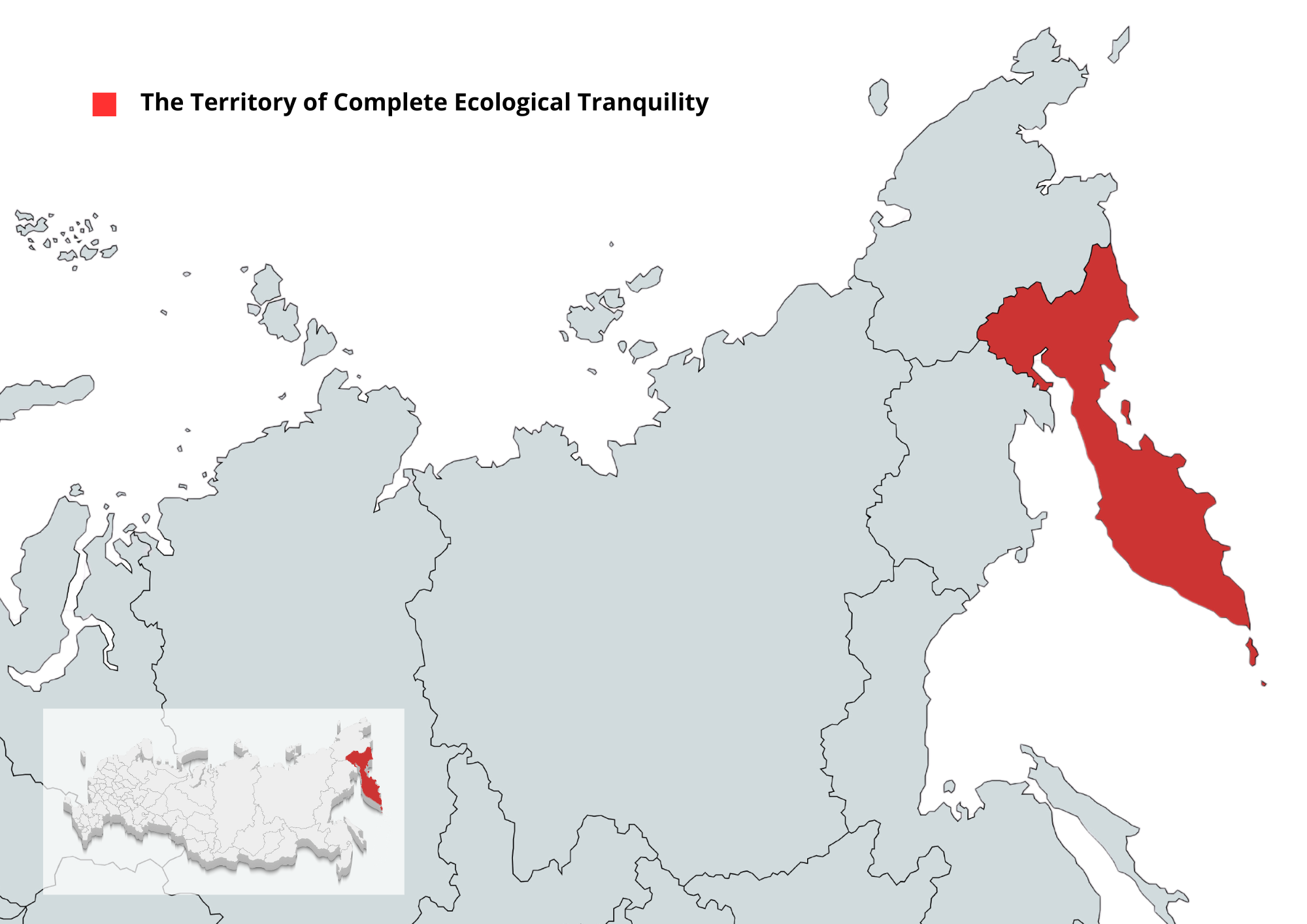
I propose designating the Kamchatka Peninsula as a global Territory of Full Ecological Tranquility, with a complete ban on the industrial development and exploitation of local ecosystems. All economic activity within this territory must be prohibited.
Third figure.
This map shows the proposed boundaries of the Kamchatka Territory of Full Ecological Tranquility (TFET).
It represents one of the potential TFET areas intended to protect the Earth’s biosphere and help prevent the sixth mass extinction of species. Similar territories, selected according to their geographical location and the condition of their biological systems, should be established throughout the world and recognized as areas of international biospheric significance.