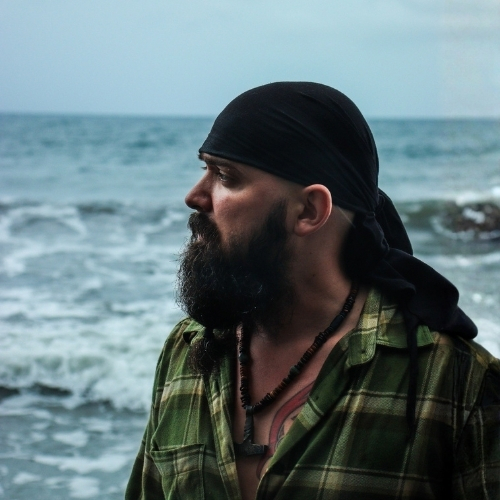
I started my fight for the Russian Taiga simply by witnessing horrifying deforestation during my travels and realizing that I couldn't remain silent. What is happening to Russian forests is wrong. It was only during an expedition to Siberia that I grasped the true scale and complexity of the problem. I became interested in forest restoration—how and what is being done now, and what experiences exist. It turned out that there were remarkable practical examples of such work in the past, while much of what is being done now is often mere imitation and formalities.
I avidly read the books of Russian and Soviet scientist and journalist Leonard Fedorovich Ipatov. It turns out that Siberian cedar had long been successfully introduced (adapted for forest restoration) in the northern regions of Russia. Another remarkable individual, the forester Alexander Adrianovich Vasiliev from Ustyuzhna, initiated large-scale cedar plantings in 1957.
Ipatov’s chapter dedicated to the cedars of Ustyuzhna ended with these words:
"I do not know the current state of the Ustyuzhna cedars. How I wish, in my old age, to once again visit these unique gardens created by the tireless Vologda forester Alexander Adrianovich Vasiliev for grateful descendants!"
And I became inspired to assess the current state of this cedar grove and share such a genuinely positive experience.
We embarked on an expedition to the Russian North. This is the Vologda region, home to the ancient town of Ustyuzhna, first mentioned in the Uglich Chronicle of 1252 under the name "Ustyug-Zhelezny." At that time, metallurgy was just beginning to develop in Russia, and deposits of bog iron ore were discovered near Ustyuzhna.
Very old and kind lands! I love our Russian North.
Here, in the Ustyuzhna region, the introduction of Siberian cedar took place! For me, personal contact is very important—without practical observations and interaction with both ecological problems and the results of nature conservation, it is impossible to gain the necessary experience.


The cedar grove is alive! And there is technological data: how to plant, how to care for it. Most importantly, it is a living example of living trees. Between 1957 and 1988, there was a wave of cedar plantings across various regions of the USSR. Unfortunately, the specifics of the tree were not well understood. The most critical factors were the numerous reforms of the forestry sector and the subsequent dissolution of the state that initiated the national forest restoration program, which included the introduction of cedar.
Very little remains.
The tree requires not only planting but also subsequent care. The lifespan of cedar spans hundreds of years, and its care and monitoring require decades. The Ustyuzhna grove is the most preserved and successful.


Yet even here, it is evident that maintenance ceased at some point. The cedars are overcrowded. It was likely planned to thin them after several years, but this was not done. Nonetheless, in the second quarter of the Zalesky forestry district, in the Sokulovo tract near the ancient Russian town of Ustyuzhna, anyone today can walk among the cedars, touch their trunks, and smell their fragrance. These are fertile cedars! Their fruiting began in 1981. At the age of 22, their yield was 8–9 kg per hectare. Even a small miracle occurred: cedar birds appeared, which had never been seen here before, 850 km from the Siberian cedar's natural range. This once again demonstrates that the forest is a holistic living organism, self-regulating with numerous connections.
What is happening now with logging? After a felling area is cleared (if it is cleared!), an act is signed: all "measures to promote natural forest restoration" have been completed. Farewell. Then everything overgrows with aspen and birch. These fast-growing trees suppress even the existing natural regrowth of pine or spruce.
Thinning of young deciduous growth should then take place over 10 or 20 years. In the same Ustyuzhna grove, there was a Soviet-era practice where the local population was involved. People were allowed to mow grass in the forest plot and harvest young growth for firewood and household needs. These necessary thinning measures were carried out by their efforts. Now, there is no such practice, no methods. Forest biogeocenosis must be consciously formed under human control. Since we intervene so drastically in the ecosystem, massively destroying the "spinal column" of the forest's living organism, it cannot fully recover on its own afterward.
There is a concept: "city-forming enterprise." Similarly, there are "forest-forming trees." The most fantastic of these is our Russian Siberian cedar. And it grows successfully not only in Siberia but also in the conditions of the Northern Russian Taiga. Verified. Proven by experience. During my expedition to the Russian North, I saw it all myself, touched it with my hands. This experience cannot be forgotten; it must be used for the benefit of Russian forests.


The most interesting thing is that the experience of introducing Siberian cedar into the conditions of the northeastern European Taiga is even longer. Cedars were planted by monks near monasteries. They considered it a sacred tree. The Korjazhma monastery cedar grove in the Arkhangelsk region is well-known. One of the oldest, according to scientists, is the Tolga Monastery cedar grove, located 8 km from Yaroslavl. It was planted back in the 16th century. In the 18th century, monks in southern Karelia also cultivated cedar; there are cedars on Valaam.
So, friends, this is our sacred Russian tree—the cedar. According to modern scientific definitions, it is a forest-forming tree. This does not negate but rather explains the sacredness of the cedar.
Today, there is no national forest restoration program in Russia. Such a program began to emerge during the Soviet Union. "Fragments" of it can still be touched by hand. In the Russian Empire, the foresters of that era did remarkable work, and living "fragments" of it still remain. For now, at least.
And every time, only fragments.
Today, the Russian Taiga is ruthlessly exploited, and no officials even try to assess its biological condition! Only the volume of timber that can be cut and sold is evaluated. In 2006, new forestry legislation was passed, ultimately transferring the Russian Taiga into private hands for exploitation.
It turns out that since 2006, the authorities have been diligently trying to establish long-term leasing of forest plots, shifting the responsibility for forest restoration onto lessees, while "optimizing" (in other words, drastically reducing) the state forest protection services.
Many years ago, I did not believe that a businessperson would voluntarily engage in quality forest restoration. It’s long and expensive! Today, it has become evident: businesses not only avoid taking care of forests but also actively devise "grey" schemes to increase the destruction of the Russian Taiga.
Our cedar is under threat, first on the list. First, cedar nuts are harvested to the last, depriving animals of their food supply, and then the trees are completely cut down. Cedarwood fetches a high price on the market, being one of the most "premium" types in our country.
I saw such businesspeople in Siberia and the Far East. They justify this approach with their economic problems. They lease a forest plot, first illegally collecting cedar cones using mechanical devices that turn trees into horrifying blood-resin-covered sights, and then the cedar stops fruiting for 4–6 years. What next? Wait without profit for this time? Of course not! They cut down the cedar forests and lease another plot. They repeat the same scheme there.
The Russian Taiga itself remains silent. It dies standing under powerful saws, just as it once did under the axes of woodcutters. Only now, the scale has increased hundreds of times and continues to grow. While there are lobbyists for business interests in power, the Russian Taiga has no lobbyists in parliament. There are only us, ordinary people. We must not allow the problem of deforestation to be silenced. We must not let it "fade into the shadows." We must gather any surviving experience of forest restoration and new developments. Together, raising our voices in defense of the Russian Taiga, we must form a public demand for the creation of a national program to preserve our forests.
And let us not forget the true national tree of Russia—the cedar. Cedars were planted by the monks of the ancient northern monasteries of Russia. It is still alive today, the positive experience of Soviet foresters. Will there truly be no continuation for the sacred Russian tree, the cedar, in the days to come?!
Recommended reading:
- The Russian Taiga was cleared of cedar cones: systemic loss of functions
- The Battle for Cedar Nuts: Migrants Plundering the Siberian Taiga?
© PAVEL PASHKOV
Support the fight!
The hardest thing in our time is to remain independent from government and business! All activities are carried out independently. Stand with us and support our Mission to protect wildlife.
I want to support!Get involved
On an ongoing basis, we launch public initiatives together to protect wildlife and achieve real change. Join this work and help change the world for the better.
Explore the initiativesTFET Concept
We are working to transform the global protected-area system — Territories of Full Ecological Tranquility (TFET) must be created. Wildlife needs refuges from human pressure! This is one of the key paths out of the planetary ecological crisis and toward preventing further ecosystem collapse.
Learn more
