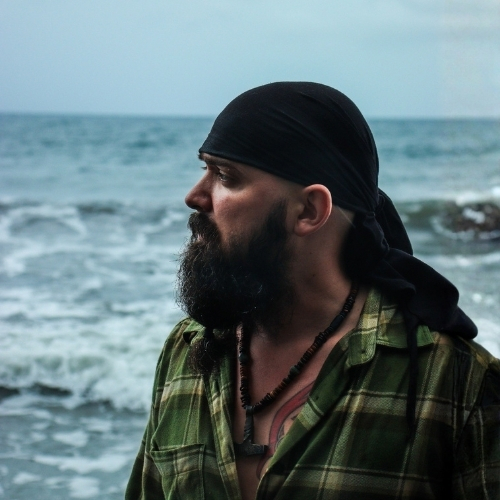
We are already witnessing the migration of the wealthy class to the last wildlife refuges—these territories, where humans have not yet destroyed everything, are now becoming a 'gold mine.' Both states and affluent individuals who have the means to move to the distant frontiers of biological refuges understand this.
I have been studying data from our country and have obtained analytical data from other countries around the world—I think we all, comrades, correctly assess that soon states will rush to find a way out of the planetary crisis, as environmental problems have become global. But the problem is that before this happens, there will first be an exodus of the wealthy population to biological refuges. No one wants to suffocate alongside ordinary people, coughing up their lungs in dusty cities.
What I see now:
States and corporations have rushed to monopolize water resources. Water will soon become as precious a resource as oil, gold, and rare earth elements. Let me remind you that colossal volumes of clean water are needed just to support data centers for artificial intelligence. But while this is being discussed, the impending food catastrophe is being hushed up: industrial agriculture will soon be left without water.
- The migration of wealthy individuals to hidden wildlife refuges has begun, preserved ecosystem areas that serve as refuges and points of self-restoration for biogeocenoses.
Now look at some facts.
In 2024, according to the UN, over 2.2 billion people worldwide lacked access to organized drinking water supply, and about half of the Earth's population already experiences severe water shortages for at least part of the year.
Consider the scale of this!
And where is our water?
That's right, clean sources are typically found in mountain ecosystems, which serve as the "water towers" for entire regions. In Central Asia, for example, this includes the Tien Shan and Pamir mountains, extending to the Tibetan ranges, and in Russia, of course, regions like Baikal, Altai, and the Caucasus.
Currently, the Altai Republic is bursting with people; everyone is flocking there. The average price per square meter of new buildings has increased 7.1 times from 2015 to 2025 — approximately from 34,000 to 243,000 rubles, according to the Unified Resource of Developers (ERZ). Oligarchs are also heading there. For instance, I think everyone knows that Sberbank has already invested over 200 billion rubles in the development of the "Manzherok" resort in the Altai Republic. Practically all influential wealthy groups are now dividing their interests there.
The same goes for Baikal. Recall the adoption of the bill on deforestation and the transfer of lands into the hands of big business. Baikal was included in the federal project "Five Seas and Lake Baikal" with a preliminary estimate of private investments alone at about 1.5 trillion rubles. Again: PRIVATE investments, paid by oligarchs, the wealthy class. Additionally, about 300 billion more is needed for infrastructure.
There is a real migration of the wealthy class to places where there is clean water and the possibility to still live normally. Soon, ordinary citizens will not be able to afford this under any circumstances — it will become simply impossible.
In our cities, the last trees are being cut down, while the initiators of such 'improvements' are moving their capital to the last refuges of wild nature.
Regarding clean water, I came across data from the Pacific Institute from November 2025. They reported 420 cases of violence related to water resources in 2024—almost 20% more than in 2023, and 78% more than in 2022. This isn't about conflicts over a bottle of water, but a broad range of incidents, including attacks on water pipelines and hydraulic structures during existing armed conflicts.
Moreover, competition on a global scale has begun to develop simultaneously on all fronts: countries have started to clash over control of river headwaters, and conflicts are already beginning over who will control, for example, international rivers. Large agricultural corporations are seeking territories where they can still purchase and urgently monopolize groundwater. Simultaneously, projects are being discussed to alter river flow in the interests of major energy companies, while the real remaining refuges of wild nature have become centers of redistribution among the wealthy.
A similar situation with water exists in our country. Why are there so many conflicts around Baikal, and why was the bill to begin its development accepted with such greed despite scientists' warnings? Why? What's so valuable there?
Water and biological refuge. These territories are being effectively appropriated—capital is flowing there at a furious pace.
See for yourself.
In 2015, the extraction of deep water from Baikal was about 85.52 million liters. But by 2024, water extraction had almost doubled—to 164.37 million liters. And the growth continues.
These data are officially presented in the state report by the Russian Ministry of Natural Resources on the condition of Baikal for 2024. Remember the uproar a few years ago when the Chinese wanted to build a plant on Baikal to extract water for export to China? At the time, I wrote that what we were really witnessing was a scramble for these territories—Russian oligarchs openly declared their claims on Baikal's ecosystems.
Let me remind those who have forgotten.
There were two scandals.
In March 2017, Chinese specialists proposed building a pipeline approximately 1,000 km long to transfer Baikal water to the arid province of Gansu, near the city of Lanzhou. Later, in February-March 2019, a massive scandal erupted around a Chinese plant in Kultuk, when the company AquaSib, primarily owned by the Chinese Daqing Water Company 'Lake Baikal,' began constructing a plant to bottle Baikal water.
The Chinese were among the first to understand that the resource of the future is water and clean territories. Remember, they are currently conducting extensive ecological exploration in Central Asian countries and are actively eyeing the Tian Shan territories, the water tower of the entire region. This is literally one of the most valuable refuges on the planet. The Chinese government is spending huge amounts on scientific research there and data collection, be sure to study this in separate materials.
Do not think that the Chinese government is doing this out of sheer wisdom. They first devastated their own lands, pushed everything to the brink, and are now seeking a way out of the crisis: only this year was the Environmental Code adopted, earlier they announced strict 'red ecological lines' and have already declared plans to transition to an 'ecological civilization.'
Read about it here: https://pavel-pashkov.ru/articles/en/environmental-code
And additionally on Tian Shan: https://pavel-pashkov.ru/articles/en/chinese-tian-shan
So, Baikal has become the center of a redistribution among influential groups of wealthy clans. And this is just the beginning of what is happening. If China is currently eyeing the territories of neighboring states, it will never forget the grievance over Baikal.
When the Chinese were pushed out, Russian oligarchs quickly showed their interests. In March 2019, Forbes published a major investigation. "Water from Deripaska. The billionaire's structures are launching a new business on Baikal." It was precisely in that year when the Chinese were being pushed out, and it actively seemed that society was handling it, protecting the lake. But in reality, society was simply being used to push out some in favor of others, all with the same goal of subsequent monopolization of the wild nature sanctuary.
In short, in January 2019, a production company "Baikal Aqua" was registered, and in February, a trading company of the same name. 99% of the capital of each company belonged to a subsidiary of the Irkutsk Electric Grid Company (IESC). According to "Kommersant," Deripaska's structures previously had informal influence over IESC. Forbes also reported on the acquisition by structures close to Deripaska of the water producer "Legend of Baikal." The possible cost of the deal was estimated by the magazine's source at approximately 150 million rubles.
Thus, the scale of interests can be assessed.
Simultaneously, other oligarchs were entering the redistribution at Baikal. For instance, Viktor Vekselberg took a stake in one of the leaders of the Baikal water market. And this was in the same 2019 when the Chinese were being squeezed out. His group "Renova" was a co-owner of Baikalsea Company ("Baikalsea"), a producer of water under the Baikal430 brand, until 2019.
Thus, at that time, two business groups controlled almost half of the water sales from Baikal. There is still a lot of data on Baikal, and the struggle over the lake is intense, with everyone tearing it apart in all directions. Everyone wants a piece.
For instance, on January 19, 2021, En+ Group and the state corporation VEB.RF signed a memorandum of strategic partnership for the development of Baikalsk. It was planned to create an International Water Resources Center with scientific, tourist, and industrial facilities on the site of the former Baikal Pulp and Paper Mill.
But, as you understand, the main interest is pure water. Plans were announced to produce up to 1 billion liters of water annually. That is, the planned capacity of the En+ and VEB plant was approximately 6.1 times the total actual intake of deep Baikal water by four accounted enterprises for 2024.
Now all the capital is rushing there. It becomes much clearer why the bill on logging in Baikal and the allocation of land for infrastructure was pushed through so forcefully.
Here, no one hides their interests.
Additionally, tourism in these regions. That is, when large capital enters, all businesses follow — from medium to small, those who can 'fit in' within the biological refuge. Take the Republic of Altai: if in 2015 there were only 1.83 million tourist visits to the region, by 2025 the republic received no less than 2.8 million tourists.
They are now discussing the construction of a gambling zone with a casino, huge sums of money are coming in, and territories are being divided among wealthy capital: who will control what.
Special economic zones are being expanded. For example, in the Altai Territory, investments exceeding 38 billion rubles are already being made in one such zone, 'Turquoise Katun.'
In other regions of the country, where there is still clean water and wildlife, the same is happening. For instance, the development of "Arkhyz" in Karachay-Cherkessia is underway. In February 2025, investors announced 93.3 billion rubles for the expansion of resort areas in the highland territory of the Caucasus.
And in the summer of 2026, the government of Kuzbass published a decree on July 1, 2026, stating that private investment plans for the development of "Sheregesh" had increased more than sixfold. Among the projects are the "Azimut" ski sector at 46.9 billion rubles, a hotel cluster at 63.9 billion, and comprehensive development of undeveloped territory at 61.7 billion. And again, water interests: the strategy includes the construction of a new water intake on the Taenza River.
The scale of what is happening cannot be conveyed in a brief article. But I think it's clear to everyone what's going on: in the coming years, a sharp increase in demand for clean water is expected, and it is being effectively monopolized, while capital migrates to valuable biological refuges and secures itself there.
Those readers who have already tried vacationing this summer, say, at Baikal or in Altai, already understand perfectly well how much it costs and how difficult it is to get there. Gradually, in a changing world, this will become an absolute privilege, and living there will be the domain of the wealthy class.
And this will happen before humanity realizes the scale of the biosphere's destruction, before state systems grasp the scale of the planetary collapse. Or have they already realized it, and before everyone rushes to survive in the remaining areas of living ecosystems, are they deliberately leaving a window for migration there for those with more money and power?
I don't know.
These are thoughts spoken aloud.
I also want to say this.
In the world, the issue of future wars over clean water was primarily recognized by multinational corporations back in 2012–2013. During that time, forecasts about the reduction of water reserves in the future also emerged. For instance, in 2013, a study was published in which scientists calculated the international purchase of agricultural lands with the real aim of controlling water. The authors found that MNCs had already acquired approximately 46.9 million hectares, with a potential volume of surface and groundwater use associated with these territories for agriculture ranging from 11 to 146 billion m³ annually.
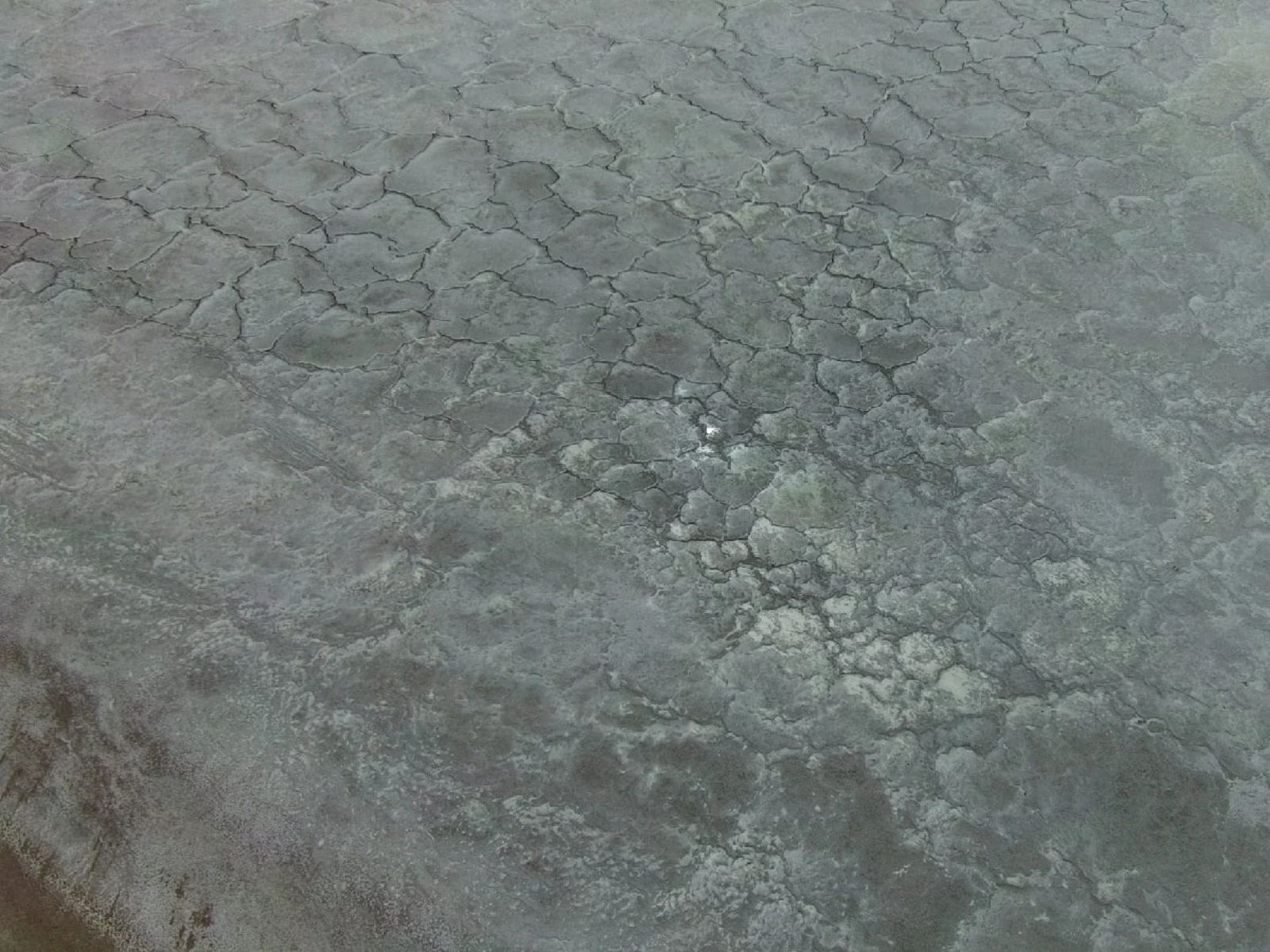
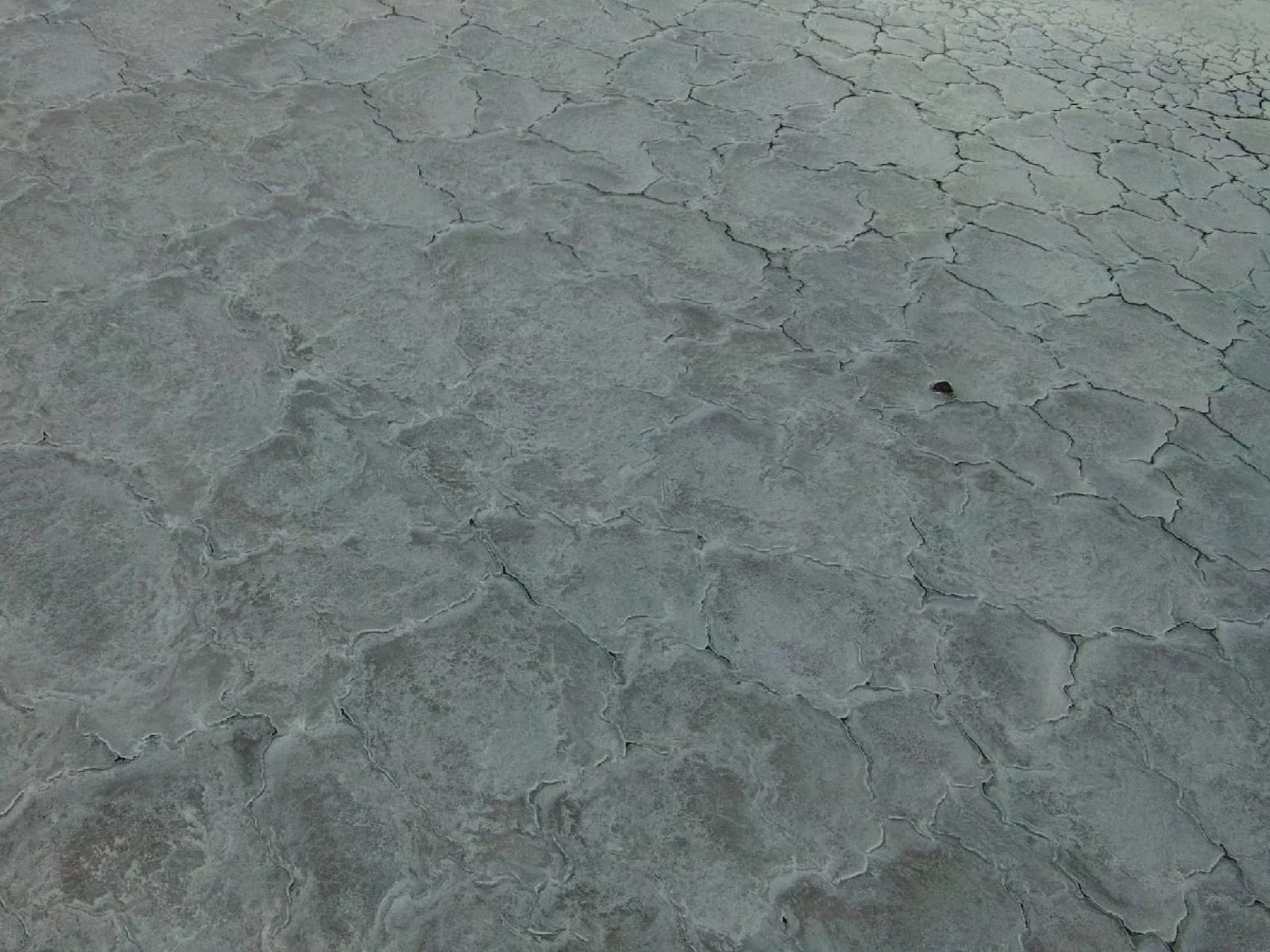
And they see real problems. The data is clear: water is disappearing. For example, only in the United States, from 2000 to 2023, according to a study by the U.S. Geological Survey, the combined water reserves in the two largest reservoirs of the system — Mead and Powell — decreased by 41.3 billion m³. The Colorado River Basin provides water resources to over 40 million people in the U.S. and Mexico.
Should we mention the recent military conflict between India and Pakistan: water is also at the center of interests there. On April 23, 2025, India announced the suspension of the Indus Waters Treaty of 1960 on its part. This concerns a river system on which a significant part of Pakistan's agriculture depends.
Meanwhile, in July 2025, China began constructing a hydroelectric cascade in Tibet for $167.8 billion on the lower reaches of the Yarlung Tsangpo in the Tibet Autonomous Region. Downstream, this river is called the Brahmaputra and flows through India and Bangladesh.
Or towards the end of the material — Mongolia, which in November 2026 announced plans to build the Egiin Gol hydroelectric power station with a capacity of 315 MW on a tributary of the Selenga. The project directly affects Russia's interests because the Selenga provides a significant part of the river inflow into Baikal.
Now just a few quotes to help you understand where our world is heading. Even long ago, everyone clearly understood where the world was sliding.
"The wars of this century were fought over oil. The wars of the next century will be fought over water—if we do not change the way we manage water resources," — Ismail Serageldin, Vice President of the World Bank, 1995.
"Fierce competition for fresh water could very well become a source of conflicts and wars in the future," — Kofi Annan, UN Secretary-General, March 2001.
"As with oil, the problems arising from the scarcity of a vital resource tend to transcend national borders," — Ban Ki-moon, UN Secretary-General, 2008.
"Are we not moving towards a great world war over water?" — Pope Francis, head of the Roman Catholic Church, February 24, 2017.
"No one can take a drop of Egypt's water. If this happens, the region will face unimaginable instability," — Abdel Fattah el-Sisi, President of Egypt, March 30, 2021.
"For years, wars were fought over oil. Soon, wars will be fought over water," — Kamala Harris, Vice President of the United States, April 5, 2021.
"We have disrupted the water cycle, destroyed ecosystems, and polluted groundwater," — António Guterres, UN Secretary-General, March 22, 2023.
"As water stress intensifies, the risks of local and regional conflicts increase," — Audrey Azoulay, Director-General of UNESCO, March 22, 2024.
According to scientific estimates, by 2050, over 5 billion people worldwide may face water shortages for at least one month each year. The volume of global GDP generated under conditions of water stress will exceed $70 trillion annually. Water reserves are already decreasing in 53% of the large lakes studied worldwide. Scientists analyzed 1,972 lakes and reservoirs from 1992 to 2020. In another study, scientists recorded that in 30% of the aquifer systems studied, the rate of groundwater level decline has accelerated. This meta-study examined 1,693 systems and approximately 170,000 observation wells.
And of course, let me remind you that in January 2026, the United Nations University announced the beginning of the era of 'global water bankruptcy.' According to the report, 75% of humanity already lives in countries classified as water-scarce territories, and we are now witnessing a decline in water levels and the onset of global conflicts.
What madness in the world!
I have long studied the environmental problems of Russia and the world—I firmly believe that we are witnessing the beginning of a large-scale struggle for water, and even now, while people are distracted by political squabbles and social strife, capital is migrating to the hidden refuges of wild nature, and absolute control over sources of clean water is being established. I would not be surprised if, in some time, armed checkpoints are set up around biological refuges of wild nature, where lands have been bought by the wealthy. And laws will be passed stating that this is necessary to preserve untouched corners of wild nature.
When society wakes up—it will be too late.
Water will become a privilege, just like a breath of clean air.
© PAVEL PASHKOV
 The Right to LifeWolves are being killed on a massive scale around the world. In The Right to Life, I investigate this problem. Download and read the book for free.Read for free
Support the fight!
Your support makes it possible for me to continue my independent work. I run these projects independently of government and business. Stand with me and support my mission to protect wildlife.
I want to support!Ancient Forest
I launched an independent project to protect Russia’s forests — an analytical research center focused on the scale of destruction of intact forests, wildfires, and the pressures threatening wildlife populations.
Explore the projectTFET Concept
I believe the global protected-area system must change and Territories of Full Ecological Tranquility (TFET) must be created. Wildlife needs refuges from human pressure! This is one of the key paths out of the planetary ecological crisis and toward preventing further ecosystem collapse.
Learn more