
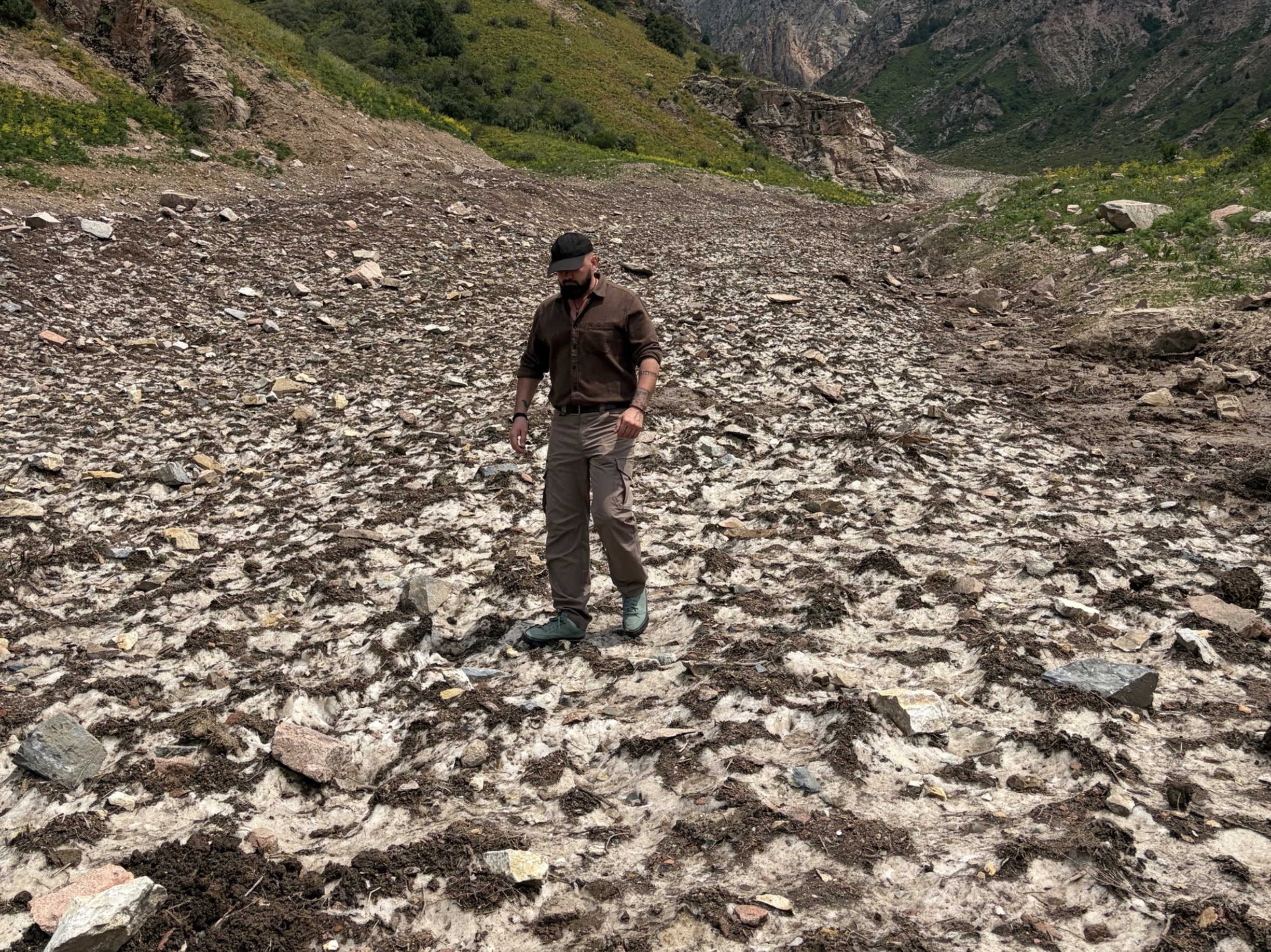
During my current expeditions studying the protected-area system of the Tian Shan and the Pamirs in Central Asia, I have encountered Chinese specialists. They are everywhere. Huge numbers of scientists and research teams are studying the wildlife of one of the planet’s oldest and most important biological refugia. I have not encountered Russian specialists here, and there are practically no scientists from Central Asian countries, but there are enormous numbers of Chinese specialists.
Modern technology, equipment, discipline. At one point, when we climbed up to the glaciers in the high mountains and once again encountered scientists from China, I turned away from my team and discreetly looked at the current political maps of the world: “The borders definitely haven’t changed, right? We’re not in China yet?”
Jokes aside, the Chinese government is now doing what the rest of the world is turning away from. While countries tear each other apart over politics, wage wars, and divide up “virtual worlds,” Chinese scientists, with direct government funding, are studying the value of wildlife refuges. I have not yet encountered research on this scale anywhere else in the world.
After returning from another expedition, the first thing I decided to do was figure out what was going on. I want to share this information with our allies: its scale is truly astonishing.
I will start with the context. The whole world has now rushed into a struggle over rare-earth resources. It turns out that the transition of the existing economy to “green technologies,” electric vehicles, and so on cannot be achieved without industrial reserves of rare elements. In order to extract them from the ground, countries are actually lowering the protection status of wildlife areas and the last remaining nature reserves so that industrial development can begin there.
China, however, knew this in advance. When almost no one was paying attention to rare-earth elements, the Chinese government was already engaged in their extraction and, most importantly, their processing. Back in 1990, the United States was the largest producer, but China was the first to understand that the strategic value lies not simply in possessing a deposit, but in controlling the entire chain. That means resource exploration, extraction, separation, refining, and the final technologies required to produce the necessary materials. It was then, in 1992, that Deng Xiaoping said:
“The Middle East has oil; China has rare earths.”
And now look at the result: by 2010, China accounted for more than 95% of global rare-earth mineral production. Later, when the rest of the world finally understood the future importance of these resources, other countries began rapidly trying to build “rare-earth sovereignty,” but China maintains such powerful control that even in 2024, for example, it accounted for around 60% of mining of magnet rare-earth elements, 91% of their processing, and 94% of the production of sintered permanent magnets.
I think the scale is clear to everyone. Now look at what comes next: in recent years, the Chinese government has begun deploying massive programs to study the wildlife of the Tian Shan — one of the planet’s most important and ancient biological refuges. The Tian Shan is one of the natural fortresses of Eurasia. Its mountain ranges stretch almost 2,500 km from west to east, beginning near the Kyzylkum Desert in Uzbekistan, passing through Kazakhstan and Kyrgyzstan, crossing all of Xinjiang, and ending near the Xingxingxia area of Hami in eastern China. In some places the mountain system expands to a width of as much as 800 km, although its average width is around 250–350 km.
It is extremely important for me to study the Tian Shan now in order to prepare the boundaries of future Territories of Full Ecological Tranquility (TFET) and push for changes to the existing protected-area system. At this very same moment, the Chinese government is conducting some of the largest scientific studies ever undertaken in this isolated mountain system of Earth.
I have written before about refugia — historically complex ecosystems that allow enormous numbers of living organisms to survive extinction during catastrophes. And if everything around them is destroyed, it is from these refugia that life can later begin to recover and expand again. In the context of the Tian Shan, just imagine it: deserts and semi-deserts press against these mighty mountains, while within the mountain ranges there are ancient glaciers, rivers, coniferous forests, juniper woodlands, wild fruit forests, steppes, alpine meadows, and high-mountain ecosystems. This is precisely why these mountains function as a system of refuges, numerous ecological corridors, and isolated centers of evolution.
And if the forests of the Tian Shan are destroyed, the entire planet will suffer an irreparable blow: scientists call these mountains a “genetic bank of humanity.” It is here that an extraordinary concentration of some of the most valuable things ever created over millions of years of evolutionary history has survived: genetic diversity and genetic complexity. In addition, the Tian Shan serves as a kind of “water tower” for all of Central Asia, supplying water that supports the lives of tens of millions of people.
In general, I think I have described the importance of this place sufficiently for everyone to understand what we are talking about in the context of China.
The Chinese government is now deploying and financing large-scale programs to study the natural systems of the Tian Shan. I have examined an enormous amount of data trying to understand what is happening! China’s research is increasingly focused on studying the entire Tian Shan — not merely its Chinese section — as an absolute refugium, a sanctuary. Chinese scientists are studying every source of water, the climate and the entire system of ecological refugia associated with it, measuring and investigating the depth of genetic diversity, sources of genes valuable for breeding, areas exposed to natural hazards, and much more.
China is now doing things that should have been studied and incorporated into the creation of protected territories long ago. At this scale — no one else is doing it.
And we are not talking about individual research projects. This is a genuinely multi-level state research system in which the Chinese Academy of Sciences, the Ministry of Science and Technology, the National Natural Science Foundation of China, the government of the Xinjiang Uyghur Autonomous Region, universities, hydrological agencies, and many other institutions work together. On this foundation, an enormous network of permanent scientific stations has been deployed. This Chinese system integrates glaciers, snow, permafrost, surface water and groundwater, satellite observations, genetics, wild fruit forests, biological collections, and national park planning.
I am only beginning to study the scientific work that has already been completed, and I will use these studies in our work to determine the boundaries of TFET. Who would have thought that China would become our main ally by providing absolutely unprecedented and critically important data on refugia? It is extremely important that the Chinese government is now viewing the Tian Shan specifically as a system of wildlife refugia: isolated humid valleys, cool high-altitude belts, snow-hydrological refuges, and relict forest ecosystems where ancient genetic lineages may have survived.
In neighboring countries such as Kazakhstan and Kyrgyzstan, there are centers studying the wildlife of the Tian Shan. Most of them are representations or programs of major international organizations. There are, for example, fairly serious programs run by the World Bank, UNDP, and others, but I have encountered nothing comparable in scale and depth to the work being carried out by China. Nothing at all.
It seems that the “Chinese dragon,” as always, is slowly but confidently and relentlessly following its vision of the future. And if it previously understood that rare-earth metals needed to be brought under the control of its influence, it is now looking toward something of truly priceless importance for Earth and all humanity — the biological refuges of wildlife.
You see, if you look at the work of international organizations, for example, individual grants may fund research on the snow leopard, a particular forest, or perhaps a glacier. But in the case of China, we are talking about a state machine that simultaneously gathers data on water, genetics, satellite observations, and economic indicators and transforms all of this into information for state planning.
So what is China planning? I do not know; I can only speculate. But having seen their scientists in the mountains of the Tian Shan, I personally see the scale of this research effort. Especially the depth of their involvement in the process.
I will be able to speak about this with greater confidence once I have personally studied all of the research. For now, I invite all of our allies to assess for themselves the scale of the work being carried out by the Chinese government. As far as I have been able to determine, China began building major interests around the Tian Shan in 2010 and over the next 15 years developed the program into something global in scale. The largest studies have been conducted in recent years and are continuing right now.
Look at this.
Beginning in 2010, China started moving beyond its own section of the Tian Shan and created a scientific network across Central Asia. It did this through the Chinese Academy of Sciences and Central Asian organizations. Numerous branches, laboratories, information centers, and joint research networks were established in Almaty, Bishkek, Dushanbe, and other locations throughout Central Asia. During the first phase of this program, 18 Chinese and 26 Central Asian organizations participated, with the Chinese government, through its Academy of Sciences, serving as the initiator that brought them together. Investment even at that stage amounted to $10 million, which at today’s exchange rate is roughly 820 million rubles.
From that moment onward, China began treating the Tian Shan as a single transboundary natural system and involving leading scientists from Kazakhstan, Kyrgyzstan, Tajikistan, and Uzbekistan in its work.
And on the basis of this same work, in June 2026 — literally just recently — China and five CIS countries further strengthened scientific cooperation through a new dialogue mechanism between national research organizations. China’s influence throughout the Tian Shan is being strengthened and expanded.
Between 2015 and 2018, the Chinese Academy of Sciences launched a program to conserve important biological resources of the Tian Shan and search for genetic resources. The research was funded by the government; I found data indicating funding of at least 2 million yuan (around 24 million rubles). The significance is enormous: scientists became interested not merely in species themselves, but specifically in genetics, studying genes associated with resistance to drought, frost, dehydration, and disease.
Between 2016 and 2020, Chinese scientists focused their efforts on saving the relict wild fruit forests of the Tian Shan. I obtained data on project 2016YFC0501500, “Ecological Conservation and Restoration of Degraded Wild Fruit Forests on the Northern Slope of the Tian Shan,” which received 13 million yuan from the state — approximately $1.93 million, or 158.2 million rubles at the current exchange rate. Enormous work was carried out to study the causes of forest decline, pathogens, insect pests, genetic resources, and METHODS OF RESTORATION. This included efforts to combat invasive pests.
The scale of the work is extraordinary. I found data on at least 27 patents, a biological resources database, two germplasm collections, the cultivation of approximately 100,000 plants, 105 hectares of core demonstration sites, and 1,080 hectares of technology implementation zones. In other words, this is a genuinely large-scale system of state ecosystem management.
And then, in 2021, the major turning point begins — the Chinese authorities launch the Third Xinjiang Scientific Expedition. In December 2021, China launched a state megaproject fundamentally different from previous research programs. It includes 29 projects and five major territorial directions; the Ili Basin and the economic belt of the northern slope directly concern the Tian Shan. The Chinese Academy of Sciences described the expedition as a major national science and technology project. MORE THAN ONE HUNDRED UNIVERSITIES AND RESEARCH INSTITUTES participated. Through this work, China effectively began conducting a comprehensive inventory of the region’s natural capital. Twenty-six automatic stations have been established in remote areas, while satellites, UAVs, IoT technologies, digital databases, and field-data collection applications are being used. And the work is not finished — it is only expanding.
I want readers to understand that projects like this are carried out over decades! From 2010 to 2026, in just its first fifteen-year period, China made an enormous leap forward and deployed an extremely powerful system for studying the Tian Shan as a biological refuge of the planet. The work under the Third Xinjiang Scientific Expedition is still ongoing: it was launched in 2021 and continues to this day; for example, only recently they were still holding meetings on expanding and integrating data into the biological resources platform.
At the same time, from 2021 to 2024, the Chinese government again allocated 13.7 million yuan to study the relict wild fruit forests and their biodiversity. I want to examine the scientific papers and research data because this is extremely important specifically in the context of refugia. Chinese scientists are studying the surviving stands of wild apple, pear, apricot, hawthorn, and the organisms associated with them; collecting herbarium and genetic samples; and applying DNA barcoding, phylogenetics, and genomics. These forests are remnants of ancient mesophytic flora that survived major climatic changes in the relatively humid valleys of the western Tian Shan. In other words, China is literally breaking the refugium down into its genetic components: what has survived, where it has survived, how unique each population is, and what adaptive traits it carries.
Does anyone already have any ideas about why the Chinese government is doing this?
In addition, during this same period — the decision was made in 2021, although the work began, as I understand it, in 2022 — a state inventory of all water resources on the northern slope of the Tian Shan began. Tang Qiuhong’s project on water availability and carrying capacity on the northern slope consists of six blocks: glaciers and permafrost; meteorology and hydrology; rivers, lakes, and groundwater; surface-water use; ecological security; and future water-availability scenarios. Note that groundwater is included in the research framework from the very beginning rather than being studied separately!
I was unable to find the total research budget, but according to my estimates, the figures there must be extraordinary. And yet the Chinese authorities allocated this money! There is information on one of the hydrological bureau’s research topics: its limit alone was around 24 million rubles (2 million yuan), and there were many such research topics.
I think the practical meaning is clear to everyone. The Chinese government is trying to understand not simply how much water exists, but how much water could be withdrawn in the future — literally, how much water this biological refuge is capable of providing if the refugium is used for its intended purpose: survival during catastrophes. They are interested in where glaciers recharge groundwater and where the limit of pressure on the entire region lies.
In parallel, the Chinese authorities launched a large-scale research program to calculate the consequences of managing the Ili Valley all the way to the border with Kazakhstan. I published separate material on this quite recently after the Kazakh authorities released Amur tigers donated by Russia. According to estimates by other scientists, if China increases water withdrawals by 10–15%, it could become a catastrophe for Kazakhstan, and the area where the tiger was released could undergo rapid degradation averaging 69%.
From 2021 to 2024, China studied glaciers, snow, permafrost, river runoff, reservoirs, water withdrawals, and changes in water temperature in the Ili River Basin. Enormous amounts of money were also spent on this — the state directly financed the research! One hydrological organization alone spent 13.3 million rubles (1.1 million yuan).
Critically important data were studied: a hydrodynamic and temperature HEC-RAS model was created for a 210-km section of the river. The model examines how water withdrawals, reservoir regulation, and warming will alter not only the volume of water but also its temperature — and therefore the conditions in which local cold-water fish species live. The control point is located immediately before the Ili enters Kazakhstan.
I am giving you information on only some of the projects that the Chinese government is currently deploying in the Tian Shan. I need time to study everything! I will close this material with another piece of information: between 2022 and 2026 — meaning right now — China will launch a project to create a REGIONAL BIOLOGICAL BANK FOR 37 MILLION YUAN. Project 2022xjkk1500, “Platform for the Collection and Conservation of Biological Resources of Arid Regions,” is the largest specialized project with a publicly disclosed budget; they have already invested 450 million rubles. Show me comparable projects in Russia. Half a billion rubles just to create a genetic database.
As part of this project, China is creating physical and digital infrastructure: a genetic bank, living collections, herbaria, seed banks, and digital catalogs. The stated goal is approximately 10,000 samples of distinctive biological resources, while the idea of a transboundary conservation system for the wild fruit forests of the Tian Shan is also being developed.
That is where things stand, my friends!
In the case of rare-earth metals, China understood that the key was not simply to possess the raw materials, but to build knowledge, technologies, processing infrastructure, and complete control over the entire chain before everyone else. And the world was not even looking in that direction!
And now China is deploying the world’s largest research network dedicated to studying the Tian Shan mountain system as one of the oldest and most important wildlife refuges on the planet today. Let me remind you once again: a refugium is a point from which biological systems can regenerate themselves! If everything on the planet is destroyed by catastrophes, life will begin to recover from places like this. Global power will belong to those who control these refuges.
© PAVEL PASHKOV
Support the fight!
The hardest thing in our time is to remain independent from government and business! All activities are carried out independently. Stand with us and support our Mission to protect wildlife.
I want to support!Get involved
On an ongoing basis, we launch public initiatives together to protect wildlife and achieve real change. Join this work and help change the world for the better.
Explore the initiativesTFET Concept
We are working to transform the global protected-area system — Territories of Full Ecological Tranquility (TFET) must be created. Wildlife needs refuges from human pressure! This is one of the key paths out of the planetary ecological crisis and toward preventing further ecosystem collapse.
Learn more
