
In the first part of the material, we examined the scale of forest destruction in the Russian North and the European part of Russia. It turns out that intact natural ecosystems there have been completely fragmented, and by 2001, ancient forests were surrounded by large-scale logging, cutting everything down and tearing ecosystems apart. Additionally, we reviewed fresh data from scientists on a national scale: from 2000 to 2025, the country lost another 53.2 million hectares of minimally disturbed forest areas. We are talking about biogeocenoses that formed over thousands of years before humans came and tore everything to shreds.
Now let's look at the situation with the forests of Siberia and the Far East to piece together the puzzle of the ongoing ecological collapse.
I will immediately start with scientific research and refer to a work titled “Fourfold increase in fragmentation of minimally disturbed forests in Siberia due to road network expansion since 2000.” The most recent scientific study, published on September 1, 2026, allows us to touch upon the most current assessments available from scientists.

The study was conducted based on 20,480 Landsat satellite images: scientists tracked the industrial development of a vast area of Central and Eastern Siberia from 2000 to 2023. And, as you might have gathered from the title of the scientific work, there was a recorded increase in the number of forest fragments by 4.3 times during this period. This means that the ancient forests of Siberia have been literally riddled with roads over the past two decades: the net increase in the length of the road network amounted to 102,767 km.
ONE HUNDRED THOUSAND KILOMETERS OF ROADS (!!)
And with these 'kilometers of transport arteries,' our taiga has been shredded to pieces. The study provides data showing that the average fragment of undisturbed forests has decreased from 4,460 to 1,038 km² — a reduction of 76.7%.
In simple terms: our Russian Taiga has been turned into a patchwork quilt, fragmented into small pieces and isolated from each other. 'Oh and ah' — we immediately recall the bears emerging from the taiga, for whom an uninterrupted natural habitat is extremely important. And 'oh and ah' — yes, it turns out that humans are to blame for the bears coming to settlements.
The scientists' study covers an area of about 5.81 million km², including several regions of Siberia and the Far East. Accordingly, the data provided pertains only to this territory, excluding other regions.
So, we have established that, according to the latest scientific data, over the past two decades, the Siberian taiga has been fragmented, and natural forest ecosystems have become isolated from each other. This all provokes chronic degradation of biogeocenoses. The processes are slow, as nature is quite resilient and tries to adapt! But they are inevitable because human pressure does not cease; on the contrary, it is rapidly increasing.
And now answer me, comrades: what happens to isolated forest areas where they are fragmented by roads? Exactly — where there are roads, there are forest fires.
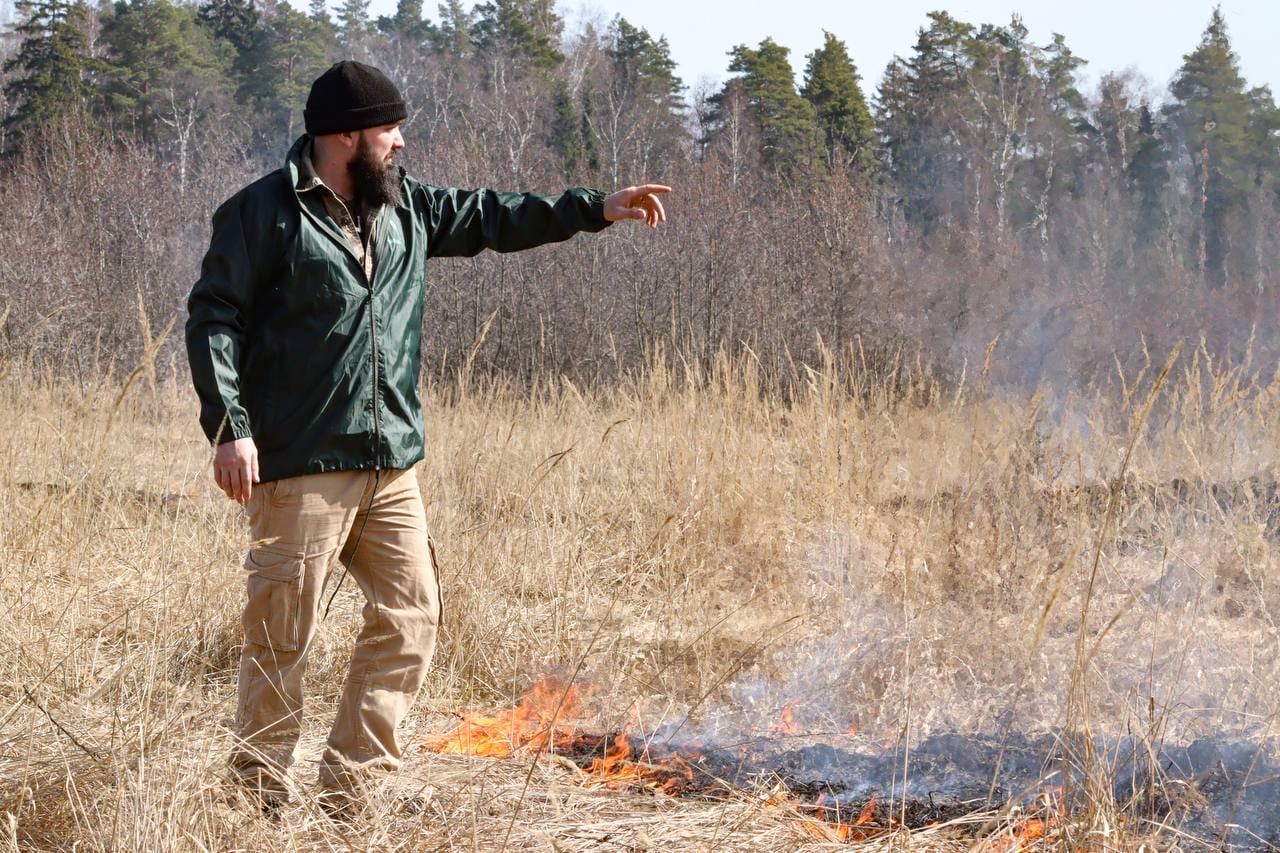
Let's take the next latest study, which was published on March 18, 2026 — as you can see, the data is as fresh as possible. The work is titled "Peat fires contribute a disproportionately large share of carbon emissions from fires in Siberia."
Here, scientists publish data showing that the total area affected by fires in the studied Siberian region from 2001 to 2023 amounted to 107.57 million hectares.
ONE HUNDRED SEVEN MILLION HECTARES OF SIBERIAN NATURE (!!)
Of course, this does not mean that only unique forest areas burned. This is the total area affected by natural fires. But I think it's clear to everyone how catastrophic these figures are! By the way, I have previously published in my works global studies showing that almost all fires start precisely in those places where people have built roads.
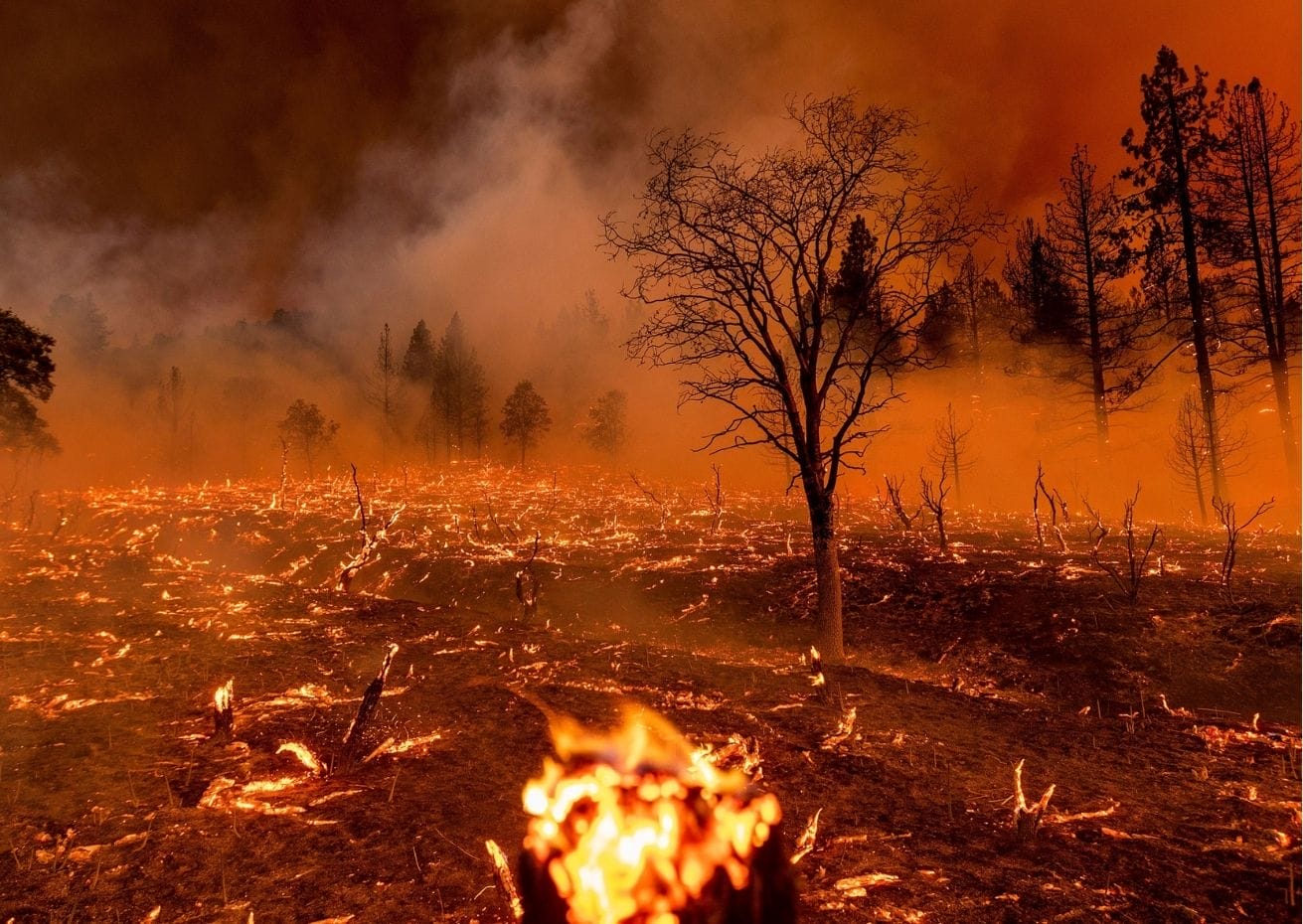
It's especially bad when peatlands start to burn; it's almost impossible to extinguish them, and everything spreads to the bordering ecosystems of ancient forests. Moreover, the fire can "hibernate" and reignite in dry weather from spring, expanding further.
The interim result is this: the taiga was fragmented, isolating ecosystem fragments, while large-scale forest destruction occurred through industrial logging, illegal logging, and fires that are destructive in their scale.
Now that we have fresh scientific assessments, let's turn to the data from Global Forest Watch, which is formed through satellite monitoring.
According to their data, the total area of tree cover loss in the Republic of Sakha (Yakutia) from 2001 to 2025 amounts to 26.6 million hectares. This is approximately 23% of the tree cover that existed in the republic in 2000.
The main loss of forests was due to fires. This is the kind of 'management' we have, where we didn't harvest as much timber as we simply burned to ashes.
In the Krasnoyarsk Krai, the loss amounted to 12% of the original tree cover, and in the Irkutsk region, about 17% of the forests. All in just two decades! Consider the scale. In the Krasnoyarsk Krai and Irkutsk region alone, satellite monitoring recorded a total tree cover loss of 22.1 million hectares from 2001 to 2025.
This is comparable to the territories of entire countries.
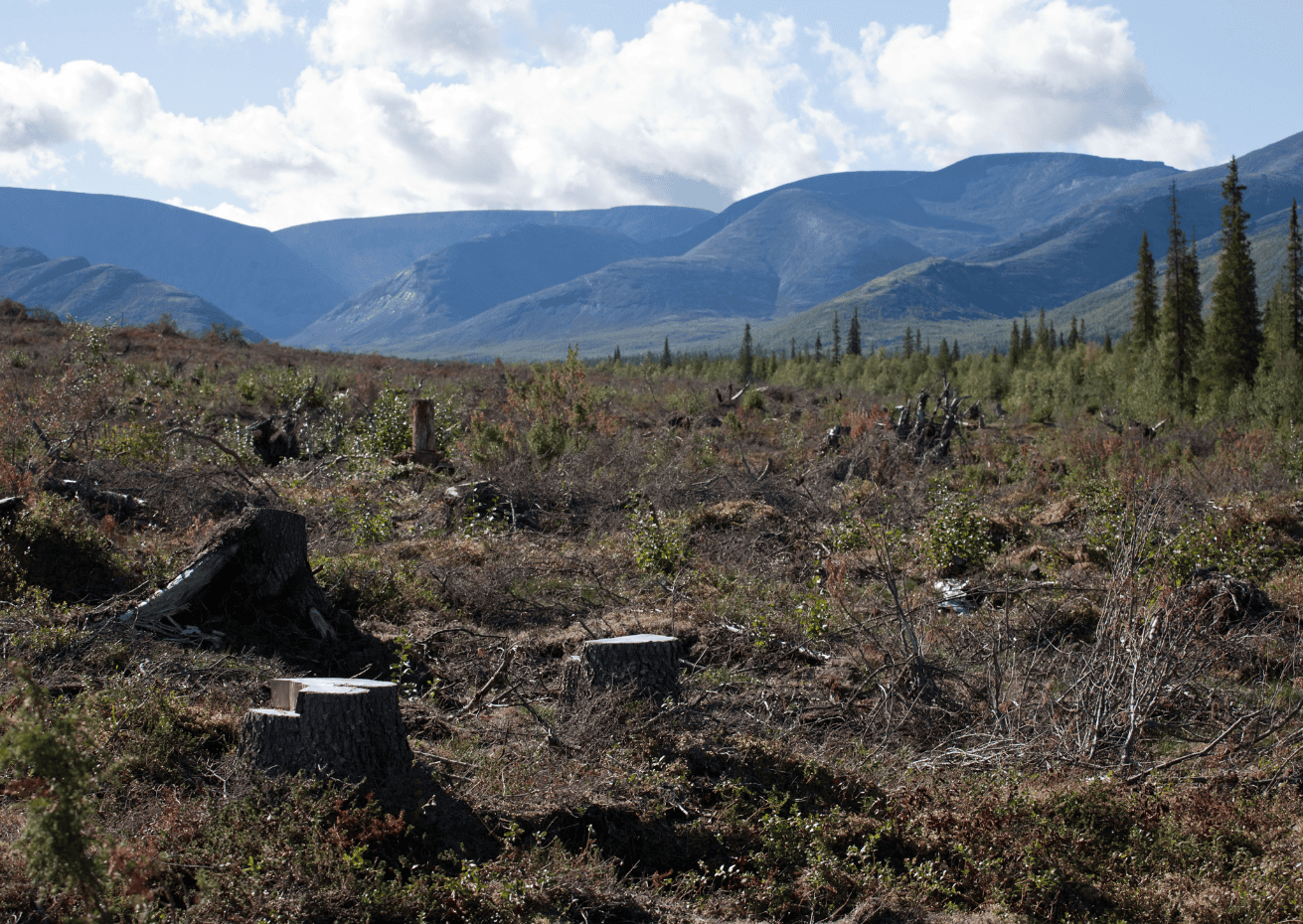
Do I need to say again: 'Oh, the bears are coming to us'? Their taiga is being cut down and burned, and try not to come to humans when the taiga is fragmented into pieces. And then the surprised person declares that there are too many bears.
I also studied data from the Global Forest Change satellite system, processed for 2001–2025.
Zabaykalsky Krai — tree cover loss of 5.46 million hectares (25% of the 2000 level).
Khabarovsk Krai — the loss amounted to 4.72 million hectares (8.9%).
Amur Oblast — loss of 4.39 million hectares (18%).
Republic of Buryatia — loss of 3.36 million hectares (22%).
In these four regions alone, over just two decades, the total tree cover loss amounted to about 17.9 million hectares. This is the recorded tree cover loss! The disturbances are spread over a vast area from Baikal and Transbaikalia to the Amur basin and the coast of the Sea of Okhotsk.
I also consider it important to visually confirm my statements that fires and logging occur near roads. And not with some 'distant Western studies,' but with scientific works by our domestic scientists. See for yourself: in 2021, a study was published titled "Intensification of fire and logging disturbances in the boreal forests of Siberia: a study of Priangarye" by Russian scientists.
During the observation period from 2002 to 2020, they recorded that fires affected 38% of the studied region's area — about 4.1 million hectares. Additionally, 600,000 hectares were affected by logging disturbances — 6% of the entire region's area.
Almost half of the identified fires occurred within two kilometers of settlements, roads, and logging sites. About 5% of the studied area burned twice or more over the 19 years of observation.

So everything is confirmed: roads, as a rule, or logging sites (again, forest roads to them) have become one of the leading factors in large-scale forest fires.
Such are the scales of destruction of the Russian Taiga.
Towards the end of the material, I will mention the Sikhote-Alin Reserve again. We are currently advocating for its protection — right at the borders of this unique biological refuge in the Far East, there are plans to mine gold and demands to 'move the boundaries' of the reserve's protected zone. Scientists, as well as the management of the protected area, warn of the catastrophic consequences of such recklessness! Especially since this refuge is home to the endangered tiger.
In 2025, a scientific work by Russian scientists from the Far Eastern Branch of the Russian Academy of Sciences was published titled "Restoration of cedar-broadleaf forest after single logging events of the 1960s in the southern part of Sikhote-Alin"The study compared 69 plots of old-growth forests and 58 post-logging areas. The conclusion is this: even after 60–70 years, the stock of Korean pine in the studied areas was almost nine times lower. The authors found fewer large trees, a decrease in the total stock of timber, and a predominance of secondary deciduous species.
I want to emphasize that the researchers studied the consequences not of complete forest destruction, but of relatively mild selective logging! Individual large trees were removed. Yet, 60–70 years later, the original structure of the pine-broadleaf forest has not been restored.
Now apply this to the entire territory of Siberia and the Far East! There is no rapid self-recovery of forests, and our nature is struggling greatly. Every scar left by humans heals slowly, painfully, and with difficulty.
Be sure to study the first part of the material on the scale of natural forest destruction in the Russian North in the European part of Russia: https://pavel-pashkov.com/articles/en/destroyed-ancient-forest
And note for yourself that in these two materials, we have examined the scale of destruction of the true ancient forests of our Russian Taiga—sacred millennia-old ecosystems that have formed into complex biological systems, survived cataclysms, and endured the hardships of millennia.
And now humans have come and are mowing them down, burning them, and then complacently declaring, "It's okay, it will grow back on its own"—or they plant a sapling for show, believing that this is enough to repay the ancient Russian Taiga for the destruction of its millennia-old history and genetic heritage.
© PAVEL PASHKOV
Support the fight!
The hardest thing in our time is to remain independent from government and business! All activities are carried out independently. Stand with us and support our Mission to protect wildlife.
I want to support!Get involved
On an ongoing basis, we launch public initiatives together to protect wildlife and achieve real change. Join this work and help change the world for the better.
Explore the initiativesTFET Concept
We are working to transform the global protected-area system — Territories of Full Ecological Tranquility (TFET) must be created. Wildlife needs refuges from human pressure! This is one of the key paths out of the planetary ecological crisis and toward preventing further ecosystem collapse.
Learn more