
For many years, I have been advocating for the protection of truly ancient forests. In fact, my Concept of Territories of Full Ecological Tranquility is based on the urgent need to consolidate the remnants of fragmented natural ecosystems into global conglomerates of protected natural areas under absolute protection status. How else can it be? I recently published two articles:
— one on research by scientists showing that humans have already adapted 75% of the planet's land for themselves, and functionally intact ecosystems are down to about 2.8% globally;
— the second on a meta-study by scientists about the decline in animal populations: over the past 50 years, the biomass of vertebrate species has decreased by approximately 73%.
It's a catastrophe! A true planetary-scale catastrophe. Yet the whole world seems blind to it. We pride ourselves on our scientists, our academics, calling ourselves a 'rational civilization,' whose evolution is driven by these very scientists. But we ignore these same scientists when it comes to the destruction of our own habitat.
It's time to wake up! Humanity has no time left.
Today, I want to talk about our country, mighty Russia. More precisely, about the state of our true natural forests. The very ancient Russian Taiga, millennia-old ecosystems that form the genetic and physiological heritage of terrestrial ecosystems. The very taiga that regulates the climate, draws moisture into the continents (biotic regulation), and fills the rivers.
What have we left of its flesh? Is there still something we can protect?
Let's turn directly to scientific works. Specifically, let's look back at the horizon of the formation of modern Russia, when the state was just beginning to "get on the tracks of history." I came across a remarkable study titled "Intact Forest Landscapes of the European North of Russia", which was published back in 2001. Our Russian scientists worked on it.
The researchers used satellite images, geographic maps, and field surveys to identify the remaining large natural areas of taiga in the European North of Russia and the Urals. They chose natural areas of at least 50,000 hectares and at least 10 kilometers wide as the main criterion. Let me clarify right away that for a wild, complex ecosystem, this is very little! This is the minimum size where species can coexist normally and integrally without cascading degradation.
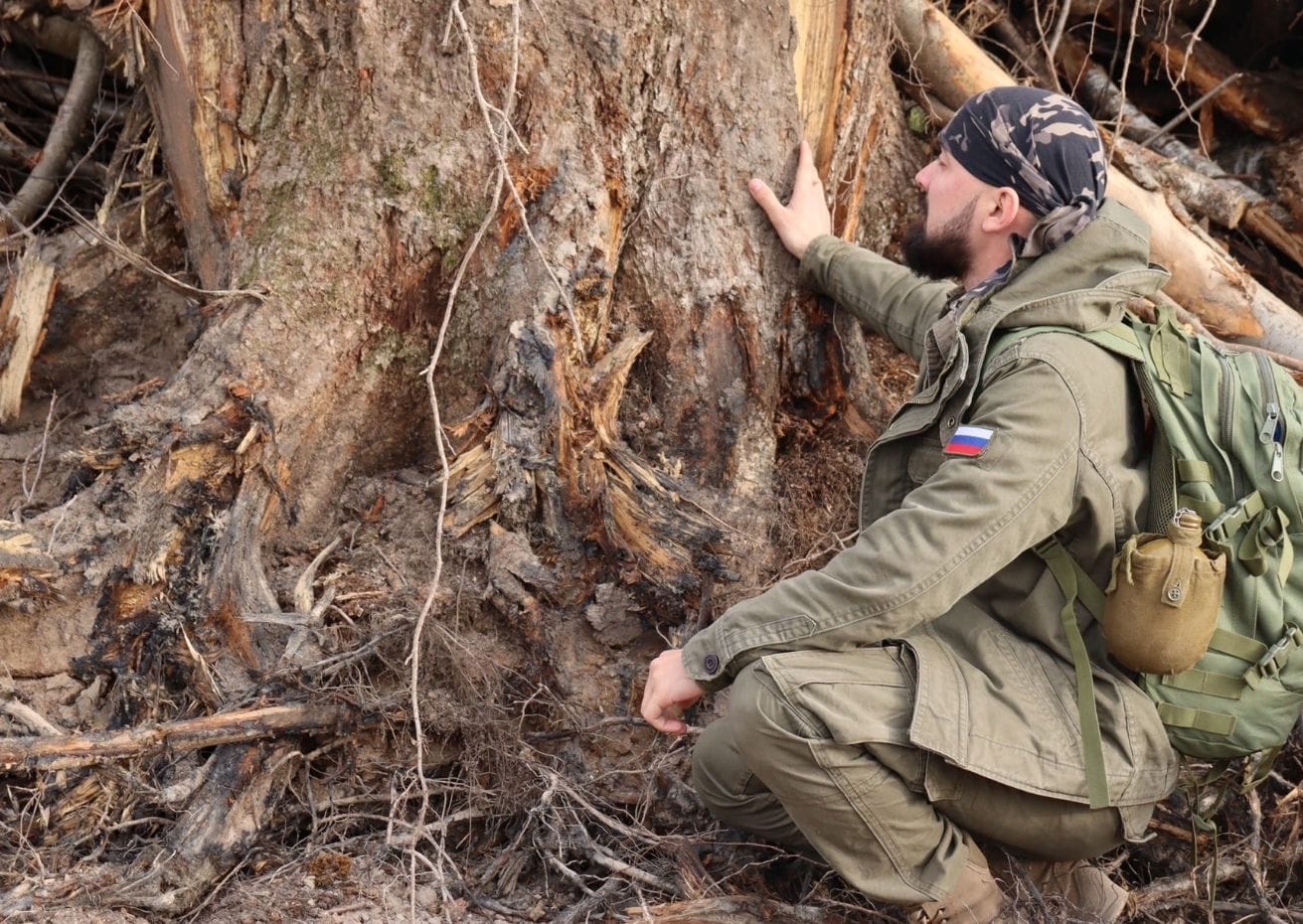
As you understood, the scientists selected areas that should not have been subjected to significant industrial transformation. The concept of an intact forest landscape also included natural swamps, lakes, and other ecosystems forming a unified taiga complex.
Straight to the main result of the study: the scientists identified 31.7 million hectares of large intact forest landscapes in the European North of Russia.
"Wow, that's a lot," an average citizen might say, for whom even a large tree is "already a big forest." But in reality, this is catastrophically little, especially since we're talking about the distant 2000s. I always say that problems need to be viewed systematically and assessed on a scale: 31.7 million hectares of natural forests in 2001 is only 13.8% of the forested area of European Russia. That is, according to scientists, about 86.2% of Russia's ancient forests had already been developed and fragmented by then.
Quite a scale, isn't it?
According to the study, in the southern part of the examined forest zone, large undisturbed areas have almost completely disappeared. The main remaining territories were far to the north, mostly in inaccessible places. This indicated a deep historical transformation of the most accessible part of the European taiga.
Do you understand what this is about? By the beginning of the 21st century, only a small percentage of ancient forests remained in the Russian North, and those were in extremely inaccessible areas, where heavy logging equipment could not yet physically reach.
Furthermore, according to this scientific study, 87% of the remaining undisturbed territories were dominated by low-productivity forests. The potential wood growth was up to 1 m³ per hectare per year.
And a few more conclusions:
On 18% of these territories, the potential growth was no more than 0.5 m³ per hectare per year. This means that when wood is extracted from here, the taiga recovers extremely slowly and with difficulty, and the logging of forests that have formed over centuries is not compensated even by several decades of young forest regeneration. Moreover, the usual model of industrial forestry is economically and ecologically problematic for most of these areas.
52% of the remaining undisturbed forests were actually sub-tundra forests. They weren't destroyed simply because they were of little interest to anyone.
- Additionally, 20% of the areas identified by the study's authors consisted of treeless swamps and bodies of water. So, from that 13.8%, you can confidently subtract another 20%—these are not forests at all, but part of related ecosystems of a different type.
And of course, I must also emphasize from this study that large-scale industrial logging was already taking place near the borders of the last major forest tracts. Let me remind you: this was in 2001, at the beginning of the 21st century. The depletion of accessible forests was already pushing the industry into the last natural tracts. This was particularly noted in the Arkhangelsk region. The conclusion lists specific areas of industrial pressure: the watersheds of the Northern Dvina and Pinega, Pinega and Vashka, the vicinity of Vodlozersky National Park, and other territories. The authors also recorded increased geological exploration and mineral extraction in Timan, the Urals, and the Pre-Urals.
This is, by the way, for the skeptics who often tell us: "Oh, the taiga is growing endlessly." Well, in reality, the Russian North at the turn of the 2000s was already catastrophic for our taiga.
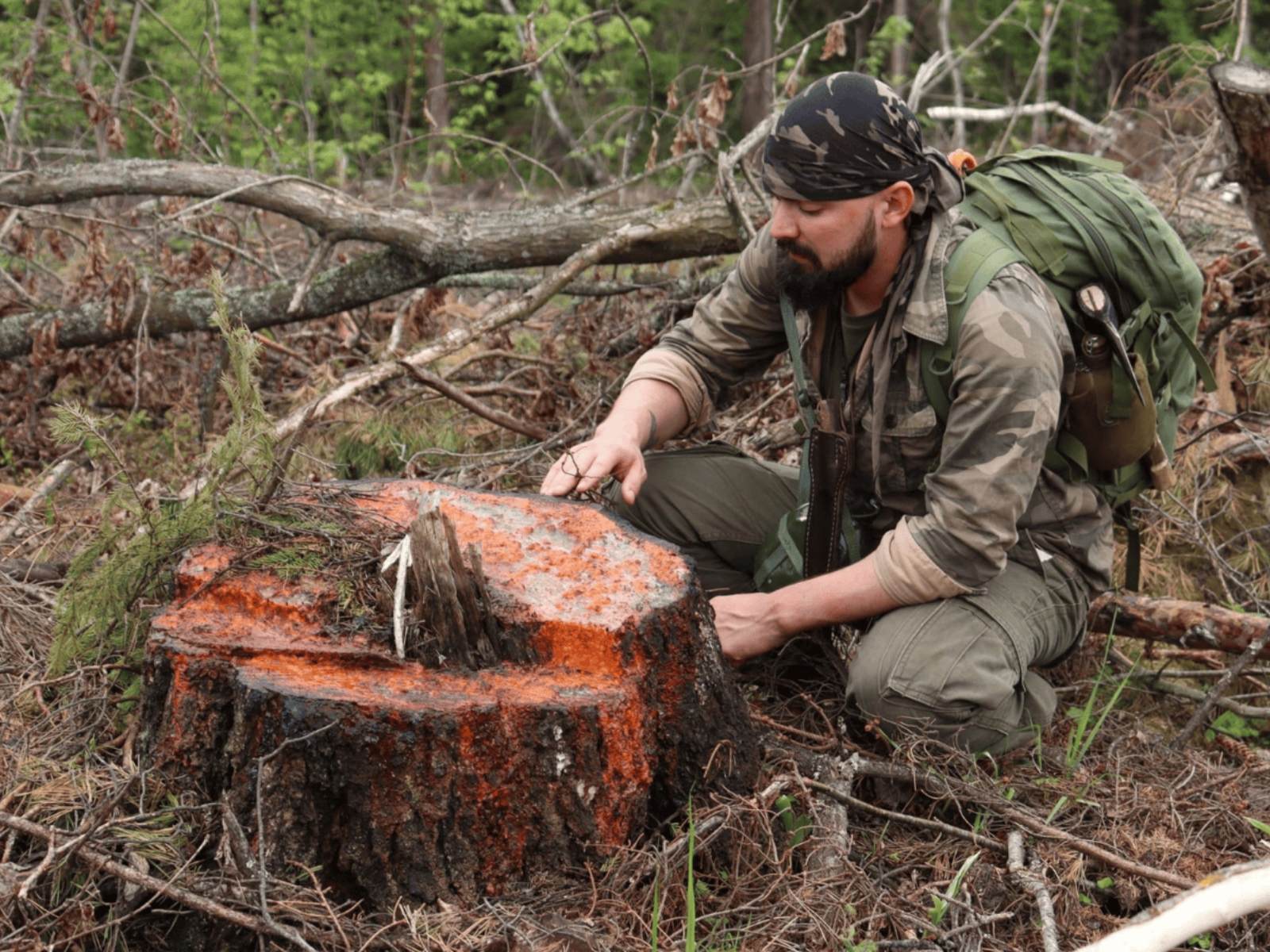
What can be said if all this time there was only intensive development of the forestry sector and the sale of the Russian Taiga into private hands for more and more exploitation?
And now let's move on to a more recent scientific work. I referred to a global study published in December 2025, titled «Intact Forest Landscapes Extent and Change».
Also, by the way, our Russian scientists and academicians. No "enemy agents of the State Department," so our officials can sleep peacefully without manipulating the "political background."
This is a direct methodological continuation of work that began in 2001. That's precisely why I turned to it! Moreover, this study includes the same authors who were involved in the earlier scientific work. But this time, considering the latest possibilities for analysis and monitoring, the scientists used planetary satellite inventory covering Russia and other forest regions of the world.
And now look at these results: from 2000 to 2025, Russia lost another 53.2 million hectares of forest areas that meet the criteria for intact forest landscapes. Thus, the loss from the 2000 level is 19.4%—almost one-fifth of the original area has been fragmented and 'developed.'
The data, as you understand, is presented on the scale of all of Russia. A very high-quality scientific work.
Year by year, it looks like this: if in 2000 there were about 274.4 million hectares of natural forest areas, by 2025 only 221.2 million hectares remain. This is a catastrophic decline in such a short time! At this rate of predatory logging, it will be reduced to zero within a century. And this is considering that by 2000, everything was already on the brink of disaster.
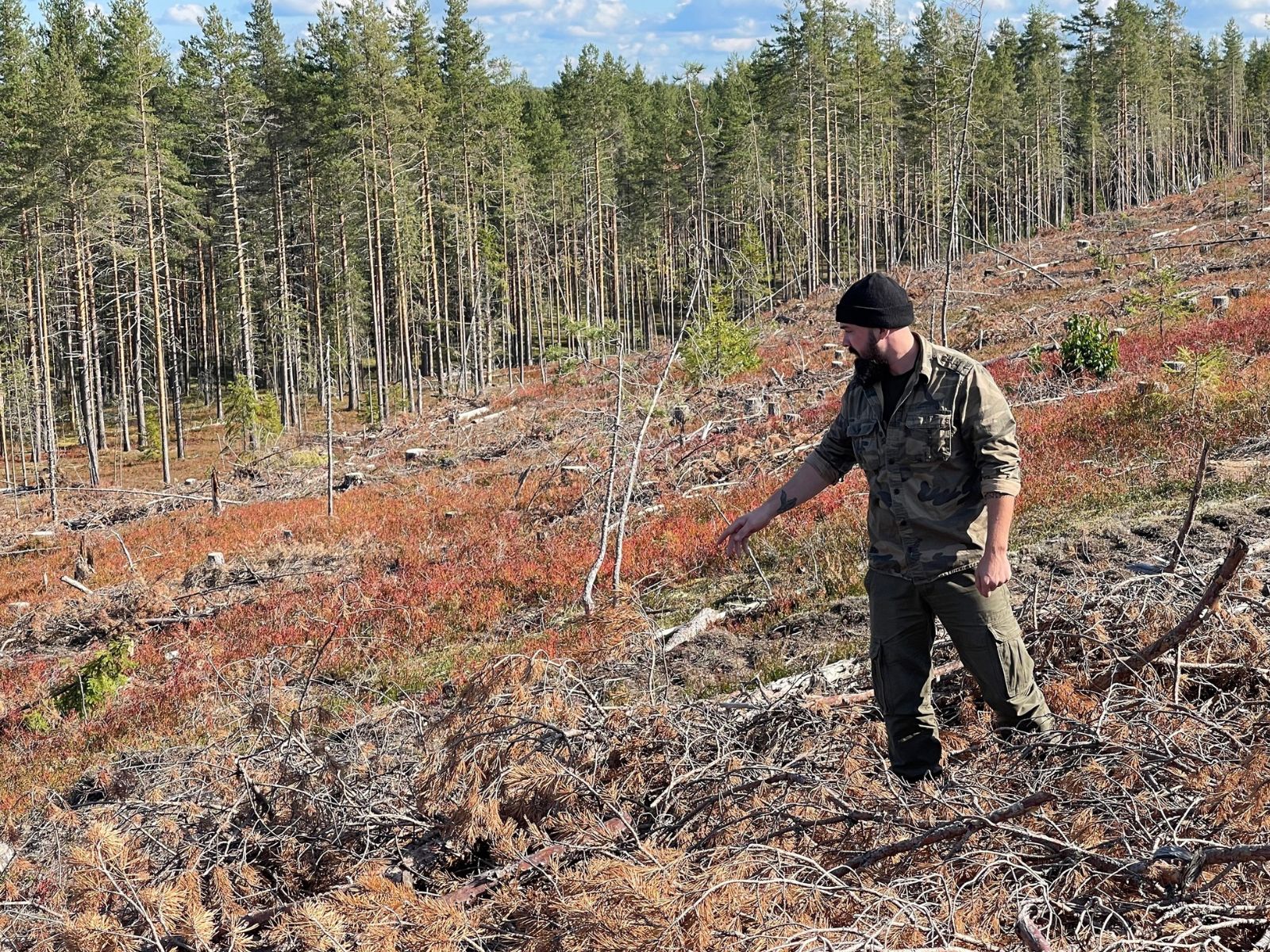
In terms of area, Russia lost the status of intact territories over more than 532,000 km² in just a quarter of a century—this is larger than the area of Spain. In terms of absolute reduction in the area of such forests, our country ranks first among the studied countries.
Interestingly, the loss is also occurring at a furious pace across the planet: about 194.7 million hectares of intact forest landscapes have disappeared. In 2000, their area was estimated at 1,280.9 million hectares, and by 2025 it is 1,086.2 million. The reduction is 15.2%, comparable to the territory of Mexico. This is an assessment of all forests: both the boreal belt—our Russian Taiga—and the southern—tropical forests.
And to conclude the material, here are the final data: by 2025, undisturbed forest areas occupied only 8.4% of the Earth's ice-free land. Russia accounts for about one-fifth of the world's remaining forests, meaning the state of Russian forest ecosystems has direct planetary significance.
This is what I keep telling you, comrades! I want to see our country as a preserved Russia. I want us to become the first nation in the world to commit to nature protection and establish Territories of Full Ecological Tranquility (TFET).
And if nothing changes, with the current course, by the end of the century, there will be no real ancient forests left in the country. We will fragment and destroy the last of them.
We have just examined the Russian North and the European part of Russia. In the next material, I propose we study the situation in Siberia and the Far East together to form a complete picture of what is really happening with the Russian Taiga.
Not these rumors from officials about 'excessively growing forests, increasing in area,' but the real situation of the Russian Taiga.
Spread this material! And do not stop fighting for Life. We will change the world.
© PAVEL PASHKOV
Support the fight!
The hardest thing in our time is to remain independent from government and business! All activities are carried out independently. Stand with us and support our Mission to protect wildlife.
I want to support!Get involved
On an ongoing basis, we launch public initiatives together to protect wildlife and achieve real change. Join this work and help change the world for the better.
Explore the initiativesTFET Concept
We are working to transform the global protected-area system — Territories of Full Ecological Tranquility (TFET) must be created. Wildlife needs refuges from human pressure! This is one of the key paths out of the planetary ecological crisis and toward preventing further ecosystem collapse.
Learn more