I openly oppose trophy hunting and, in general, any industry of paid killing in which the last inhabitants of the wild are turned into objects of human entertainment. My position is objective: according to scientific data, the world is undergoing a sixth mass extinction of species. The difference is that earlier mass extinctions were caused by natural cataclysms, whereas the current one has been triggered by human activity. By the standards of time, we have literally wiped out wildlife in the blink of an eye, and now we are finishing off the last survivors. Over just the past 50 years (since the 1970s), animal populations have declined by an average of 73%.
At the same time, trophy sport hunting is one of the leading drivers of animal destruction, because “trophy hunting” means tracking down the finest, strongest, and genetically most valuable individuals in populations. In doing so, people not only reduce the number of animals, but above all consciously destroy their genetic heritage.
There is no such thing as “sport” through the extermination of animals, nor can there be. Killing cannot be a sport. Killing is simply killing.
Among people who do not support hunting, there is a widespread belief that a sport hunter is usually a man, and an uneducated one at that, someone who only knows how to shoot.
And this complete misunderstanding of what we are actually facing is the main danger in our struggle for Life: people simply underestimate how critical the problem really is.
The paid killing industry is rapidly expanding across the world right now; we are literally witnessing a “hunting fever” centered on the destruction of the last remaining animals.
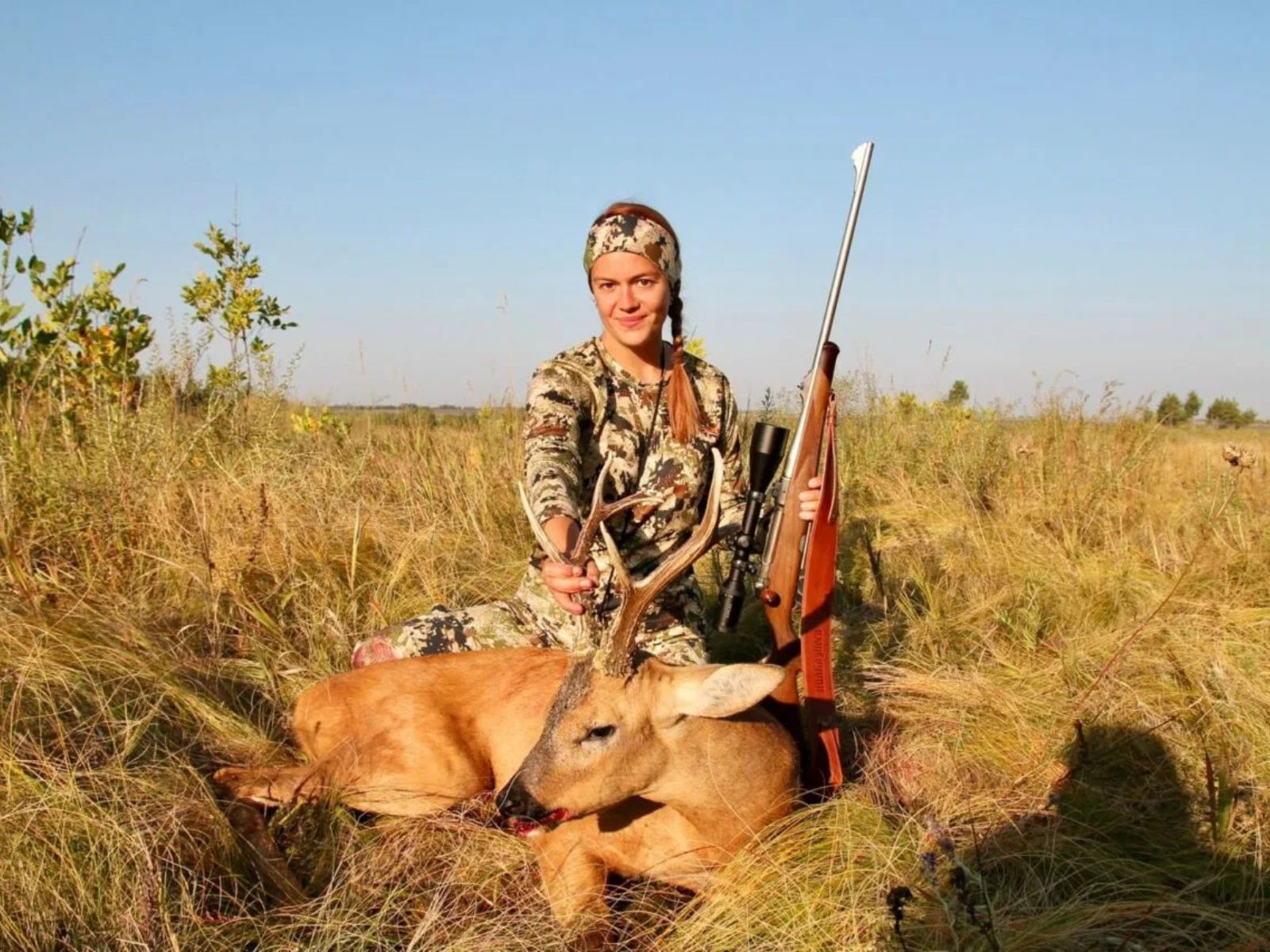
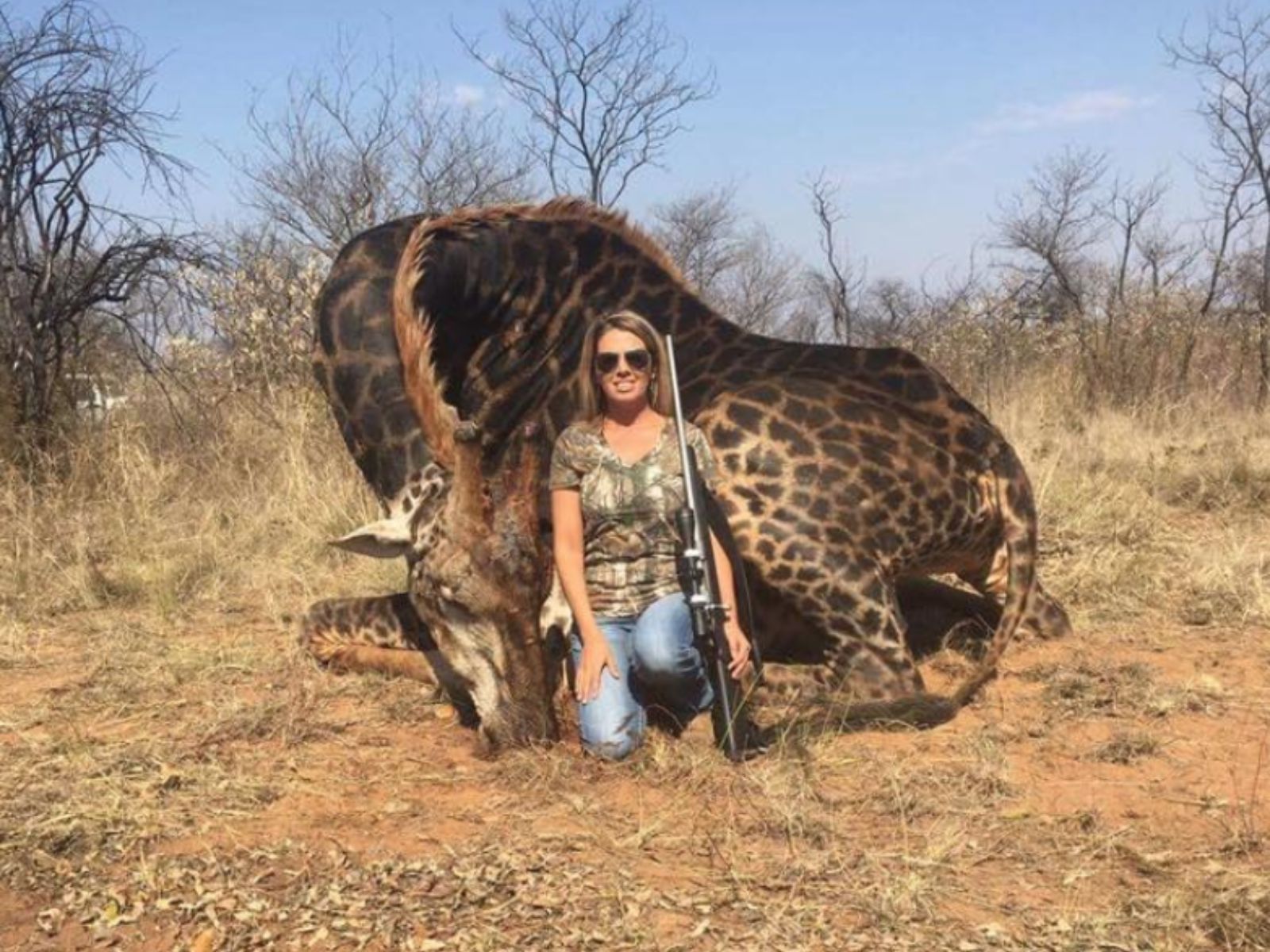
More and more women are putting on hunting gear and going after trophies. And this is not about a few isolated enthusiasts: women have become the fastest-growing group among hunters in developed countries.
- The main body of “trophy hunters” consists of adults with high incomes and higher education.
From a rare exception to a new norm
Historically, women’s participation in hunting was generally insignificant for a long time. The first nationwide U.S. hunting statistics in 1955 stated that only about 4% of hunters were women. In the following decades, the situation remained largely unchanged. But from the 1980s onward, a sharp turning point occurred: the number of female trophy hunters grew rapidly, although in absolute terms the increase was still modest and the overall number did not even reach 10%.
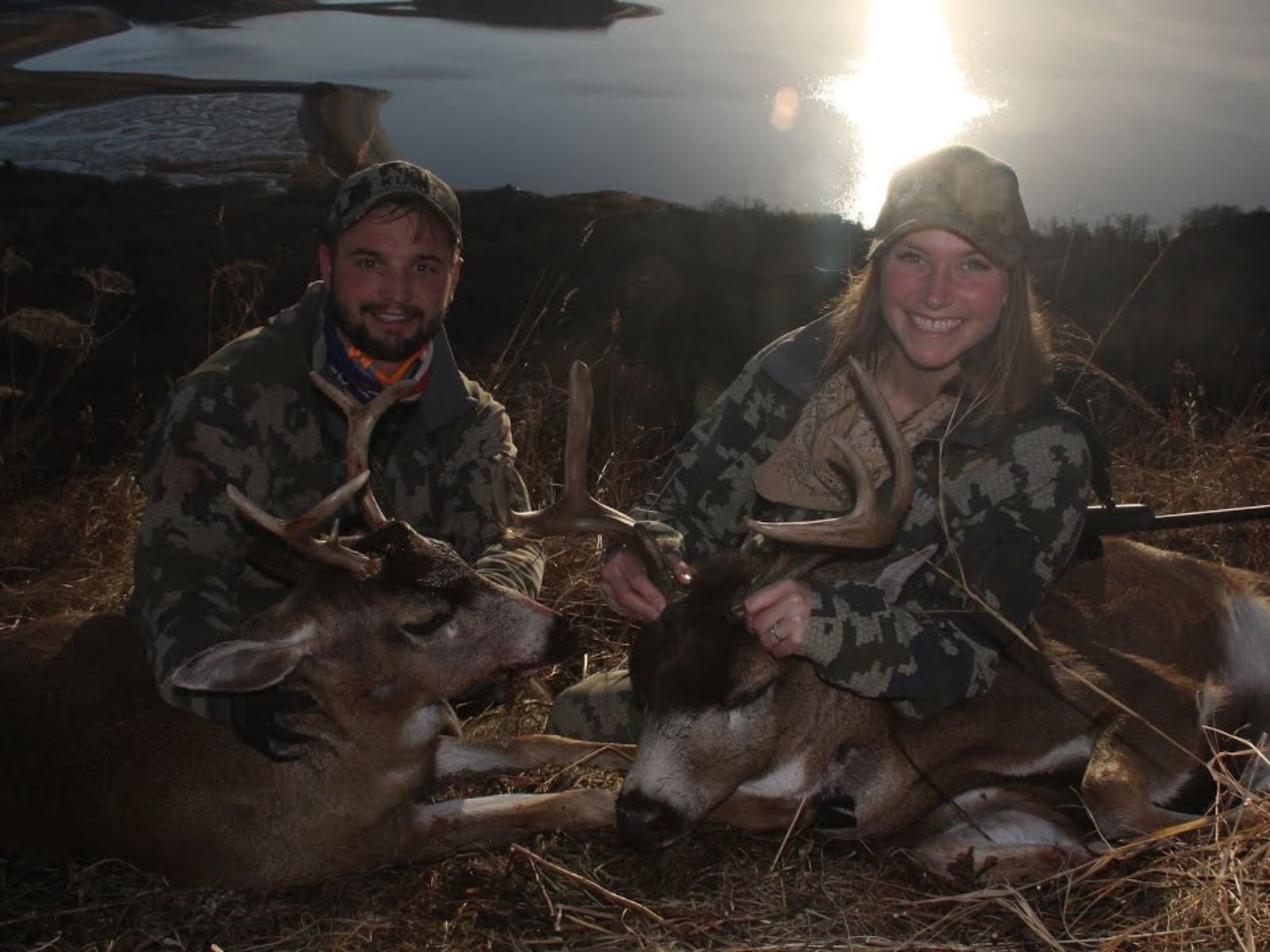
This period coincided with an era of social change: cultural attitudes were shifting, and women increasingly took part in activities traditionally viewed as “male.” It was becoming normal.
I will use the United States of America for this analysis, because Americans are currently the global leaders in trophy hunting, killing animals on every continent. The U.S. is also a country where various studies are actively conducted; in our country there are simply no statistical data, because no one is doing this work.
In the United States, from 2006 to 2011, the number of women hunters increased by 25% (from 9% to 11%) within the country’s overall hunting community. According to official government calculations, their share today reaches up to 17%, and among novice hunters, meaning those who are just entering hunting, women account for about 33%. Put simply, every third new hunter today is a woman.
But, just as in our own country, I would not trust official data from the authorities: they always either understate or overstate the figures depending on what suits them in a given context.
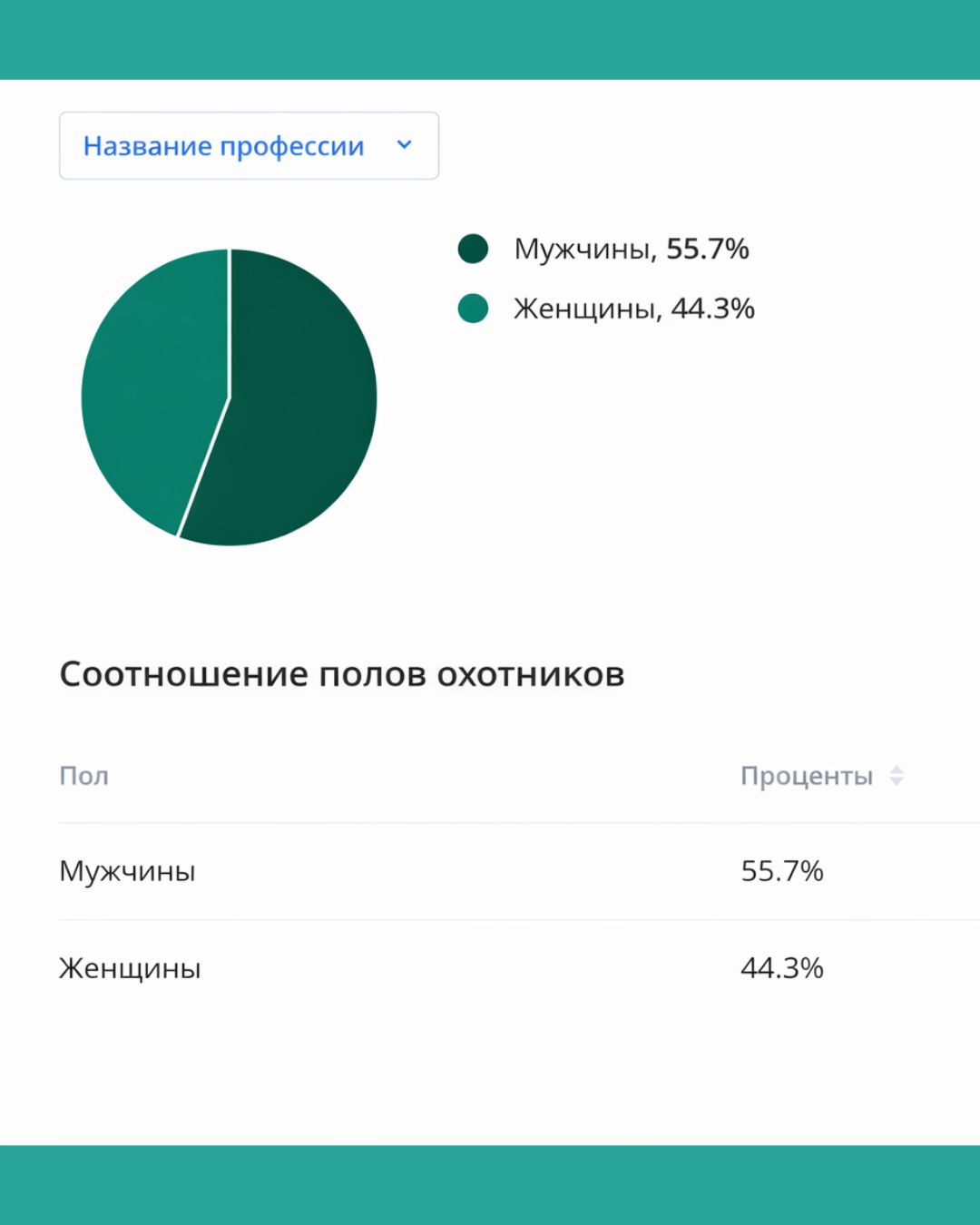
Let us turn to independent estimates. The major analytics project Zippia conducted its own investigation of all hunters in the United States as a professional group. According to their data, by 2025 the number of women had risen sharply to 44% — virtually full parity with men.
The analysts used both statistical data from all available sources and their own control survey of a large number of people, so these figures are far more credible than the ones drawn by officials.
But even if we look only at official data, it still turns out that in the United States alone there are approximately 2 to 2.5 million women hunters. Moreover, as already mentioned, among newcomers entering hunting, the share of women is even higher — about one third. There are also interim estimates indicating that women made up 22% of the total number of hunters as of 2022 — data from WCBU (a joint project of Bradley University and Illinois State University). These data were also separately confirmed by the U.S. Fish and Wildlife Service.
And when taking into account the growth among novice hunters, where one third are women, we roughly arrive at a confirmation of Zippia’s figure — 44.3% women hunters by 2025.
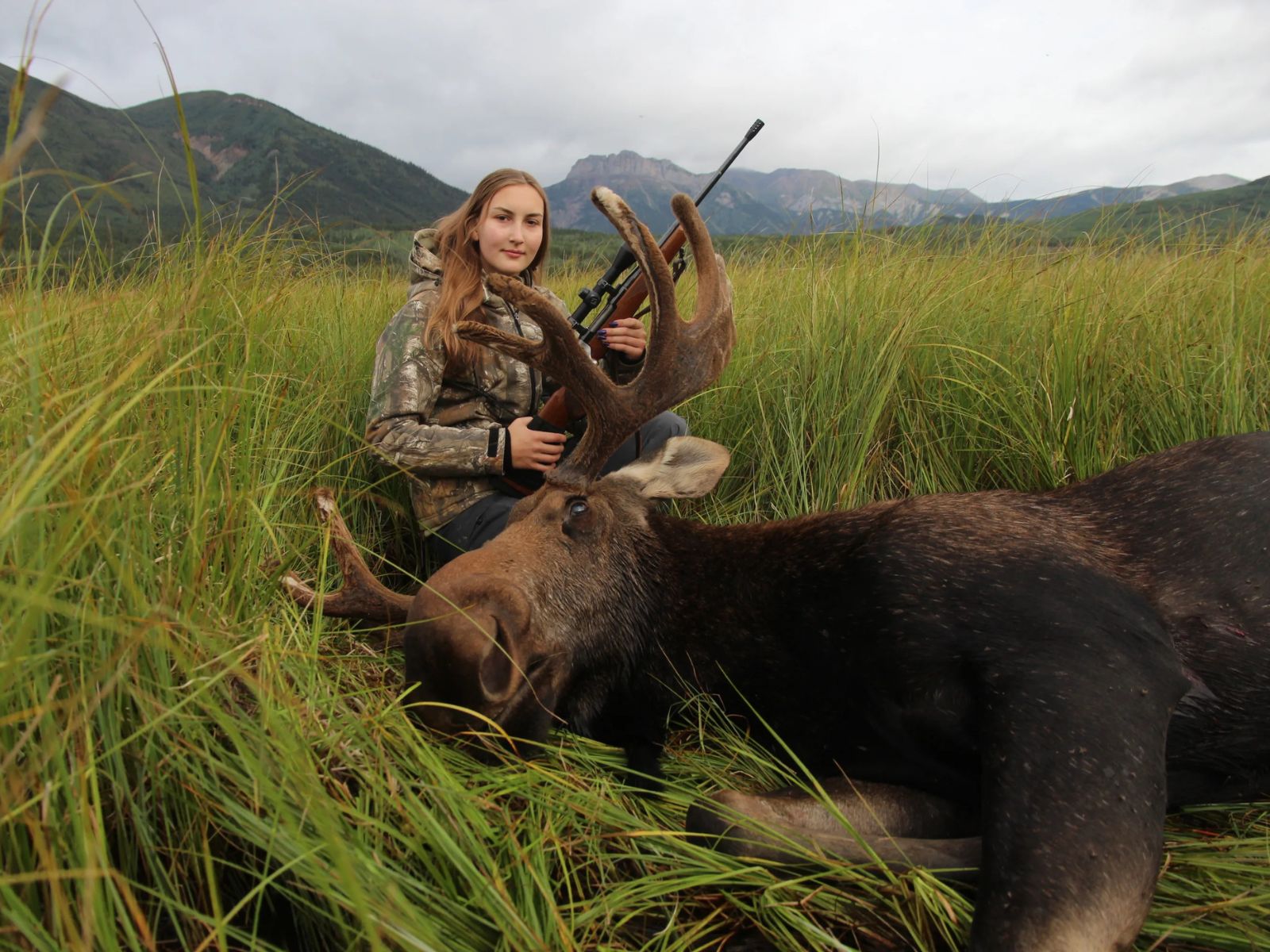
Thus, in the main global hub of sport (trophy) hunting, the United States, nearly half of all hunters are women. Accordingly, we can roughly estimate the situation in other developed countries as well, especially those that actively follow the American example and integrate that experience into their own societies.
So, let us take a closer look at some of the Zippia research data. This is the chart they provide on the gender breakdown among representatives of the hunting industry.
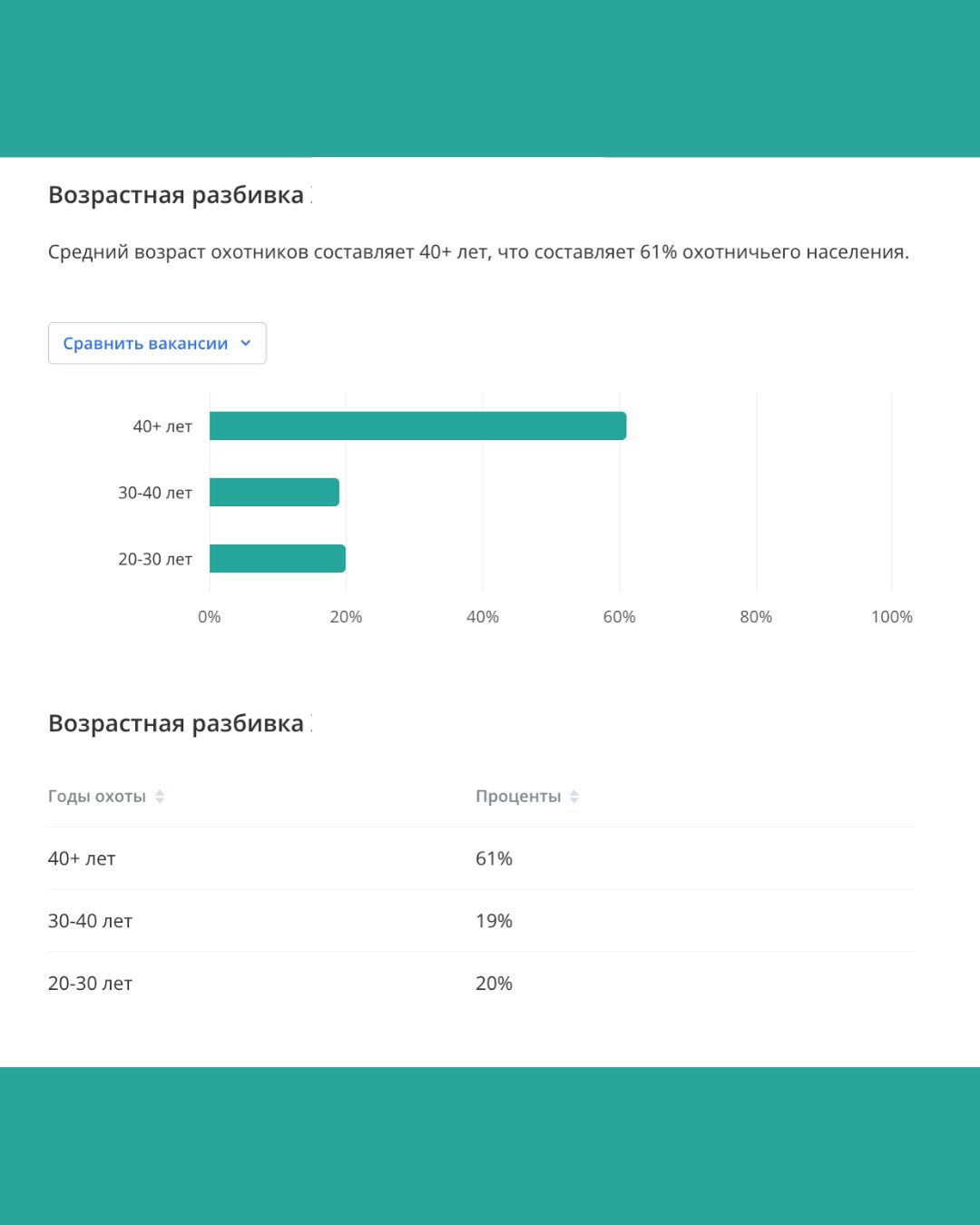
Next, I want you to pay attention to the average age of trophy hunters. According to the analysis, people in this industry are generally aged 40 and older, meaning they are adults who fully understand what they are doing and why.
And now for the most interesting part: the researchers provide data on the education of trophy hunters. Who exactly is traveling around the world on “hunting tours” for the sake of adrenaline and trophies from killing wild animals? Who is willing to pay enormous sums of money for such “pleasures”?
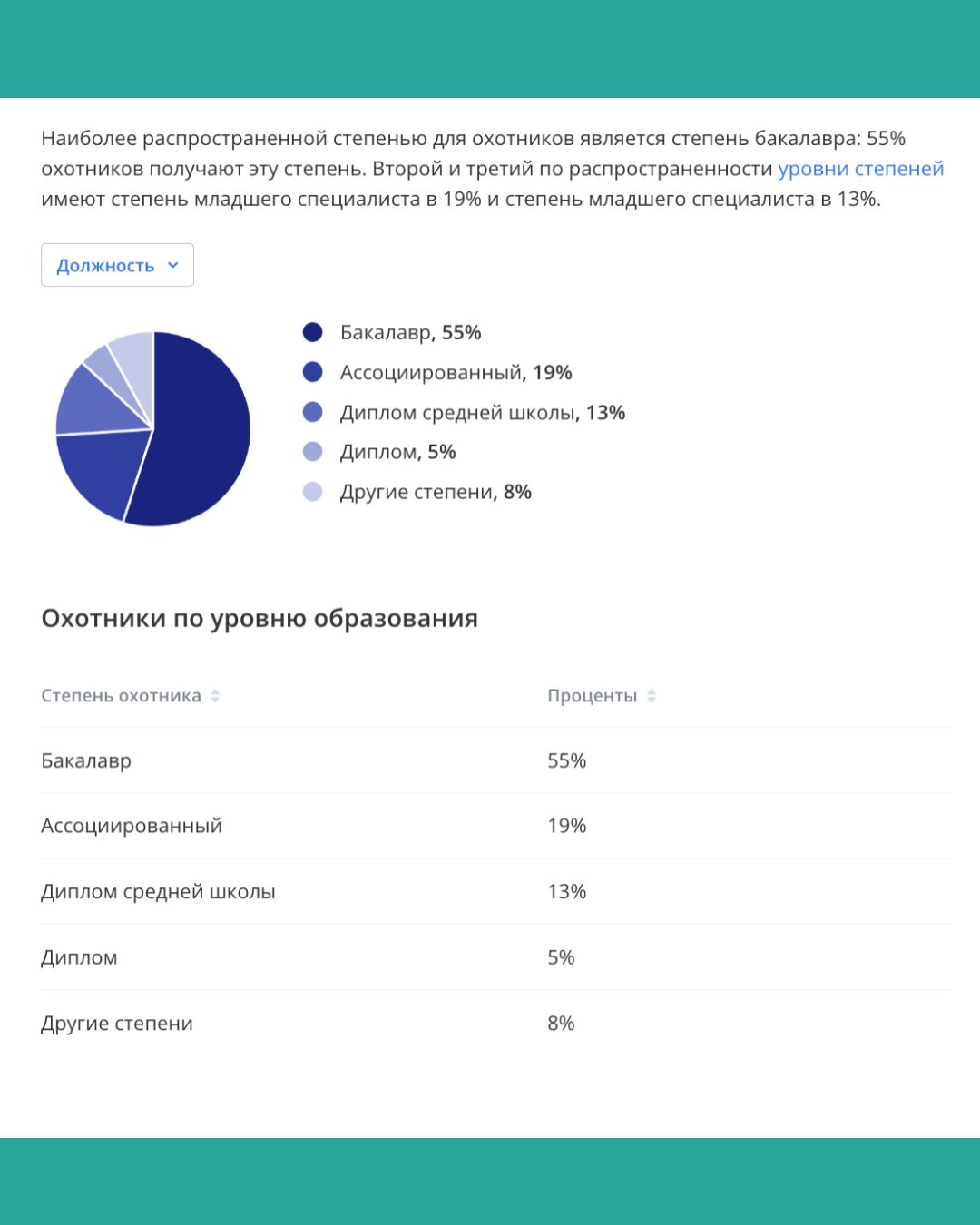
Bachelor’s degree — 55%, more than half. In Russia, this corresponds to the first stage of higher education after four years of study. That means the overwhelming majority are educated adults who either hold senior positions in companies or government, or have their own businesses and enjoy a good, stable income.
For my own analysis, I examined data from the U.S. Census Bureau as of 2022, and it turns out that only 37.7% of people in the country have a bachelor’s degree or higher. Therefore, it can be stated that it is precisely people with higher education who are drawn to sport recreational hunting.
In second place is vocational secondary education (colleges, technical schools): they account for 19% of trophy hunters. People with more modest educational attainment are already far fewer in number.
Thus, the modern American trophy hunter, who kills for pleasure and entertainment and is prepared to spend huge amounts of money on global travel, weapons, equipment, and “safari tours,” is a man or woman aged 40+ with a good income and education.
I studied data from other regions of the world in order to understand the broader picture of what we are facing today. In Canada, for example, women’s involvement in the killing of animals is also growing at an insane pace: in Ontario alone, over just three years (2011–2014), the number of women who obtained hunting licenses grew by 70%; in British Columbia the increase was 62% over nine years (2003–2012); and in Alberta the number doubled between 2006 and 2012.
Today, the gap between men and women is shrinking rapidly.
Europe shows a similar trend. Moreover, there the percentages of women in hunting used to be negligible: for example, in Italy as recently as 2013 they were under 1%, in Bulgaria around 1.3%, and in France about 2%. But today a sharp increase is visible: for Germany I found official data showing women had risen to 11% of the hunting community by the 2020s. According to the German Hunting Association, this is 50% higher than in 2016.
The Scandinavian countries show the same pattern: Norway reports that female trophy hunters already exceeded 15% by 2021. Interestingly, there are many young girls under the age of 20 — 19% of the total. The situation is similar in Sweden and Finland.
I was able to study a great deal of data from Africa, where animals are now being destroyed on an unimaginable scale: trophy hunters from all over the world travel there and pay huge sums of money for the chance to kill the “Big Five” rare animals. In African countries, women are increasingly becoming professional hunting guides and are themselves actively participating in the shooting of animals.
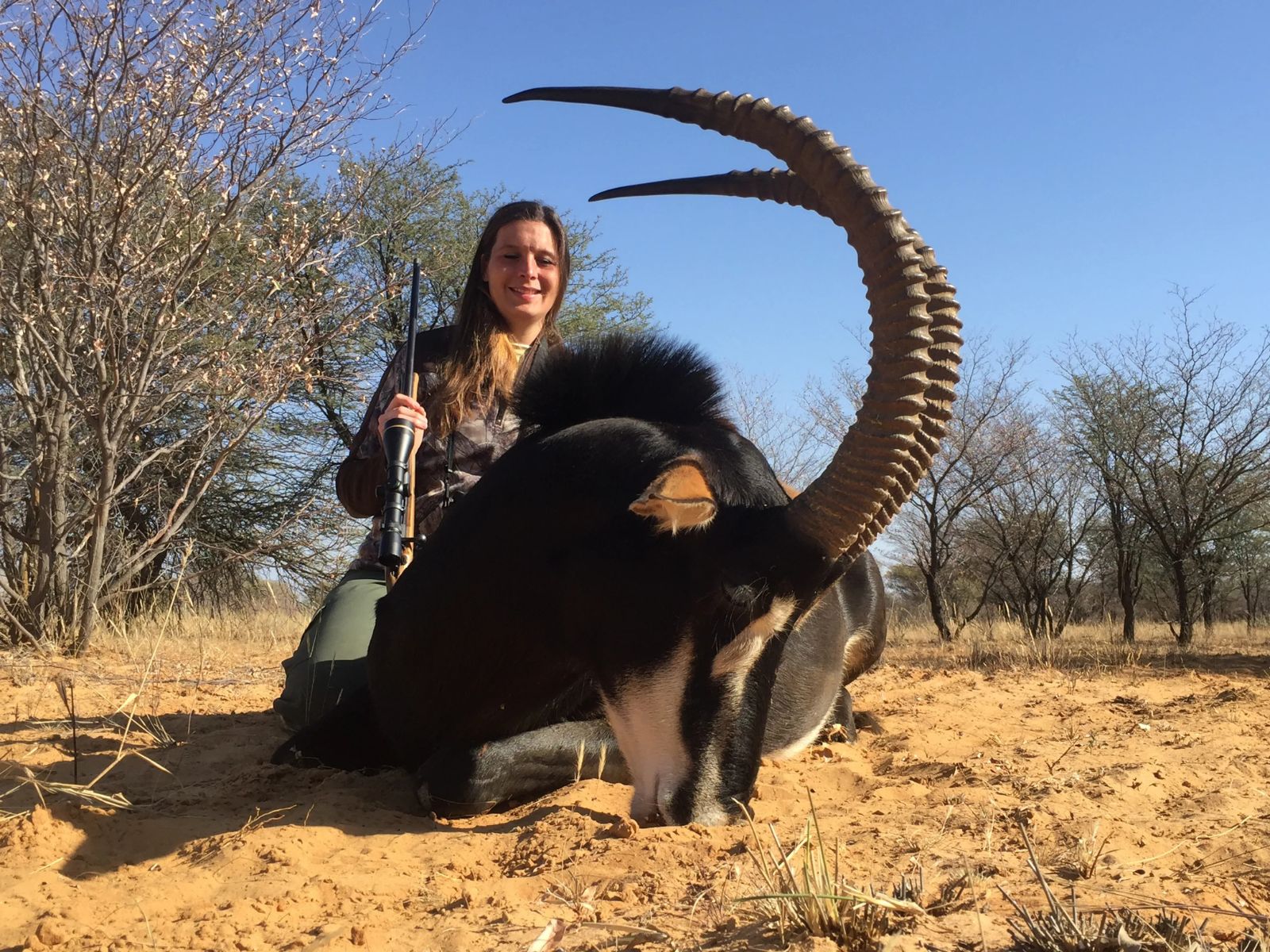
Wherever I was able to find data, women themselves often refer in blogs and social media to this as their challenge within feminist trends. It all comes down to attempts to break stereotypes such as “women have no place with a gun” and “hunting is too hard and cruel for ladies.” In order to challenge this and prove something, women become hunters and go after trophies, killing animals.
Experts directly link the growth in the number of female hunters to feminist trends and to changes in public opinion: in the 1980s and 1990s, a critical mass of women emerged who were willing to become pioneers, while society began to look more favorably on this.
In National Geographic, I came across a quote from one of the leading women hunters: “Today women are more independent than ever and understand that they are capable of hunting.”
That is the situation in the world — fully objective, real data. Right now, women’s circles and communities of interest are emerging in which, for the sake of obtaining trophies, they unite for safari trips to different parts of the world. Weapons and gear manufacturers are adapting as well, launching lines and “collections” for women’s hunting. Niche companies founded by women hunters themselves have appeared — for example, Próis Hunting Apparel, Girls with Guns, and others — producing comfortable and functional clothing specifically for women.
To sum up
Many people’s ideas about how deep a crisis our society is in are based on personal impressions. A trophy hunter is imagined as an uneducated, not very intelligent person full of complexes. I also constantly receive messages from women readers asking me to refer to trophy hunters as “men” every time in my articles, because, according to them, “women do not hunt.”
But the real numbers show something entirely different. And that makes it even harder for us to convey to humanity the importance of protecting nature, the need for the whole world to unite in order to prevent the further extinction of animals and preserve and protect the little that we still have left.
The truth is that many scientists are hunters. Many representatives of the authorities are hunters. Educated and successful people are hunters too. And possessing enormous money, power, and influence, they go out to entertain themselves by killing animals, deliberately seeking out the very best individuals simply for the sake of killing them.
© PAVEL PASHKOV
Support the fight!
The hardest thing in our time is to remain independent from government and business! All activities are carried out independently. Stand with us and support our Mission to protect wildlife.
I want to support!Get involved
On an ongoing basis, we launch public initiatives together to protect wildlife and achieve real change. Join this work and help change the world for the better.
Explore the initiativesTFET Concept
We are working to transform the global protected-area system — Territories of Full Ecological Tranquility (TFET) must be created. Wildlife needs refuges from human pressure! This is one of the key paths out of the planetary ecological crisis and toward preventing further ecosystem collapse.
Learn more
