In those years, we were constantly clashing with the authorities: they claimed that the Volga was being actively cleaned up and that a federal project worth billions had even been launched. Meanwhile, we carried out expeditions from the very source of the Volga all the way to the Astrakhan Region, where the river flows into the Caspian Sea. We studied environmental problems, I wrote extensively about them in my books, and we spoke about the complete inefficiency of the management system.
As it turned out, we were right, as always: the federal Volga “rehabilitation” project, which the authorities had promoted so actively, has failed completely. On July 8, 2026, it was reported that Anatoly Greshnevikov, Deputy Chairman of the State Duma Committee on Ecology, made the following statement, and I quote:
“The 127 billion rubles allocated to save the great river were largely wasted. The project turned into a mechanism for spending budget funds.”
Everything is as usual, everywhere: a complete failure of the management system, once again colossal theft at the local level, while the environmental community and nature defenders are successfully being pressured from all sides, simply so that they do not get in anyone’s way. Yet it is precisely nature defenders, specialised experts and environmental organisations that would be capable of IDENTIFYING SUCH PROBLEMS and helping to find ways to solve them. They could also prevent corrupt officials from embezzling public funds.
I have a special history with the Volga: almost three years of research expeditions along its course. There are enormous logging operations along its banks and heavy industrial facilities stretching for dozens of kilometres, which, for some reason, were deliberately built right beside the water.


Interestingly, the authorities decided to acknowledge the problem and, in effect, the systemic banditry involved in the “spending of budget funds” only after the Accounts Chamber officially confirmed back in March 2026 that the key objective of the federal project — to reduce the discharge of polluted wastewater threefold — had not been achieved. For some reason, the only institution that works effectively in Russia is the Accounts Chamber. I previously wrote a major article about it: it was the Chamber’s representatives who conducted large-scale investigations, for example, into how “reforestation” is actually carried out in our country. Up to 90% of all planted saplings die within the first three years. In other words, officials are once again siphoning public money into their own pockets without even trying to do the work properly. They stick container-grown saplings into the ground, submit their paperwork and sit back feeling satisfied.
Let me also remind you that the Volga “rehabilitation” programme was primarily built around plans to reconstruct and construct wastewater treatment facilities. According to Rosprirodnadzor, earlier inspections of 132 newly built or reconstructed treatment facilities revealed 1,471 violations, and not a single facility passed verification following the initial inspection. Later, a representative of the agency told the State Duma that, as of November 19, 2025, only 38 measures had been verified, while the total damage caused to the Volga, calculated following unscheduled inspections, amounted to 125 million rubles. At that time, legal entities and officials were held administratively liable and fined a total of 32.9 million rubles.
The Federation Council then publicly joined the discussion. Following a speech by Accounts Chamber Chairman Boris Kovalchuk, Valentina Matviyenko demanded an investigation into who at the Ministry of Natural Resources had authorised the commissioning of facilities that “do not work” and proposed involving supervisory agencies and the environmental prosecutor’s office. So, as you can see, everything is happening at the very highest level: nobody understands anything, there was no proper oversight, and they rushed to demand reports only after 127 billion rubles had already been spent, while the country never received the promised result.
Let me now briefly recall what actually happened with the Volga. In 2017, the government approved the priority project “Conservation and Prevention of Pollution of the Volga River,” which set the goal of reducing the volume of polluted wastewater discharged into water bodies of the Volga Basin by at least 80%. In 2018, the initiative became the federal project “Rehabilitation of the Volga” within the national project “Ecology,” and the target was set as reducing polluted wastewater discharges from 3.17 to 1.05 cubic kilometres per year by the end of 2024.
What followed was classic bureaucracy: everyone eagerly “joined” the project and began publishing impressive reports claiming that the work was progressing wonderfully and that “crystal-clear water” would soon flow through the Volga. In 2022, the Ministry of Natural Resources itself reported that 93 treatment facilities had already been commissioned and that polluted wastewater discharge had fallen from 3.17 to 2.20 cubic kilometres per year. Then, in 2024, the government and the Ministry of Construction spoke of one hundred or more commissioned facilities, while the list of federal project measures included 145 facilities.
They talked, boasted and showed one another their little “paper reports.”
Then a parliamentary inspection was finally sent to the sites: after all, someone had to see how the federal project was working “on the ground” and where the billions had gone. According to data presented in the State Duma, 121 out of 139 facilities were inspected. A total of 127 billion rubles from the consolidated budget had been spent on them, and only six met the required performance indicators at that time.
LET ME REPEAT: ONLY SIX OUT OF 121 INSPECTED FACILITIES MET THE REQUIRED PERFORMANCE INDICATORS AT THAT TIME.
After that, in the summer of 2024, the authorities announced the launch of “Incident No. 55” — a separate crisis-management system for the manual supervision of wastewater treatment facilities. The federal project was placed under emergency, strict control, effectively acknowledging that the entire previous model had failed completely. Naturally, this could no longer fix the situation, as the well-known saying goes: “Where is the money, Zin?” The budgets had already been divided up and pocketed; the billions had once again been “spent,” as they put it.
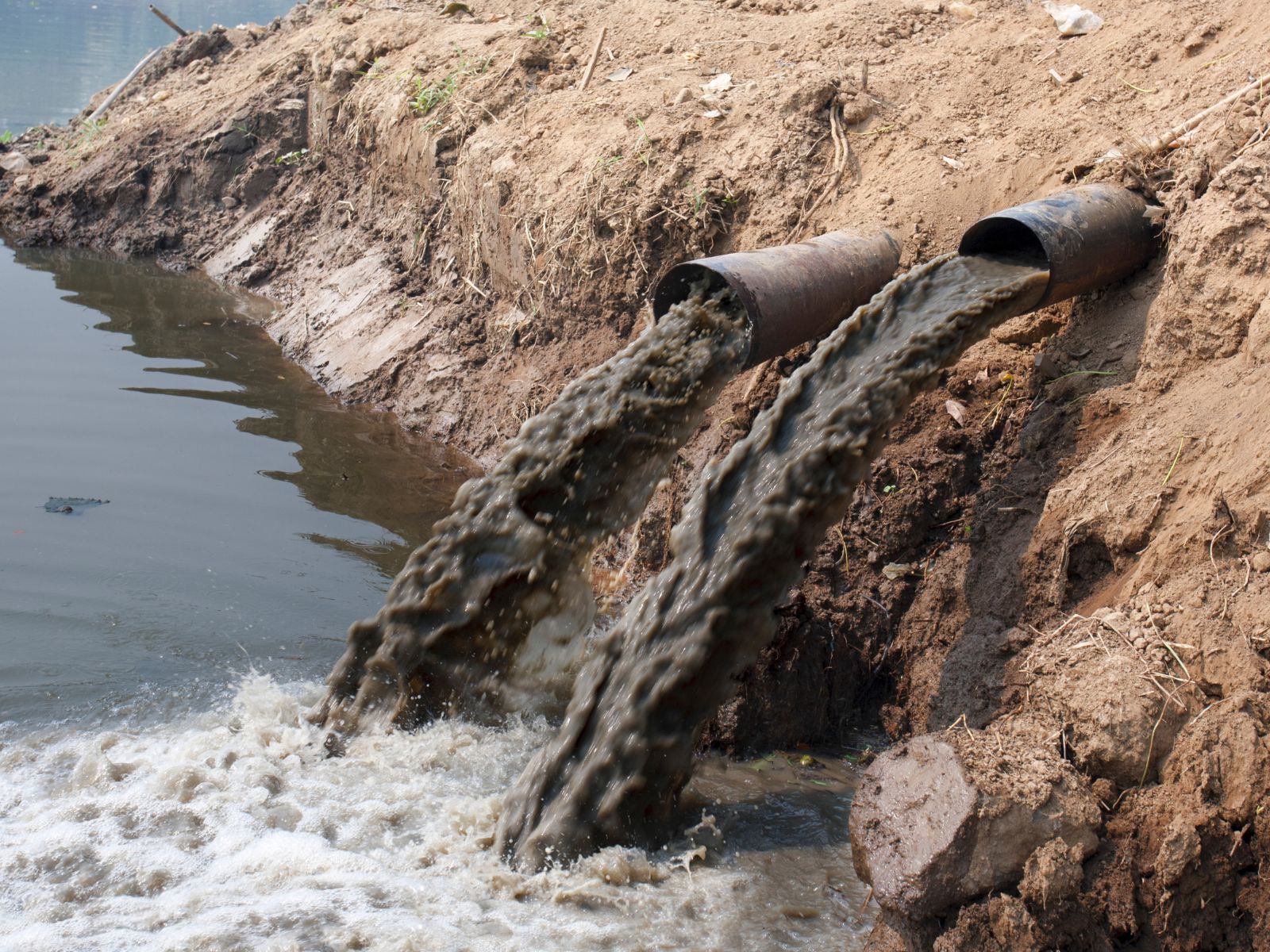
In November 2025, at a joint meeting of State Duma committees, a representative of Rosprirodnadzor reported on the damage to the river and thousands of violations. In March 2026, Deputy Prime Minister Dmitry Patrushev stated that, since the beginning of 2025, only 40 facilities had reached the required standards and that construction of another six was expected to be completed in 2026. In other words, even after the project had formally ended, the state was forced to continue building, completing, rebuilding and bringing up to standard facilities that had already been declared “commissioned” and whose budgets had already been “spent.”
The incompetent administrators responsible for creating the treatment facilities acted so inefficiently that sometimes it is impossible to understand who appointed these “figures” to senior positions and why. For example, the Accounts Chamber cited the almost grotesque case of Kineshma: new treatment facilities were built, but the sewer pipeline from Navoloki was never connected to them, while Kineshma’s own internal wastewater system was not modernised. As a result, the treatment facilities stand idle, the state is already spending money on their maintenance, but a fully functioning municipal wastewater system has never been created.
Is this not the degradation of the management system in all its glory? And what exactly were we criticised for when we spoke out in defence of the Volga and reported these problems? A textbook could now be written about how a state can invest billions in facilities without ensuring that they can even be properly integrated into the basic system. Then every new “political manager” could be given this textbook and required to pass a public examination on it.
What else can be done? What kind of chaos is this?
This textbook should also include a chapter on how effectively real results were replaced by “paper reports.” During the early stages of its inspection, Rosprirodnadzor established that not a single treatment facility or linear infrastructure facility had been verified, while the average number of violations was approximately 10–11 per facility. At the same time, in May 2025, the head of the agency separately stated that, among the inspected facilities, only those in Moscow, the Moscow Region and Tatarstan were actually operating within regulatory standards at that point. After six years, billions of rubles and the official commissioning of facilities, it turned out that not a single facility had passed the initial independent environmental inspection. Apparently, officials’ reports were considered sufficient.
The situation turned out to be even worse. I have now carefully studied the reports, including those issued following inspections by the Accounts Chamber and Rosprirodnadzor. Accounts Chamber Chairman Boris Kovalchuk directly spoke about inflated technical specifications at some facilities. Dmitry Patrushev later acknowledged that, at a number of smaller treatment facilities, the installed equipment was unable to provide treatment meeting regulatory standards. Meanwhile, in the materials for the new project, the government officially acknowledges that more than 70% of the country’s operating treatment facilities were built 30–50 years ago and that 80% require complete modernisation.
Put simply, they attempted to implement the federal Volga rehabilitation project on top of a chronically worn-out industry, while failing to make adequate changes to standards, technical supervision and accountability for the final environmental outcome.
The Volga is not merely some regional body of water; it is the central axis of European Russia. As early as 2017, it was emphasised that more than 60 million people live in the Volga Basin and that the river remains the country’s most important transport artery, carrying more than half of all river passengers and freight. This is not even to mention the Volga’s importance for water supply: the authorities themselves confirmed that the Volga Basin accounts for almost half of all freshwater used in Russia for drinking and domestic purposes. In addition, according to State Duma Chairman Vyacheslav Volodin, municipal wastewater accounts for around 85% of pollution when the Volga issue is discussed.
And this is the situation we have created: the country’s leading waterway gives people life and water, sustains and protects our lives, while people respond by literally poisoning the river and dumping all their sewage into it. All of this then flows into the Caspian Sea, and every year the media expresses surprise: “Why are the seashores covered with the bodies of seals and fish? What could possibly have happened?”
Perhaps millions of tonnes of pollutants, mixed with dangerous toxic chemicals, are being confidently discharged into the main water artery of European Russia, while public funds are divided up and pocketed, independent experts and scientists are silenced, and society is prevented from defending its right to Life by fighting for nature? Meanwhile, our Volga is slowly dying before the eyes of tens of millions of people.
© PAVEL PASHKOV
Support the fight!
The hardest thing in our time is to remain independent from government and business! All activities are carried out independently. Stand with us and support our Mission to protect wildlife.
I want to support!Get involved
On an ongoing basis, we launch public initiatives together to protect wildlife and achieve real change. Join this work and help change the world for the better.
Explore the initiativesTFET Concept
We are working to transform the global protected-area system — Territories of Full Ecological Tranquility (TFET) must be created. Wildlife needs refuges from human pressure! This is one of the key paths out of the planetary ecological crisis and toward preventing further ecosystem collapse.
Learn more
