
After yesterday’s article about how Ministry of Natural Resources staff in the Russian Far East are now luring starving tigers out of the wild using live dogs, I received a huge number of letters. It is simply impossible to study them all — too many people are speaking out!
Several dozen letters claimed that there is nothing wrong with catching tigers using dogs. Whether in a cage or tied to a tree, the main thing is to catch the “malicious striped violator” of human peace. There is no point even replying to this: people are completely cut off from modern progress, and, unfortunately, many still live in archaic ideas about the world. I will simply remind you that the problem of tigers approaching people is serious and has been continuing for several years in a row, moreover on an accelerating curve.
It has been fully confirmed officially by the state that tigers are coming out because of destroyed habitat and a lack of prey caused by human interference in ecosystems.
Putting dogs in cages to catch conflict tigers was the only method available in the 1990s, in conditions where modern technology was absent after the collapse of the Soviet Union. Everyone understands what those times were like! There was no internet, no properly formed system, and no technical solutions.
- Then, for two decades, federal budget money funded not only tiger recovery programs, but also the creation of scientific centers for studying them and preventing conflicts. They promised equipment, thermal imagers, drones, all-terrain vehicles, and even the most advanced technologies used worldwide to prevent conflicts with tigers. They also directly promised that no one would use dogs “like in the 1990s” except in the most critical case. But even in such a case, specialists would be nearby, would respond instantly to the predator’s appearance, and so on.
Once again, here is the quote of what we were publicly promised in 2021:
“If the situation continues to worsen, then ‘the use of a live dog is possible.’ But in that case, the dog will be inside a secure cage, inspectors will remain nearby the entire time in order to immobilize the tiger as it approaches. And for these purposes, the dog used will belong to the inspector, who will have a personal interest in staying awake and vigilant.”
So it turns out that everything has deteriorated to such a degree that shivering dogs are sitting there waiting for starving tigers, trying to survive. And while people destroy their habitat and, for entertainment (calling it “sport”), shoot wild animals, depriving predators of their food base, it turns out that we have neither specialists nor the promised technologies, and the situation has reached an extreme degree of degradation in the nature protection system.
And now to the subject of this article. I received a letter that perhaps did not even require a reply, but there are far too many identical ones. I am being told that tigers have no problems and that “there are simply too many of them now.” In other words, a population of 750 individuals is, in some people’s view, a huge number, although I will remind you that, according to scientific data, a more or less viable animal population should consist of no fewer than one thousand breeding individuals. These are assessments not only by world specialists, but also by our Russian academics.

I will once again quote our Russian scientists who worked on a major scientific study of the tiger situation in the country at the turn of the 2000s. This is what they wrote:
“In addition, there is the issue of population size. Population geneticists warn that small populations are at risk of extinction for various reasons associated with low genetic variability. The question of what constitutes a ‘viable’ population remains a matter of debate; however, it is clear that populations numbering fewer than 1,000 breeding individuals are unquestionably at risk” (study: A SURVEY OF AMUR (SIBERIAN) TIGERS IN THE RUSSIAN FAR EAST, 2004–2005).
In the letter that was sent to me, and in what many people are saying now, people are convinced that there are no problems with tiger habitat at all. Apparently, they are simply incapable of understanding basic cause-and-effect relationships! And even the confirmed information presented at the State Duma round table in 2025, where the authorities themselves publicly confirmed all the problems, still does not allow them to understand the scale and depth of the crisis.
I will also remind you that tigers are extremely cautious, and attacks on people are very rare. They can literally be counted on one hand over the past years. But hunger is truly driving predators toward human settlements, where at least a dog can be dragged off its chain. In the regions, even dead tiger cubs are being found after crawling under local people’s houses and dying there from hunger. And in conflict situations with tigers in which people died (literally a handful of cases), the authorities themselves later confirmed that the tigers had festering bullet wounds. In other words, local residents had previously shot at them, and later, upon seeing a person, the predator would naturally try to attack.
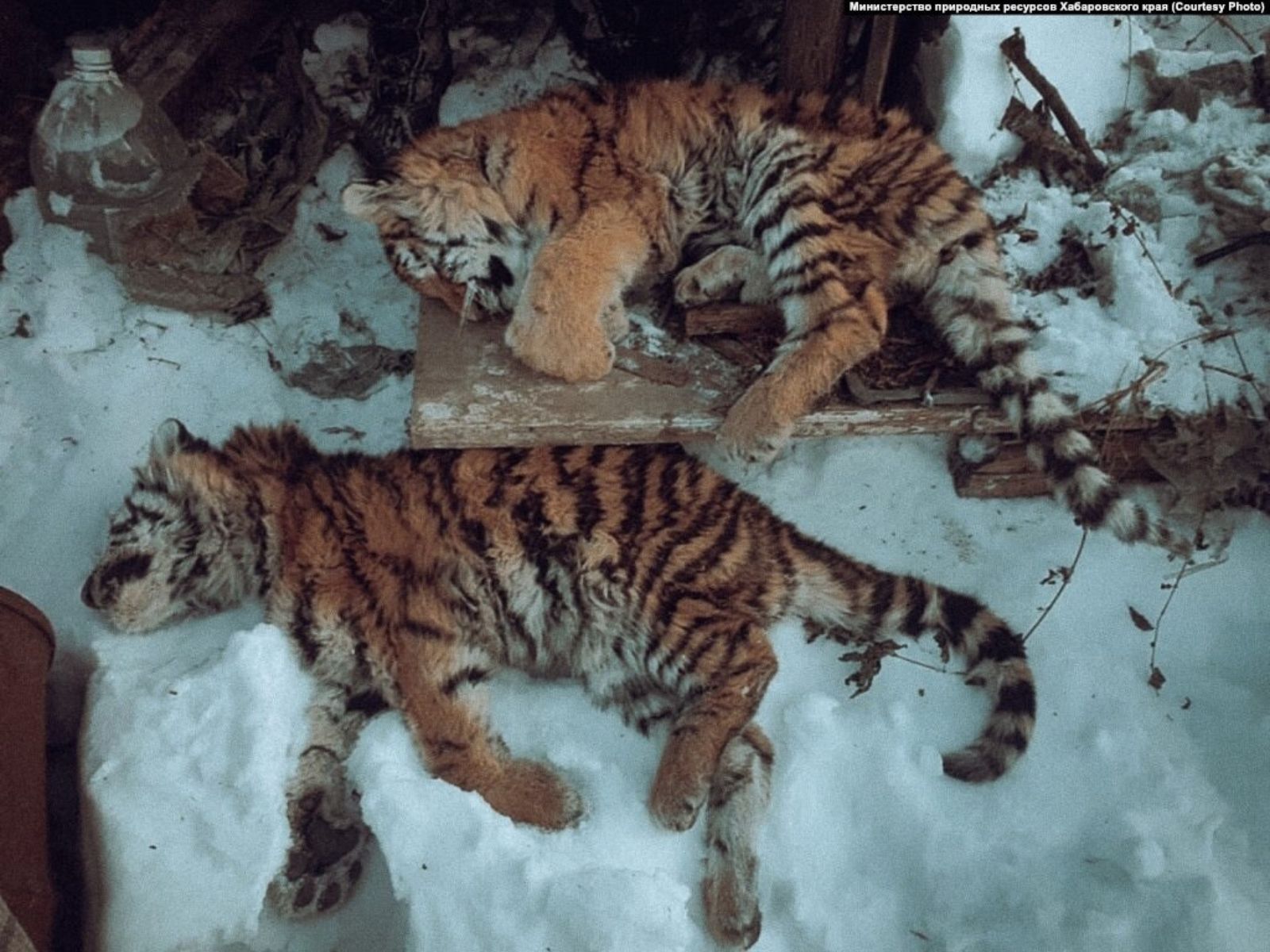
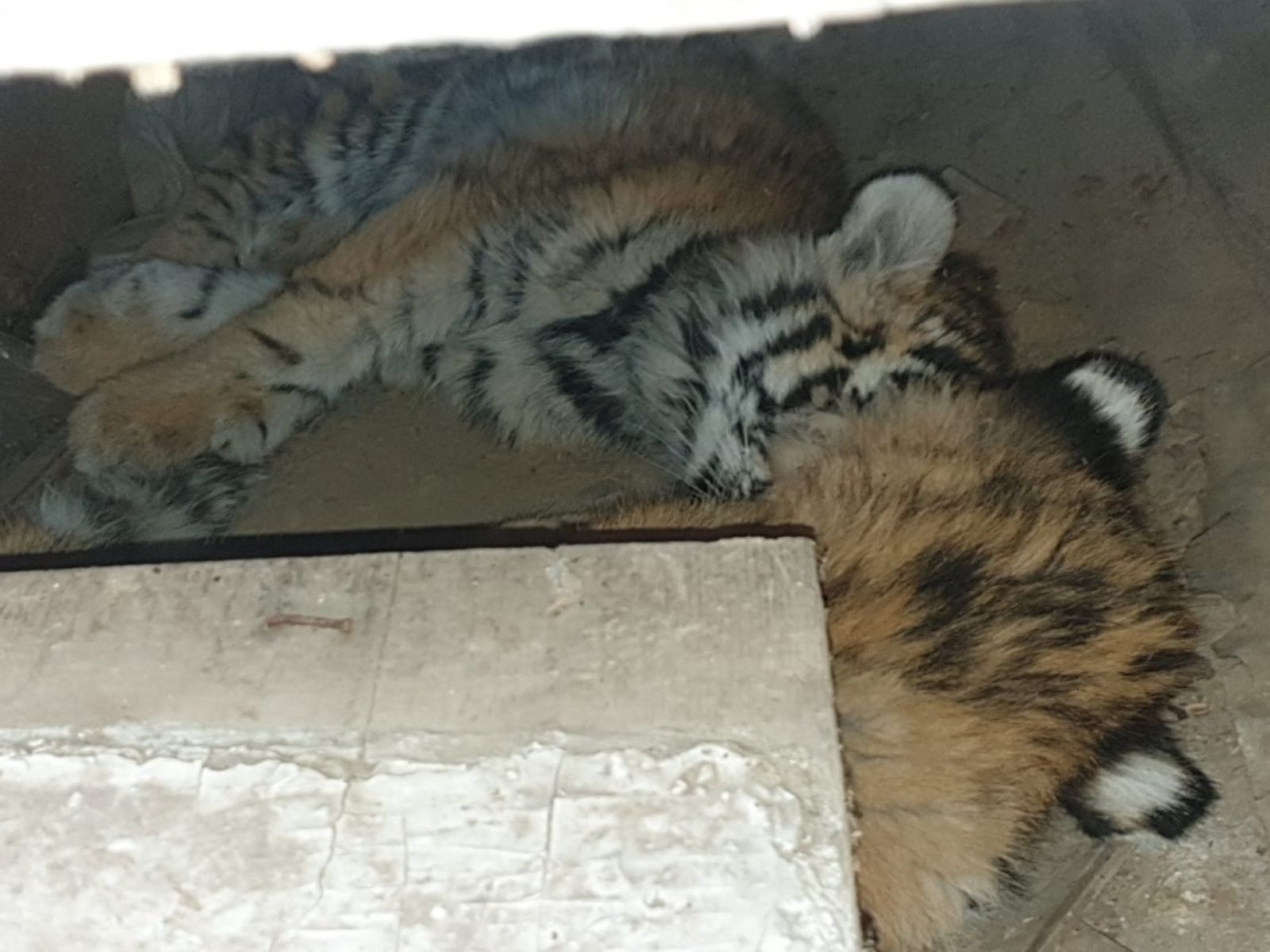
The biggest problem is that the wild predator is becoming synanthropic, living near humans and becoming dependent on them. Because people are invading the last corners of the wild in order to destroy it and shoot animals!
We have been studying this problem with you for a very long time. During our expeditions many years ago, I worked in the Russian Far East and personally studied the destruction of nature there. At the same time, our Allies know that our Concept of the Territories of Full Ecological Tranquility (TFET) includes the first steps toward changing the protected-area system beginning specifically with Kamchatka and the regions of the Russian Far East. And the problems we speak about are known to me not only from the studies I have read, but also from my own many years of direct field experience in expeditions devoted to protecting Russia’s wild nature.
So, while in those expeditions, I studied the Korean pine–broadleaf forests of the Russian Far East, and as is well known, they are centers of interspecies connections. Mother trees. Where pine forests dominate, tigers live there as well, because all the other species are tied to them. In those years I came across the dissertation of Vasily Nikolaevich Koryakin, submitted for the degree of Doctor of Agricultural Sciences at the Far Eastern Research Institute of Forestry in 2009. The work is truly remarkable — essentially a full-scale and profound study, with excellent assessment methods and extensive data collection, including field observations.
Thus, the study describes how Korean pine–broadleaf forests were reduced by more than half over the 20th century. The author provides retrospective data: 6.44 million hectares in 1946, 5.45 million hectares in 1956, and 4.27 million hectares in 1961; he then writes that by 1983, compared with the approximate area of 6.8 million hectares in 1929, the area of pine forests had decreased by more than half. Separately, it is stated that in Primorsky Krai they declined 1.9 times, and in Khabarovsk Krai 2.4 times. As of January 1, 2001, 2.88 million hectares of such forests remained, and as of January 1, 2007, 2.94 million hectares remained, meaning that after the collapse of the 20th century there was only weak stabilization and very limited recovery in area.
This means that from 1946 to 2007, the area of these most valuable Korean pine–broadleaf forests declined by approximately 54.3%.
And now almost 20 more years have passed, and during that time the scale of destruction has increased many times over, especially in the context of changes to the country’s Forest Code in that same year, 2007, when responsibility for forests was fragmented across the regions, powers were transferred to them, and they rushed to destroy the Russian Taiga. It was precisely from 2007 onward that the most large-scale destruction of wild nature began — forests were transferred into private hands, and all “responsibility” for reforestation work was placed on business. And business, as we know, cares only about money.
After that, over time, problems began with hungry tigers coming to people in search of food. There it is, the truth! These are the real figures no one talks about.
Now, to correct the imbalance in the information space, where the knowledge gap is catastrophic, I will simply present quotes and confirmed facts about the tiger situation from other specialists and from the authorities themselves. Perhaps this will, to some degree, help those who write aggressive letters saying the problem does not exist finally understand what is happening.
First.
In February 2023, major media outlets wrote that Yuri Kolpak, acting head of the Hunting Department of Khabarovsk Krai, reported in a letter to the Ministry of Natural Resources of the Russian Federation that “a mass خروج of tigers into населённые пункты and attacks on domestic animals is being observed in Khabarovsk Krai.” According to him, he linked all these cases to the “catastrophically low number of wild boar” (the loss of three quarters of the boar population as a result of ASF in 2019). Kolpak even requested from the federal authorities “permission to remove six Amur tigers from the wild” and to “ban the logging of Mongolian oak and boar hunting for three years” in order to protect people and preserve starving animals.
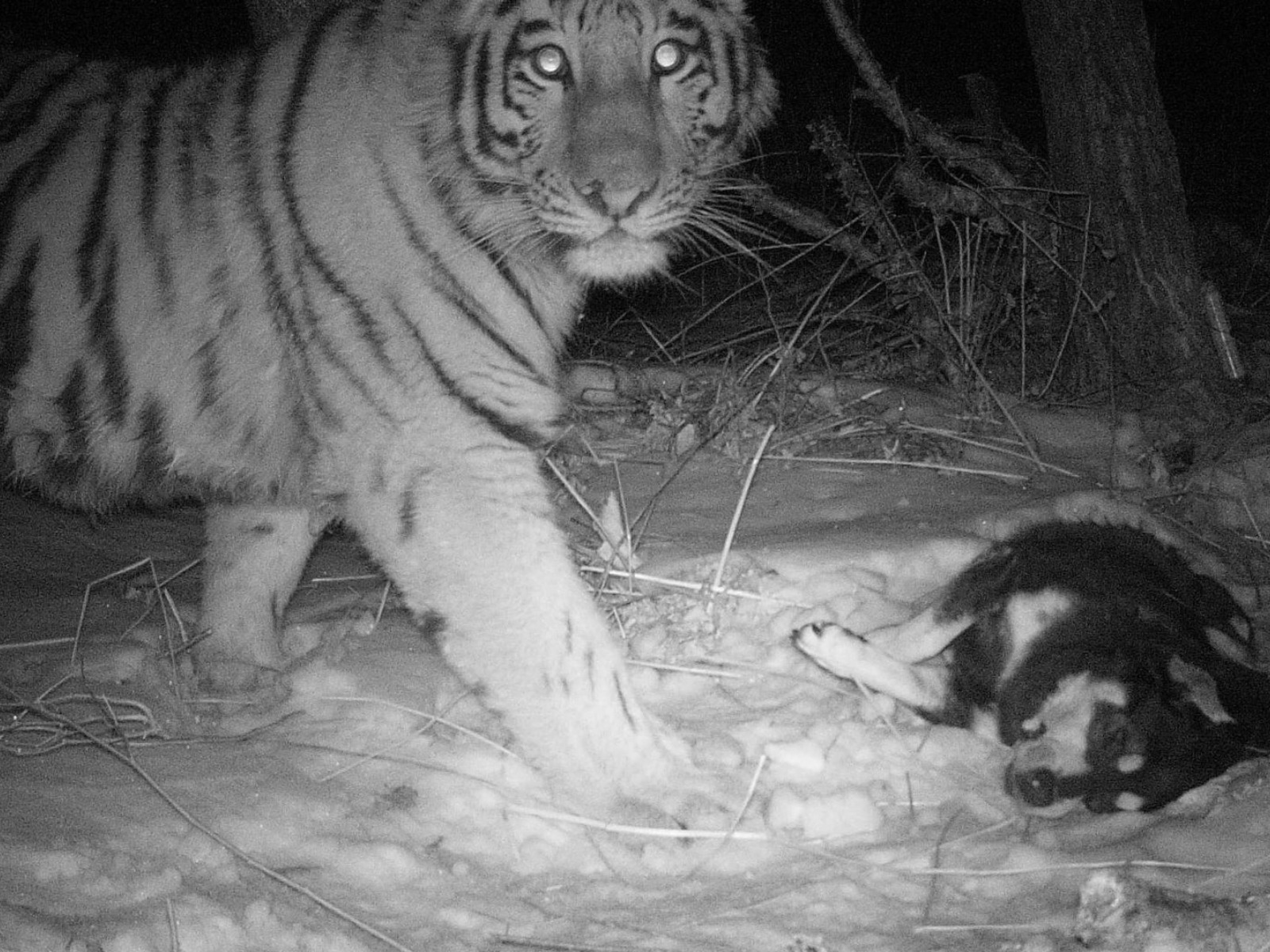
In other words, officials of high rank in the Russian Far East themselves officially confirmed the problems. But within that paradigm, they were asking for Red Book tigers to be killed in order to “solve” the problem.
Second.
In 2025, the federal Government confirmed all the problems. The information was officially published in “Parlamentskaya Gazeta” (a publication of the State Duma and the Federation Council). Adviser to the head of Rosprirodnadzor, Amirkhan Amirkhanov, stated — I quote the publication further:
“The agency, according to him, is engaged in removing sick or dangerous animals from the wild and returning them there if possible. Over the last two years, at the request of regional authorities, 77 tigers were recognized as dangerous, but only 32 were removed. That means at least 45 ‘improper’ big cats are still roaming somewhere.”
This is exactly what I am talking about, and it is strange that no one mentions it at all — the serious problem of the formation of a synanthropic tiger population.
The problem was also confirmed by Irina Makanova, head of a department at the Ministry of Natural Resources. Again, a quote from the publication:
“If wild boar in the Russian Far East were destroyed out of necessity, then the populations of deer and roe deer, which tigers may also feed on, are already small, and poachers are additionally cleaning them out, noted Irina Makanova. But the main cause, according to her, lies in other human actions: improper oak forest logging and mass collection of pine nuts, because of which animals are starving.”
This is exactly what I was just telling you above. About the destruction of Korean pine–broadleaf forests. Everything has been officially confirmed at the highest level!
And more quotes from the same source:
“People have been talking about the shortage of nuts for years. In 2023, a group of senators and deputies submitted a bill to the State Duma granting regions the right to set the time, places, and norms for collection. This would make it possible to control the harvest, most of which goes for export. Moreover, according to Rosprirodnadzor, 90 percent of exports go to neighboring China, while a tenth goes to Europe and Israel. The authorities of Primorye asked for the law on controlling pine nut harvesting to be adopted more quickly. At present, anyone can collect this product freely.
During the discussion in the State Duma, another problem was also uncovered. Powers to manage wildlife objects, including their monitoring, currently belong to the constituent entities of the Russian Federation. The Ministry of Finance allocates only nine million rubles for this. Nine million for 89 regions, Makanova repeated, adding that the time has come to change the method for calculating subventions. Otherwise, the proper and much-needed statistics may never appear.”
Third.
Information from media outlets that quoted leading experts from the Russian Far East. Thus, “Public Television of Primorye” wrote:
“Because of African swine fever in Primorye, more than two years ago there was a mass die-off of wild boar, and this is the basis of the Amur tiger’s food supply. The boar population declined by more than 70%. This significantly affected the region’s ecosystem.”
But it was not a mass die-off of wild boar — it was extermination. Outbreaks of ASF were declared, and people went into the forests killing boar, clearing them out to a critical level.
By the way, the information about a decline of more than 70% is still a very cautious estimate. I will quote the outlet “FederalPress,” which published an article titled “Amur Tigers on the Brink of Survival: The State Duma Prepares New Protection Measures” in 2025:
“Deputies of the State Duma intend to appeal to the General Prosecutor’s Office with a request to check facts of illegal hunting of Amur tigers in Primorsky Krai. At a meeting of the committee on ecology and natural resources, parliamentarians expressed concern over the threat to the population of these Red Book predators and proposed strengthening control over their protection.
‘If commercial hunting is being carried out on animals under the highest level of protection, this raises serious questions. It is necessary to appeal to the Prosecutor General to verify the situation,’ said Vladimir Burmatov, First Deputy Chairman of the State Duma Committee on Ecology.
According to deputies, one of the main reasons for the increasing number of tiger appearances in populated areas is the weakening of animals due to poaching. Many of the caught ‘conflict’ predators bear traces of old and fresh wounds inflicted by poachers’ weapons.
‘The hunt for our national treasure continues,’ the parliamentarians noted.
In addition, the situation is aggravated by the reduction of the tigers’ food base. As Deputy Chairman of the Committee Georgy Arapov reported, the plague epidemic destroyed up to 90% of the wild boar population, while the numbers of other species such as deer and roe deer remain low. In 2023, more than 450 cases of tigers approaching people were recorded, leading to the death or injury of 250 domestic animals.”
As you can see, all of this is official. Note carefully: Irina Makanova, head of a department at the Ministry of Natural Resources, confirms that wild boar are being DESTROYED specifically by people. The media cautiously soften this into “there was a mass die-off.” And later, parliamentarians say that “the plague epidemic destroyed up to 90% of the wild boar population.”
In reality, it was people who destroyed them. They simply went into the forest and, under the cover of “ASF,” shot wild boar in the wild, and huge funding accompanied all of this. This issue needs to be studied separately, perhaps in future articles; for now, just note it for yourself.
So, the authorities themselves confirm that tigers are being shot, that poaching is widespread, that appeals were made even to the Prosecutor General’s Office, and that a resolution was adopted following discussion of the problem. They also emphasized once again, officially in Moscow, that the wild boar population had in fact been reduced by up to 90%. The tigers simply have nothing to eat.
And notice how the cause of “African swine fever” somehow became blurred by the fact that, it turns out, not only are there no boar, but deer and roe deer are also very scarce.
Fourth.
And in March 2026, at the “Eastern Russia” meeting, Doctor of Biological Sciences Andrey Goncharov (Far Eastern Branch of the Russian Academy of Sciences) stated:
“At present, 8 out of 10 Korean pines in Primorsky Krai have been cut down — Korean pine broadleaf forests have been virtually destroyed. And this was the tiger’s main habitat: the pines fed everyone, from chipmunks to boar, which are the predator’s main food base. In fact, the tiger has nowhere to live.”
This confirms my analysis. Earlier I referred to data from another scientist up to 2007, then the destruction of the country’s forestry system followed (the new Forest Code), and accordingly here are the conclusions of a Doctor of Biological Sciences — today 8 out of 10 pines have been destroyed.
I will also quote “EastRussia,” which covered the results of the round table on the problem of tigers approaching people in March of this year:
“At the initiative of the deputy corps and the Ministry of Forestry, the Federal Scientific Center for Biodiversity of the Far Eastern Branch of the Russian Academy of Sciences conducted a study of the tiger’s food base. The conclusion was unequivocal: ‘the food base in Primorsky Krai does not correspond to the tiger population. It simply has nothing to eat — and this is one of the reasons why it comes to people.’”
And now I will close this article, which has already become too long, and I hope all Allies have read it, with one more quote from “EastRussia”:
“Representatives of the ANO ‘Amur Tiger,’ invited to the round table, were not present at the event. It was not possible to obtain comment from the organization at this time.
Earlier, its head Sergey Aramilev stated that the third edition of the ‘Strategy for the Conservation of the Amur Tiger’ through 2034 takes into account new challenges, including ‘attacks in the information space.’
‘Among these challenges are the activation of trophy hunters and information attacks aimed at creating an atmosphere of fear and hatred, undertaken by opponents of our Motherland, including from abroad. Someone is trying to present the tiger as the cause of all problems, while someone else wants to use it to distract attention from their own mistakes,’ the statement by Sergey Aramilev says.
According to him, conflict-free coexistence between tiger and human is possible. Strategic documents have been adopted, instructions have been given by regional heads. Every day, in forests and populated areas, specialists catch conflict tigers, feed ungulates, and catch poachers.”
That means even the specialists working with tigers themselves say that an information attack is underway against tigers, and that predators are being deliberately portrayed as enemies of humanity. And the leading problem identified by experts working directly with tigers is the activation of trophy hunters. These are the same influential wealthy people who for many years have been eroding the protected status of Russia’s Red Book, and who right now are trying to pass a bill on the shooting of endangered animals listed in that very Red Book — a resolution on the creation of a digital online system for issuing permits for the “taking” of rare species, including to legal entities and entrepreneurs.
I apologize to my Allies for such a long article. This is only part of what I want to tell you and publish! But unfortunately, people hardly read long texts, and our society has a colossal knowledge gap.
Help us in our struggle — spread this material as widely as you can, pass the truth on. And we will keep fighting for Life!
Let me remind you that we are preparing to launch a unified nationwide project for the protection of Russia’s key predators. We will respond not only to local problems, but also push for changes at the legislative level.
© PAVEL PASHKOV
Support the fight!
The hardest thing in our time is to remain independent from government and business! All activities are carried out independently. Stand with us and support our Mission to protect wildlife.
I want to support!Get involved
On an ongoing basis, we launch public initiatives together to protect wildlife and achieve real change. Join this work and help change the world for the better.
Explore the initiativesTFET Concept
We are working to transform the global protected-area system — Territories of Full Ecological Tranquility (TFET) must be created. Wildlife needs refuges from human pressure! This is one of the key paths out of the planetary ecological crisis and toward preventing further ecosystem collapse.
Learn more
