
We are told that shooting bears is the only method to resolve conflicts. No one suggests addressing real ecological issues, reducing pressure on wildlife, or imposing a moratorium on sport hunting and animal culling. Instead, we hear a linear rhetoric: more bears need to be killed, and budget funds should be allocated for this. On the contrary, instead of easing, say, hunting pressure on animal populations, projects and laws are being adopted that significantly expand their culling.
Are there really no other methods to resolve conflicts? Must the bear, the 'terrifying taiga monster,' inevitably die for attempting to approach human settlements in a starving, exhausted state?
I want to illustrate the problem using the example of a European country. This is Romania. Here, there are severe conflicts with bears, alongside the implementation of modern scientific approaches, resulting in a dual reaction: while authorities shout about the need to shoot bears, scientists simultaneously demonstrate practical methods for modern coexistence between humans and wildlife.
Let me start with the background.
During the "Ceausescu era," from 1963 to 1989, bears in the country were artificially maintained for elite hunting. Hunting was practically closed to the general public, but the political elite, including Ceausescu himself, actively engaged in VIP killings. This says a lot about "big politicians," doesn't it? Starting around 1974, bears were actively fed to encourage them to inhabit certain areas for future shooting. Their numbers were also deliberately increased: about 4,000 bears were counted in 1975, and after mass feeding in elite hunting grounds, there were about 8,000 bears. Let me remind you, this is Romania—a small country.
Ceausescu himself and members of his inner circle, according to expert analysis, personally killed at least 450 bears. They regularly went to shoot animals.
Later, after 1990, the feeding of bears continued, but hunting became more accessible to everyone. The industry of paid killings continued as a legacy of the old regime. By 2000, the population was estimated at about 5,000 to 6,000 individuals. Since bears were widely fed everywhere, they developed a habit of living close to humans, suppressing their biological evolutionary caution towards humans, and often wandered near settlements.
Then in 2007, after Romania joined the European Union, the brown bear received strict protection under European environmental legislation. Regular bear hunting was stopped, and only "special exceptions" allowed the removal of conflict individuals. This is what VIP hunters began to exploit, buying these "exceptions" for money.
At first, everything seemed reasonable, even worthy of respect.
See for yourself:
In 2016, the Romanian authorities banned actual trophy hunting of bears under the guise of regulation. Before this, there was a quota for the culling of 550 bears, and foreign hunters would come to Romania to shoot bears, paying around 10,000 euros per trophy. The then Minister of Natural Resources, Cristiana Pașca-Palmer, stated that the exception intended for removing dangerous animals was being used for commercial hunting. In October 2016, this practice was halted and a temporary ban was introduced.
This provoked a fierce conflict with officials who served the interests of the influential hunting lobby. They were outraged: how could it be NOT ALLOWED TO KILL? Does this mean they have to stop the flow of money?
From 2017 to 2021, they began to stir up the information landscape, genuinely scaring the population with a 'bear invasion.' I checked scientific reviews, where researchers show the scale of this madness. For instance, scientists analyzed 931 publications in Romanian media from 2007 to 2021. In 2016, there were 23 publications about bears, in 2017 there were 69, and in 2021 there were 430. Of the materials on human-bear interactions, 53% had a negative tone, and 68% did not explain the causes of conflicts. Even the simple appearance of a bear near a person was often presented as a conflict. All of this was done deliberately!
As early as 2023, Romania's new Minister of the Environment is attempting to legalize the mass culling of bears. On June 14, Minister Barna Tánczos announced that he had signed an order providing for the culling of 426 bears under a preventive quota and another 55 under intervention measures—481 in total. The Romanian Academy officially stated that its specialized commission had not given preliminary consent. The documents were only submitted to the Academy on the evening of the same day, already with the minister's signed draft. Moreover, the study justifying the numbers 426 and 55 was not provided to the commission at all.
Complete disregard for science, ministerial manipulations, and blatant forgery with the sole aim of legalizing the shooting of animals.
But officials lack a real scandal. Something is needed to instill genuine fear in society and portray the bear as an absolute threat! And so, in July 2024, a 19-year-old tourist dies, prompting Parliament to be urgently convened from recess—aha, they can rejoice: officials immediately allowed the annual killing of 220 to 481 bears. 426 under the preventive quota and 55 under intervention measures. The decision was made literally a few days after the tragedy. President Klaus Iohannis publicly stated that there are 'too many' bears in the country, and then the law was passed.
What efficiency, right? Meanwhile, bears were actively being fed near roads, with the internet flooded with such videos and photos. And as is known: feeding a bear by hand is killing a bear and provoking future conflicts, because the safe boundary is erased.
Now look at what was happening in parallel. Back in 2018, the Romanian government was trying to establish a NORMAL SYSTEM OF INTERACTION with wildlife. A national action plan for bears was adopted, aiming to create a genetic registry, regularly count the actual population size and structure, establish a comprehensive monitoring system, preserve ecological corridors, create special regional response groups, use electric fences, implement bear-proof waste containers, protect livestock and property, work with specific conflict animals, relocate animals, and reduce human-bear interactions.
The plan mandated conducting national genetic studies using non-invasive samples at least once every ten years. It also called for a minimum of five special regional groups, which were to include specialists in forestry, hunting, veterinary science, biology, and ecology.
IN OTHER WORDS, COMPLETELY ADEQUATE GOVERNMENT MEASURES BASED ON A SYSTEMATIC APPROACH TO INTERACTING WITH WILDLIFE.
One could say "bravo! Just BRAVO!" — but practically no one did, as instead, there were government reshuffles, the hunting lobby came to the forefront and pulled the line: KILL BEARS ACROSS THE COUNTRY!
So, the plan is supposedly in effect, but no one intends to follow it. And all because no one wanted to slow down the flow of money from influential foreign trophy hunters. Self-serving interests of immediate profit prevailed!
Then the authorities of the individual city of Băile Tușnad decided to establish their own system of interaction, and while the main government called for dealing with bears and increasing the scale of shootings, the administration of Băile Tușnad, together with global scientists, began to address real problems.
Starting in 2019, instead of trying to eliminate bears, they began installing electric fences to protect yards, farms, and other properties. Later, the system was expanded to approximately 400 electric fences. They started working on waste management and other food sources that attracted animals to humans. Eliminating food rewards is one of the key principles of such a system.
From 2021 to 2022, a system was also created to work with individual bears rather than the entire population at once. Scientists and specialists began using GPS collars, camera traps, monitoring the movements of specific animals, an early warning system, a specialized response team, deterrence, tranquilization and relocation, waste and food source control, and electric fences. Lethal intervention was made a last resort.
And now look at the results. I will immediately note that the area of Băile Tușnad is one of the most bear-populated in the country, making the practical experience there very illustrative.
Before the entire system was launched, in 2021, there were 41 incidents of bear-related damage reported in Băile Tușnad.
In 2022 — 0.
In 2023 — 0.
The number of bear emergency alert system notifications:
2021 — 149;
2022 — 30;
2023 — 6.
Thus, the recorded damage decreased from 41 cases to zero, and the number of emergency warnings dropped by almost 25 times.
Importantly, in the area around the town of Băile Tușnad, bears were not exterminated; they remained an existing population. Only the approach changed, the system of human interaction with them.
Later, results for 2025–2026 emerged—the outcome was maintained, and the model began to spread further, attracting interest from other regions. Scientists reported that by 2025, the number of registered damage cases in Băile Tușnad remained zero. There were only 14 emergency warnings in a year, requiring 5 interventions: one deterrence and four relocations of animals; not a single bear was killed. By 2026, Băile Tușnad's experience was already being presented to other municipalities in Romania as a practical model for conflict prevention. Scientists, specifically relevant experts, are addressing authorities and proposing to implement REAL MODERN PRACTICAL MODELS OF INTERACTION WITH WILDLIFE and stop the linear, senseless killings.
In summary, while government officials fuel the fire in the interests of the hunting lobby by pushing for the mass killing of bears, even ignoring the national academy of sciences, at the same time, in the same country, a wonderful model of interaction is being implemented, demonstrating to everyone the possibility of coexisting with wildlife without linear killings.
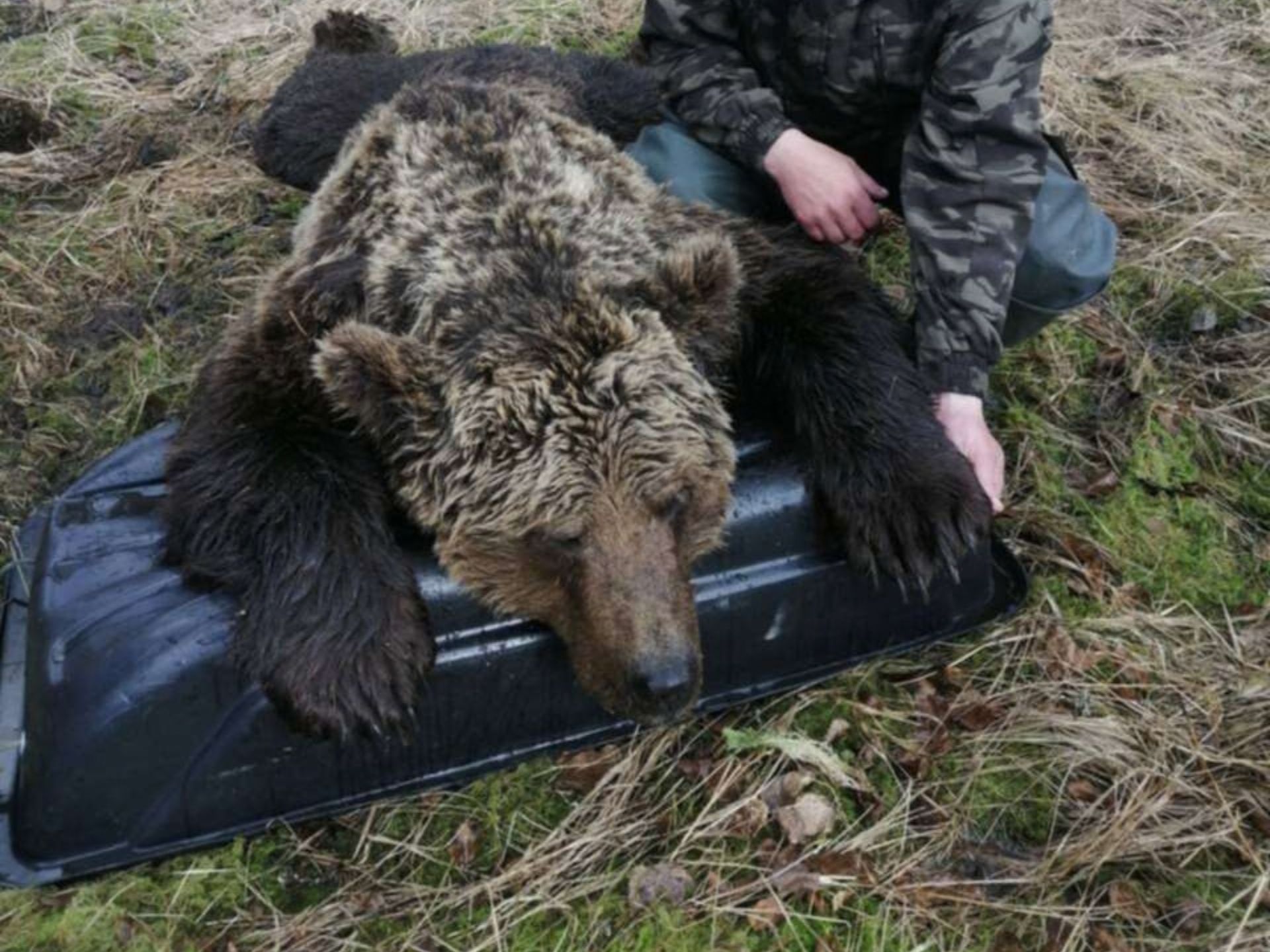
Now, regarding the situation with bears in Russia. What prevents the integration of a practical model that has already proven effective in the Romanian town of Băile Tușnad? What prevents reducing conflict to zero if such developments already exist and are successfully used?
Update to the material: Romania has authorized the killing of 969 bears annually. Law No. 190/2026 dated October 5, 2026, has been signed.
© PAVEL PASHKOV
 AncientIn Ancient, I draw on my expeditions and scientific research to reveal the destruction of old-growth forests. This book is my gift to you: download it free, read it and pass it on.Read for free
Support the fight!
Your support makes it possible for me to continue my independent work. I run these projects independently of government and business. Stand with me and support my mission to protect wildlife.
I want to support!Ancient Forest
I launched an independent project to protect Russia’s forests — an analytical research center focused on the scale of destruction of intact forests, wildfires, and the pressures threatening wildlife populations.
Explore the projectTFET Concept
I believe the global protected-area system must change and Territories of Full Ecological Tranquility (TFET) must be created. Wildlife needs refuges from human pressure! This is one of the key paths out of the planetary ecological crisis and toward preventing further ecosystem collapse.
Learn more