
The planet cannot withstand humanity — all of the world’s ecosystems are in an extremely severe crisis, and humanity itself has exceeded all acceptable limits in the exploitation of nature. Just recently, in March 2026, a new scientific paper was published titled “Global human population has surpassed Earth’s sustainable carrying capacity”, in which scientists are trying to convey to people that the size of the human population is critically above the level that Earth can support.
In other words, the current number of people is consuming resources at such a speed that the planet is physically unable to recover. And this means one thing: our civilization will inevitably destroy this world and all life around it if urgent action is not taken.
I studied this analysis, and it is a very high-quality work that confirms the critical phase of the planetary crisis. Quite literally, we really are, like a disease, stripping the planet of all living things, and this process is not stopping. The scientists conducted their analysis on the basis of earlier large-scale studies, which makes it even stronger. In fact, this is exactly how science should develop: numerous studies are conducted, after which they should be brought together, analyzed more deeply, and used to move the power of thought further.
According to the scientists, the biosphere is in crisis, and this stage began around 1970 — that was the time when humanity started living in a global deficit of biological capacity. Right now, Earth is unable to support either the future population or even the current one without radical changes in how people use land, water, energy, biota, and other resources.
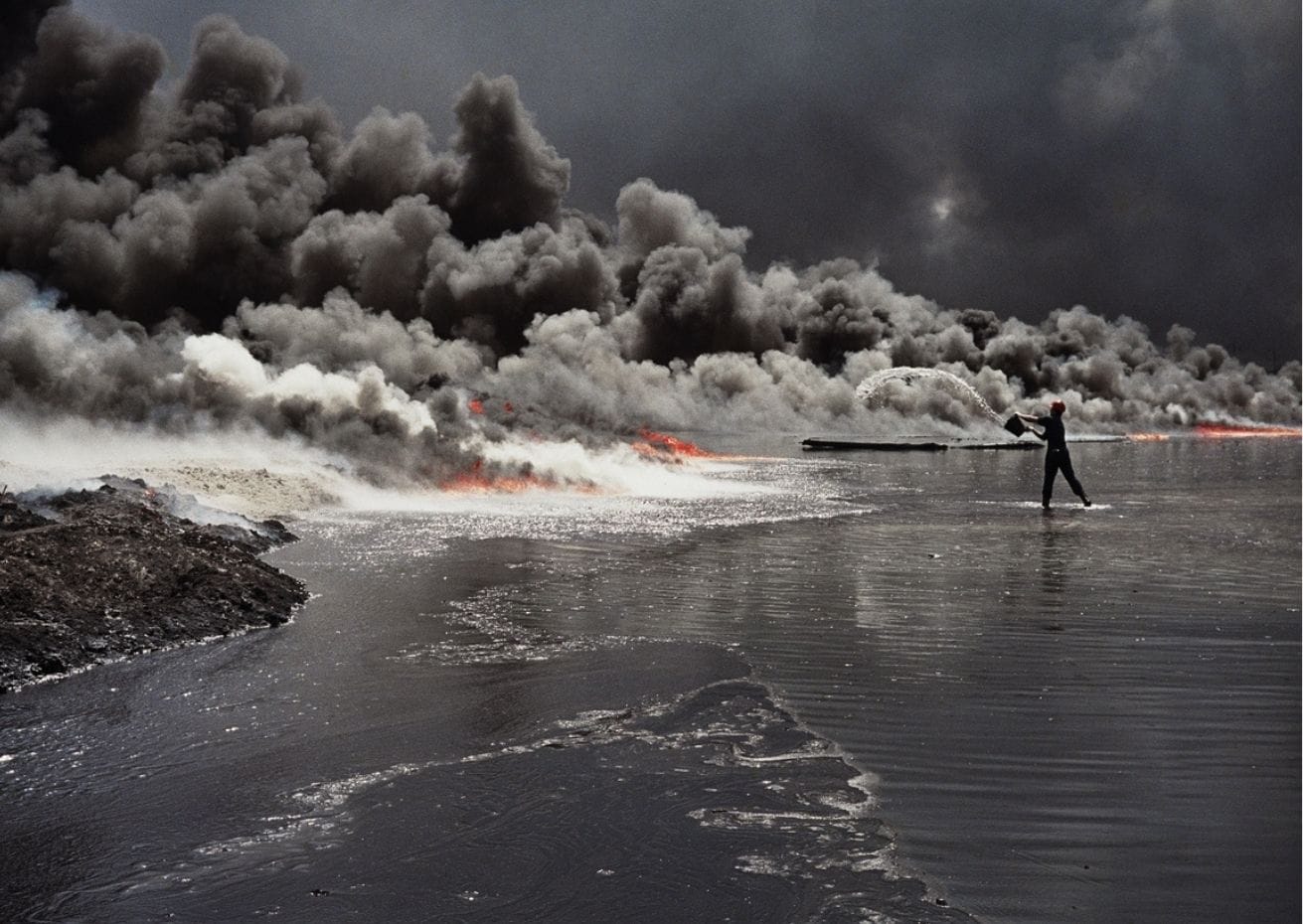
Technological breakthroughs and access to fossil fuels allowed humanity for decades to increase population and consumption faster than the biosphere can recover. In their scientific work, the authors model the global trajectory in such a way that, if the current form of dynamics continues, the absolute population ceiling may fall at approximately 11.7–12.4 billion people in the second half of the 21st century — by their estimate, somewhere around 2067–2076. That is, at most within 50 years.
But the planet is not prepared for this, and even now it cannot withstand the current population of Earth.
Let us take a closer look at how humanity moved from the Industrial Revolution to the “Great Acceleration.” To make it clearer, the “Great Acceleration” refers to the sharp increase in humanity’s impact on the planet after the middle of the 20th century, especially after about 1950: growth in industry, energy consumption, resource extraction, plastic production, dam construction, fertilizer use, the number of automobiles, international global trade, and ecosystem destruction.
Now let us look at the moment when humanity began destroying all life around itself. For the planetary system, the key turning points are as follows:
The first is the Industrial Revolution. Scientists usually take around 1750 as the starting point in order to capture the beginning of the industrial regime and its consequences. At that time there was a sharp expansion of energy capacity through coal, and later oil and gas, as well as accelerated transport, production, and the growth of urban agglomerations.
The second turning point is the post-war “Great Acceleration,” which began precisely after 1950. It was driven by the world war, which then triggered many socio-economic and biophysical indicators that rose sharply upward. Population growth began, along with GDP, industrial production, energy consumption, fertilizer use, mass water withdrawal, transport, and so on. At the same time, changes began in the climate, the planet’s biogeochemical cycles, and the biosphere.
In 1800, the population of Earth was about 1 billion people. Today it is more than 8 billion. Accordingly, the pressure has increased mathematically: how much we take from the biosphere, how much we ultimately turn into infrastructure and waste, and how much we return in the form of emissions and toxic substances.
In fact, these things have long been proven and confirmed by other scientific studies and reports. For example, in 2024, global scientists estimated that the global use of metals increased from about 30 billion tons in 1970 to 106 billion tons by 2020. If calculated per person, that is an increase from about 23 to 39 kilograms of materials per day. And accordingly, colossal resources are needed to extract and process all of this, followed by equally colossal volumes of pollutant emissions, and so on.
Specialists usually call this “linear destruction,” when each new billion people becomes not simply “a billion mouths,” but a billion shares of infrastructure. After all, all energy, fertilizers, transport, concrete, steel, plastic, and waste are distributed across everyone, and all of this puts pressure on Earth’s biosphere.
But here is the paradox — despite the promoted “convenient ideologies,” supposedly claiming that there are too many poor people and therefore nature is dying, the reality is entirely different. Scientists in various studies confirm that the upper caste of wealthy people (about 10%) is responsible for around half of all emissions.
Thus, yes, population scale matters, and even the most modest per-capita levels, when multiplied by billions, turn into enormous flows with colossal pressure on ecosystems. But at the same time, the key accelerator of this entire crisis in the current global model is the overconsumption of the wealthy and the industrial infrastructure that cements this way of life as an “absolute norm.”
I had actually studied these data earlier in other scientific papers. For example, according to global individual carbon footprint estimates, in 2019 the bottom 50% of the world’s population accounted for only about 12% of emissions, while the richest 10
Support the fight!
The hardest thing in our time is to remain independent from government and business! All activities are carried out independently. Stand with us and support our Mission to protect wildlife.
I want to support!Get involved
On an ongoing basis, we launch public initiatives together to protect wildlife and achieve real change. Join this work and help change the world for the better.
Explore the initiativesTFET Concept
We are working to transform the global protected-area system — Territories of Full Ecological Tranquility (TFET) must be created. Wildlife needs refuges from human pressure! This is one of the key paths out of the planetary ecological crisis and toward preventing further ecosystem collapse.
Learn more
