In our country today, the practice of so-called “trophy hunting” or “trophy tourism” is being institutionalized within the boreal zone of the Russian Taiga. It is legitimized through archaic and pseudo-scientific narratives — especially through the myth of “nature regulation.” This allows society to avoid and postpone the ethical reconsideration of human interference in wild nature. Instead of looking toward the future, it turns participants and beneficiaries of such “aristocratic blood entertainments” — as well as the whole society — backward, into the Middle Ages. Including those who have either not heard about this dark revival of archaism or prefer not to.
The question “Am I a creature or do I have the right?” — nobody even tries to ask.
The answer seems somehow self-evident to everyone: “Yes, I have the right. I do whatever I want.”
“I am the king of nature!”
“Man is the crown of creation!”
“Man comes as the master of his vast homeland,” — as the song says.
And now the “masters of life” demonstrate their aristocratic “right to violence,” violating nature and killing the living inhabitants of the Russian Taiga.
Let’s skip the fact that the beautiful Soviet song meant by “man-master” the creative human being — a working person, building his country for everyone, for the future. The one who declared Biospheric and Noospheric principles, and in part even embodied them in reality — for example, in creating the country’s system of nature reserves.
And today’s “masters of life,” realizing their whims and deep psychological complexes through violence against animals, look alien and grotesque within the Soviet narrative of the “master of the taiga.”
They are completely foreign there, to be honest. A pathological inclusion into the Soviet myth.
And even in the pre-Soviet one. They hardly resemble a saint to whom birds perch on the shoulders, and bears emerge from the forest bowing in greeting.
A “gang-style slaughter” has little in common with the fairy tale “Masha and the Bears.” Why do we believe it when our meanings are replaced?
The Russian Taiga today is a mirror of the Anthropocene.
A mirror of the era in which man destroys the very world that sustains his own life.
The classic “sitting on a branch and sawing it off.”
The classic “pig undermining the roots of the oak whose acorns it feeds on,” from the well-known fable “The Pig and the Oak.”
And what is happening right now borders on surrealism!
Viewers are shown the image of harmony between man and nature — eco-friendly recreation in “protected zones.”
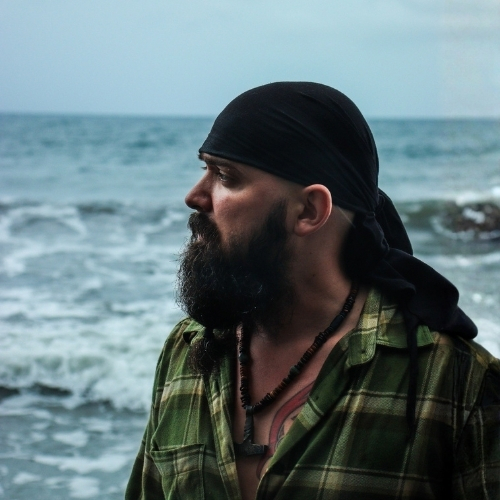
We are presented with the image: a group of “eco-tourists” in “eco-friendly” outfits taking pictures with the body of a slain animal in what used to be a Soviet nature reserve.
Question: why isn’t this killing perceived by viewers as violence, but rather as a “return to nature”?
“The magic power of art,” probably.
I mean — the art of propaganda.
The art of cheap propaganda disguised as “advertising” or even “social advertising.”
Let us here and now deconstruct several of the most dangerous myths that justify and legitimize the final destruction of our Russian Taiga.
The most dangerous myth: the myth of “excess animals.”
This is a sad story about how science becomes a screen for something else…
We are given supposedly “scientific” arguments:
- If we don’t shoot them, the population will degenerate / die of hunger.
- There are too many deer; they destroy pastures and eat everything — so they must be killed.
- There are too many predators; they destroy the deer — so they must all be killed.
- There is not enough food for predators because all the deer have mysteriously disappeared. Therefore, predators approach human settlements and threaten people. Therefore, they must all be killed immediately.
Kill, kill, kill — any argument will do to justify an endless chain of killings.
Yet all these arguments are so pseudo-“scientific” that they are hardly worth refuting — they are simply absurd:
- Ecological connections within the biocenosis are ignored.
- The self-regulation of ecosystems is ignored. The role of scavengers, migrations, intra-species regulation, etc., is ignored.
- Forestry and hunting administrations use biologically unfounded models convenient for setting quotas.
Thus, science becomes a pseudo-science — a paid justification for any fantasy or whim of those who fund it.
Such commercial “science” turns into a cover for another commerce — commerce on the looting and destruction of the boreal taiga.
Ethically, modern trophy tourism appears as a colonial practice in a new wrapper — something that the media, cinema, and advertising now openly demonstrate:
- False analogies with 19th-century “safari”: a rich foreigner or oligarch “takes” a trophy from the “wild” forest.
- They say outright in ads: “Feel like a prince!”, “Royal Hunt”, “Noble Estate.”
A strange ethical paradox: while Western countries are shutting down trophy hunting, Russia is institutionalizing it.
The question arises: are we moving toward the future of technology — or toward the “bright Middle Ages” with fleas, beards, and the whipping of peasants in the stables?
Archaism is being implemented as official ideology!
If we are to think about the future and about complex systemic principles, the first question should be: can we be part of nature — without claiming the right to kill?
Protecting wild fauna begins not with “management,” but with rejecting the right to “edit” it without understanding. One must first grasp the principles of living systems — and only then (and cautiously!) can management even be discussed.
Understanding first — interference later!
The Russian Taiga does not need “regulation.” It is itself a form of cleansing — of human vanity. By learning how great living systems function, we can begin to understand ourselves and our true place in this world.
We are part of nature — not its rulers.
Not long ago, reserves in our country were protected not only by law, but by their physical remoteness and inaccessibility. Thanks to that combination of physical, material, legal, and social factors, some corners of “pure” nature survived.
Now these “pure lands” have become a valuable resource to be sold. People have polluted everything around them so thoroughly that they now flock to the last places not yet defiled by themselves.
The second part of the equation — physical accessibility of once-inaccessible places.
The third part — the desire of the nouveaux riches to become “princes and boyars,” since they have more money than sense. As a result, trophy hunting grows a pseudo-historical mythology built by advertising to attract customers. Business is business — nothing personal, as they say.
Now let’s put an equals sign and look at the other side of this equation — the openly suicidal state strategy being carried out in the name of society for the benefit of commerce:
FIRST.
The blow falls on key mountain ecosystems — Kamchatka, the Caucasus, Altai, the Baikal mountain country.
These are the most fragile systems of all — any ecologist knows that.
These are the sources of rivers, of fresh drinking water.
SECOND.
The blow falls on vast areas of boreal taiga that perform a vital role — transferring moisture from the oceans deep into the continent.
The “biotic pump” of atmospheric moisture — that is the scientific term.
Destroy them now — and the inland regions will dry up.
Oh…
We have equated the personal ambitions and psychological complexes of a handful of businessmen and “business-officials” with the security of the nation’s water resources.
The desire of a few to feel like “princes and boyars,” skillfully fueled by profit-driven promoters, has already placed the sources of Russian — and Eurasian — rivers under threat.
The transformation of vast macro-regions into tourist clusters has already been institutionalized. Development is underway.
Again: these are the headwaters — the climate-regulating territories of Eurasia.
For what purpose are these mega-projects being developed under state patronage?
Or rather: for WHOM, if these massive tourist complexes clearly exceed the needs of our own small (and shrinking) population?
And they answer, without shame and with pride in their voices: for the money of foreign tourists!
…Now our own land, our last pure corners and mountain springs, are being sold.
In one of those archaic cults into which we are now being consciously immersed, there is an old parable about this: “To sell one’s birthright for a bowl of lentil stew.” That is exactly what it’s called.
© Pavel Pashkov
Support the fight!
The hardest thing in our time is to remain independent from government and business! All activities are carried out independently. Stand with us and support our Mission to protect wildlife.
I want to support!Get involved
On an ongoing basis, we launch public initiatives together to protect wildlife and achieve real change. Join this work and help change the world for the better.
Explore the initiativesTFET Concept
We are working to transform the global protected-area system — Territories of Full Ecological Tranquility (TFET) must be created. Wildlife needs refuges from human pressure! This is one of the key paths out of the planetary ecological crisis and toward preventing further ecosystem collapse.
Learn more
