
Together, we are defending nature in Russia, and one of the epicenters of the most severe systemic problems in our country today is starving tigers approaching people in search of food. As you already know from my earlier materials, the large-scale destruction of tiger habitat is taking place right now: the taiga is being sold into private hands for logging and trophy hunting, while the animals' prey base has collapsed. Starving predators are genuinely approaching people, and more and more small tiger cubs are being left without their mothers—they crawl under local residents' homes and die from starvation. The problem has been acknowledged by the federal government, and scientists and experts are speaking about it openly. According to the latest scientific data, researchers also state unequivocally that tigers have nowhere to live and nothing to eat! This receives so much attention specifically because tigers are on the brink of extinction, are listed in the Red Data Book, and, when starving, approach people, kill dogs, and trigger conflicts that result in casualties. But at the same time, other animals are suffering from exactly the same shortage of food and habitat! And as though that were not enough, they are also constantly being shot as the quota-based industry of paid killing—trophy hunting—continues to expand.
To understand the scale of the problem, it is enough to examine even the most basic publicly available data, which no one is concealing. Or simply listen to the scientists who stated in 2026 that eight out of every ten Korean pines in the Russian Far East have already been destroyed. These mother trees, centers of interspecies relationships, are being completely erased for the sake of short-term profit.
But that is not all. Instead of addressing these problems, regional officials in the Russian Far East, together with major commercial interests, are now demanding that the boundaries of the Sikhote-Alin Nature Reserve be altered to allow industrial gold mining. In blatant defiance of all federal laws and prohibitions, they have even built a 500-meter road through the reserve's buffer zone, forcing their way toward one of the last refuges of the endangered tiger.
And against this background, we hear news that “tigers are being released in Kazakhstan.” This is being promoted as the salvation of nature! Readers have sent me numerous letters saying, “Pavel, look—nature is finally being restored.” Society, meanwhile, has split into two camps: some support the release of the tigers, while others oppose it.
Yet almost no one has recognized the real context of what happened.
So let us discuss it now.
I will begin with the fact that the practice of states presenting one another with rare animal species was borrowed from China. At the beginning of this year, I published an article titled “Panda Politics: Why Did China Take Back the Pandas It Had Previously Given to Japan?”
In brief, there is no genuine protection of pandas in China. There are isolated populations living entirely under artificial management and dependent on the government of the Celestial Empire. It is a political spectacle. During the twentieth century, more than half of all forests inhabited by pandas in China were destroyed, while the animals themselves were killed en masse for their pelts. A comprehensive fight against poaching did not begin until the 1980s. Today, fewer than 2,000 pandas remain, and the entire population lives in isolated areas. There has been no “victory over extinction.”
The point is that the Chinese government uses pandas as part of “panda diplomacy”—an instrument of China's foreign policy. When China wants to conclude a major agreement with another state, it leases that country a panda and requires payments of up to one million dollars per year. China thereby gains political influence: pandas become a symbol of Beijing's favor. A country that receives a panda demonstrates that it has good relations with China. But if it behaves badly, the panda can be publicly taken away, immediately damaging that country's reputation.
In other words, pandas function as a diplomatic asset. Many countries around the world have begun adopting this mechanism from China, “giving animals” to other states as a gesture of cooperation and favor.
Now let us return to what happened in Kazakhstan.
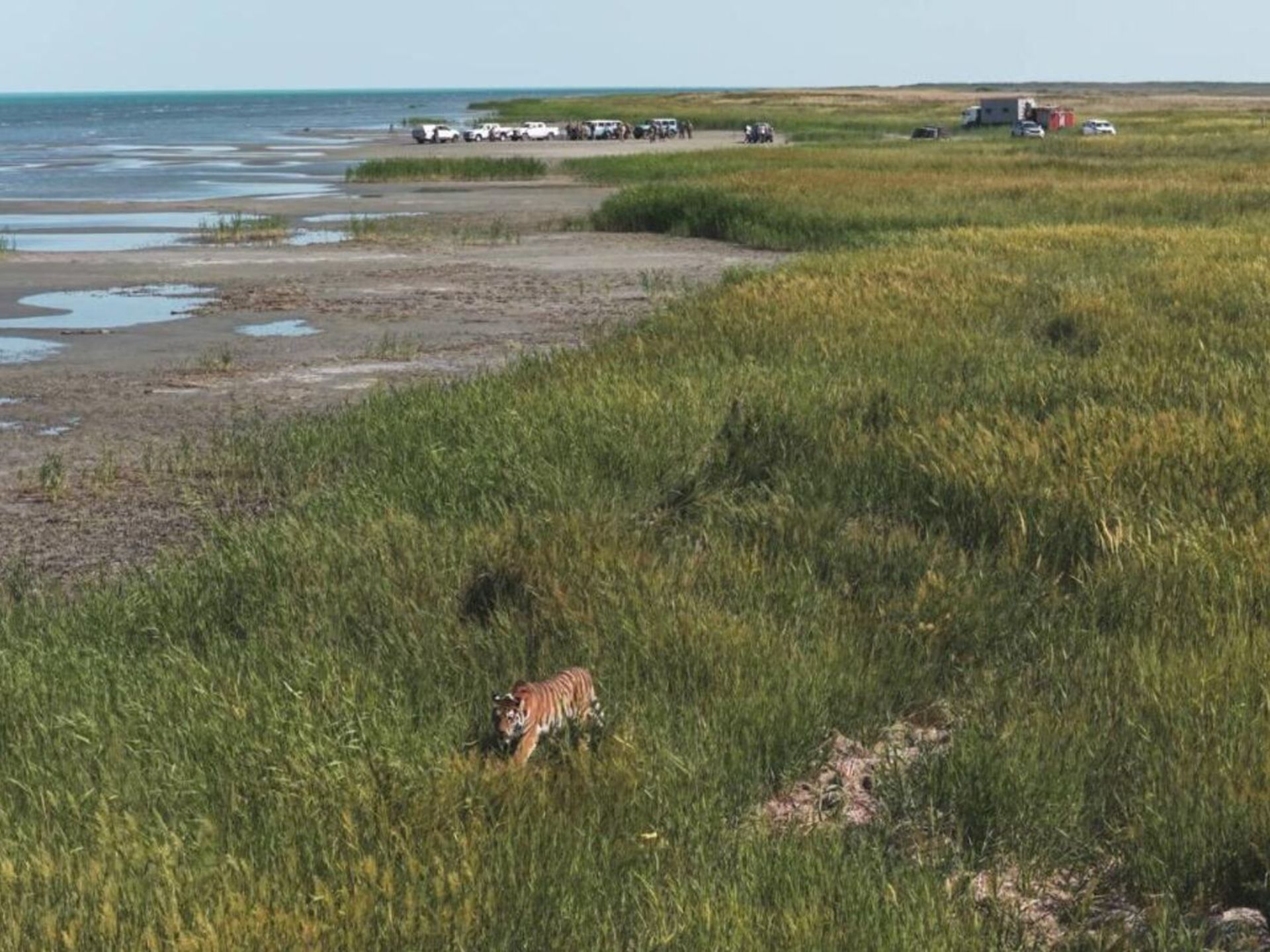
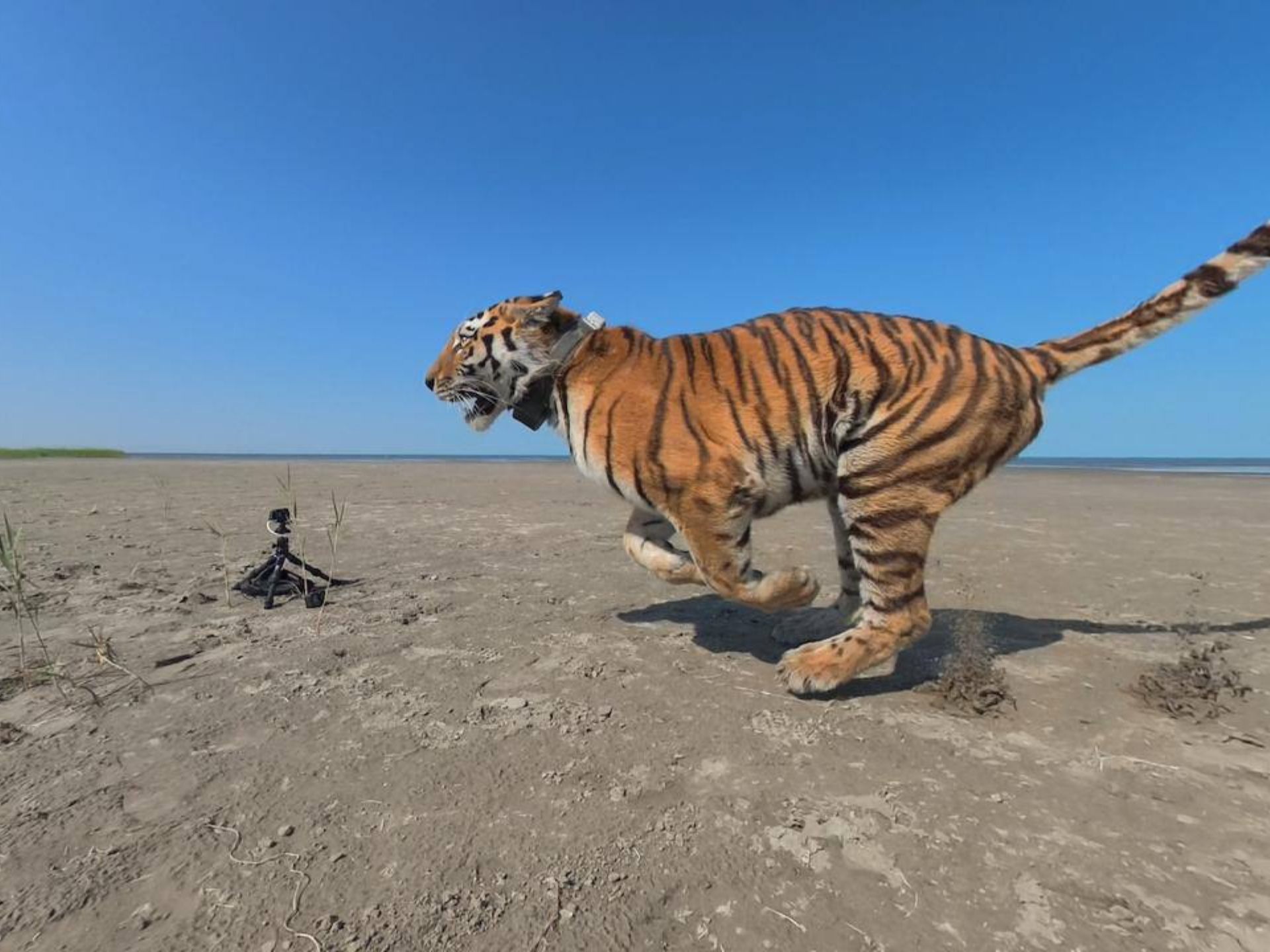
On July 31, 2026, an adult female Amur tiger named Umit was released into the wild in the Ile-Balkhash State Nature Reserve. Her name means “Hope.” At present, only one tigress has been released into the wild—not a restored population. Three other animals brought from Russia—an adult male named Amur and the cubs Turan and Ussuri—were still undergoing preparation when Umit was released. The adult animals were delivered to Kazakhstan at the end of May 2026, while the cubs are expected to require considerably more time to prepare for independent life.

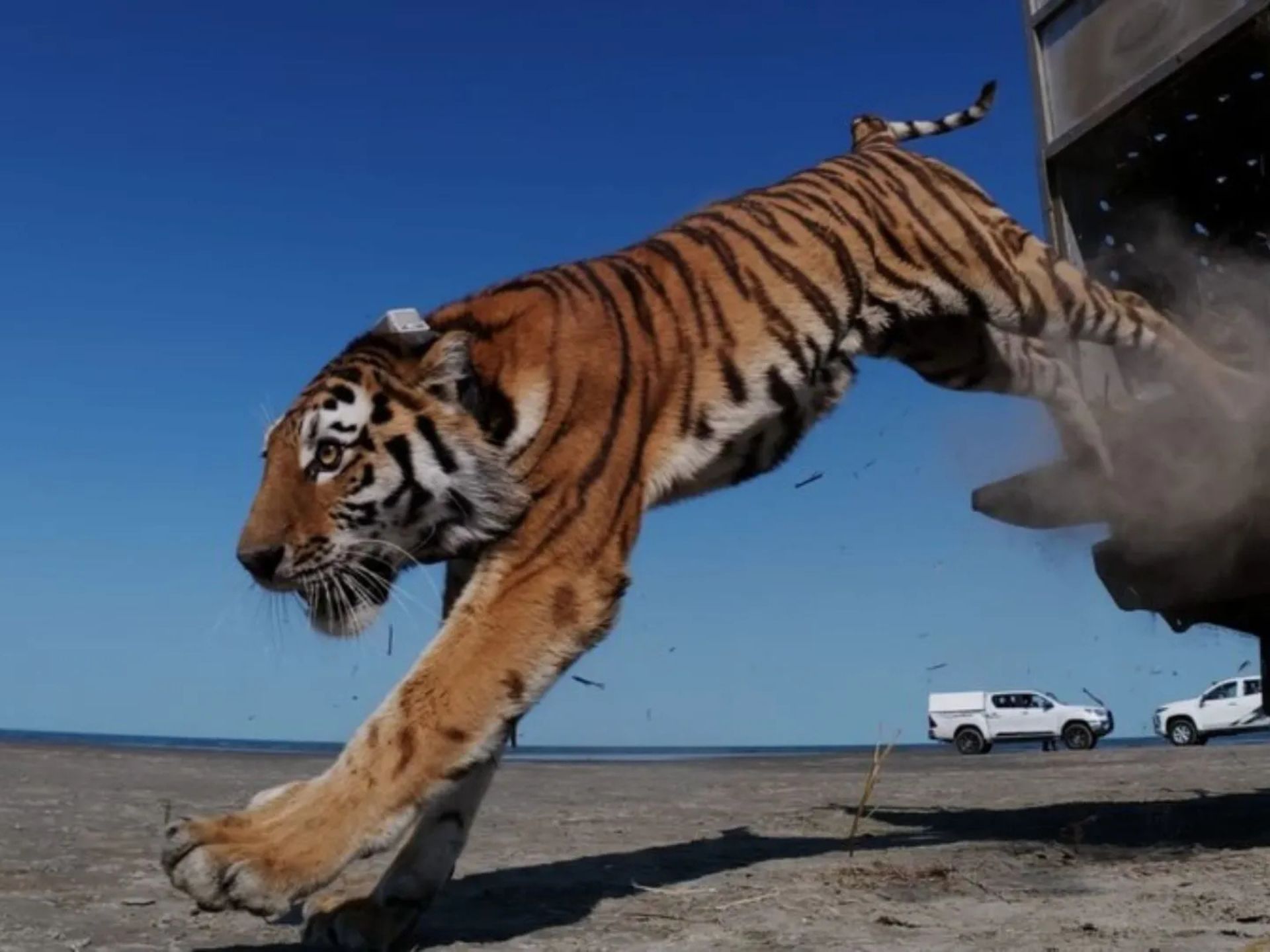
Thus, Russia is transferring four tigers from Khabarovsk Krai to Kazakhstan. The media are now presenting all of this as a human victory over tiger extinction, the restoration of nature, and so on. But the histories of these tigers tell a very different story. The adult male and female, approximately three to four years old, were captured after appearing near populated areas. Let me remind you that employees of Russia's Ministry of Natural Resources place frightened, trembling dogs inside cramped cages and leave them outdoors to lure wild tigers. This literally teaches starving tigers to hunt domestic dogs! A dog is kept inside a cage, a tiger approaches intending to eat it, and Ministry employees capture the tiger.
The two adult tigers delivered to Kazakhstan—one of which has been released, while the other has not—are precisely those same SYNANTHROPIC tigers, tormented by hunger and the loss of their habitat. Their real home is being ruthlessly destroyed and exploited, and now the Sikhote-Alin Nature Reserve is also being taken away for industrial gold mining. Naturally, these tigers are synanthropic: they live around populated areas and have already become effectively dependent on humans. If they lack food in Kazakhstan, they will begin approaching people, leading to conflicts and possible casualties.
As for the other two cubs being transferred to Kazakhstan, they are approximately six to seven months old. They were previously found EMACIATED, had lost their mothers, and came from different litters. When specialists discovered them, they were exhausted and literally close to death.
I have previously written that more and more tiger cubs are being found, while bullet wounds have been discovered on nearly all synanthropic tigers that approach people. Some have old wounds; in certain animals, the wounds are festering.
To summarize once again: forests are being sold into private hands for industrial logging and the shooting of animals for “sporting interest.” The prey base has collapsed, and eight out of every ten Korean pines have been destroyed. Tigers have nothing to eat and nowhere to live. They have begun approaching people, dragging chained dogs away, and becoming a synanthropic population. Employees of the Ministry of Natural Resources capture them by using terrified dogs locked inside cramped cages as bait! It looks horrific and repulsive. For years, those same authorities claimed that they would not do this and that the practice was not being used. But, as we now know, it most certainly is. Naturally, the tigers become increasingly conditioned to hunt dogs and return again and again. In response, local residents shoot at them. This further antagonizes the predators, which begin to regard humans as absolute and unconditional enemies and attack at the first encounter. In recent years, several people have been killed, several tigers have died, and hundreds of dogs have been killed.
The authorities therefore took two adult tigers and two cubs that had lost their mothers and transferred them to Kazakhstan. One tigress has already been released into the wild, while the other three are expected to be released later.
This is a tragedy, not the restoration of nature.
Now let us examine Kazakhstan itself.
In addition to the Russian tigers, Bodhana and Kuma, who arrived from a Dutch animal rescue center, have been kept at Ile-Balkhash since 2024. They are accustomed to captivity and will not be released. The organizers hope that their potential offspring could be used in the program. But producing cubs from a captive pair and subsequently preparing them for independent life is a separate, difficult, and far from guaranteed undertaking. For now, this is closer to political marketing.
I encountered celebratory headlines online claiming that “the authorities have finally brought back the Turanian tiger—it has been revived.” Naturally, this is completely false. The historical Caspian, or Turanian, tiger population was entirely exterminated by humans. The tiger became extinct. Amur tigers are now being introduced into Kazakhstan as the closest available analogue. To repeat: this is the reintroduction of an ANALOGUE, not the return from extinction of the lost population with its original genetic structure and local adaptations.
Why did I tell you about China's “panda politics”?
The transfer of the four tigers was timed to coincide with Vladimir Putin's state visit to Kazakhstan. Kassym-Jomart Tokayev publicly thanked the Russian president for the “valuable gift,” while Russian government bodies presented the animals as a symbol of partnership between the two countries. This means that the tigers were presented in the context of a diplomatic visit and negotiations concerning energy, oil transit, and other matters—just as China does when concluding agreements with other states.
The tigers' names were also selected skillfully from a political standpoint—Amur, Umit, Turan, and Ussuri: living emblems of interstate friendship.
The release of the tigers into the wild was itself a major exercise in political staging. As early as May 28, the official website of the president of Kazakhstan reported that Tokayev and Putin had been shown a video “in which four Amur tigers were released” into the reserve. News agencies repeated this wording, producing headlines claiming that four tigers had already been released into the wild.
In reality, only one tigress has so far been released into the wild. She is essentially the first animal in a pilot stage, and her fate is unknown. She may establish herself, hunt successfully, and eventually reproduce. She may leave the prepared area, approach populated settlements, die, be captured again, or come into conflict with humans. Neither a satellite collar nor monitoring by specialists eliminates these scenarios. And yes, of course, these will be closely monitored tigers dependent on humans and constant supervision.
I obtained the available scientific studies concerning these regions because I am currently conducting expeditionary research in Central Asia to establish Territories of Complete Ecological Tranquility and develop the boundaries of future TPES. Naturally, I am interested in who is making the decision to release tigers from the Russian Far East in Kazakhstan, how that decision is being made, and what evidence it is based on.
The principal scientific study underlying the decision to return tigers to the Lake Balkhash region was published in the journal Biological Conservation by Igor Chestin, Mikhail Paltsyn, Olga Pereladova, Lisa E. E. Egorova, and James P. Gibbs. The researchers estimated that approximately 7,000 square kilometers of suitable habitat existed in the Ili River delta and along the southern shore of Lake Balkhash, and modeled the possible establishment of a population of 64–98 tigers after 50 years. But this result was obtained only under the conditions that 40–55 tigers were translocated, the flow of the Ili River was PRESERVED, populations of other animals serving as prey for the tigers were restored in advance, the interests of local residents were taken into account, and the Amur tiger proved capable of adapting to an ARID landscape.
Kazakhstan has received only four tigers, one of which has been released. Even if all four eventually survive and begin reproducing, they amount to no more than one-tenth of the lower-bound number of founders used in the scientific model.
If Kazakhstan continues receiving tigers, protects wildlife, expands protected lands, and undertakes the enormous work required to restore the populations of other species, then, hypothetically, this could make it possible to establish a minimally viable population under the scientific model. But without a continued influx of unrelated animals, inbreeding will occur within the small isolated group. This would lead to an even greater tragedy: inbreeding degrades genetic diversity, causes litters to die, suppresses adaptation to disease, and produces other destructive consequences.
I also examined additional data from earlier scientific studies. Even now, with the entire Amur tiger population in Russia numbering only about 750 animals, at least one thousand individuals are required for the species to remain sustainable. Yet we are incapable of providing adequate habitat and prey even for several hundred tigers. We have brought the situation to tragedy.
I can state unequivocally that the current release of tigers in Kazakhstan is a political media campaign. It involves a tiny founding group of animals that have already endured tragedy, placed inside a risky experiment requiring a complete change of habitat—from their native lands in the Russian Far East to the arid landscapes of Kazakhstan. For the tigers to have a genuine chance of long-term survival, dozens of additional animals must be brought in from outside, strict genetic monitoring must be maintained, and successful reproduction must be confirmed across several generations. This must be accompanied by habitat restoration, the expansion of protected lands, and the rebuilding of other animal populations.
This is especially important for Ile-Balkhash. The danger is not limited to a single tiger attack caused by a shortage of food. If the tigers discover that cows, horses, sheep, goats, or free-roaming dogs are easier to catch than wild boar and deer, a persistent conflict pattern may emerge in which synanthropic animals live near people and attack livestock and domestic animals. This would not even be a synanthropic population in the strict sense, but rather a frontier population systematically using fragmented patches of wild habitat across the reserve, pastures, wintering grounds, and villages. Those who live in Kazakhstan will, I think, understand exactly what I mean. The moment a tiger attacks livestock, local attitudes toward it will change overnight—and, just as in Russia, people will begin shooting at the tiger.
Finally, I cannot conclude this article without addressing the redistribution of raw-material assets. This is important when considering whether wildlife restoration and the expansion of protected areas will actually take place. Of course they will not.
Kazakhstan is currently becoming one of the centers of the global race for critical rare-earth metals. I have written about this previously as well. In 2025, Kazakhstan and the United States signed a memorandum of cooperation on critical minerals, providing for deeper collaboration in geological exploration, processing, and deposit development. And, as you already know, extracting rare-earth elements requires the “development” of protected territories, including areas where these elements occur in commercially viable quantities.
In July 2026, representatives of Kazakhstan publicly invited American companies to participate in the exploration and development of more than one hundred deposits of rare and rare-earth metals. The U.S. Department of Commerce also describes Kazakhstan as possessing substantial resources of rare-earth elements, lithium, tungsten, tantalum, copper, and other strategic materials. Those who have read my earlier materials already know how legislation is altered to facilitate the large-scale industrial exploitation of wild nature, how the protected status of conservation territories is weakened, and so on.
The same process is now unfolding in Kazakhstan, which is effectively handing its natural wealth over to the United States. One of the largest projects involves the American company Cove Capital. The company obtained a controlling 70% stake in the Northern Katpar and Upper Kairakty tungsten projects. The preliminary development cost was estimated at approximately $1.1 billion; the U.S. Export-Import Bank was considering large-scale financing, and future supplies were expected to be directed primarily toward the needs of the U.S. government and American industry.
In 2026, the Financial Times reported that the entity controlling these projects had requested an additional $400 million from a U.S. government financial institution. Earlier, nonbinding pledges of support from American agencies had been estimated at $1.6 billion. Through a corporate transaction, the project became linked to a company in which Donald Trump Jr. and Eric Trump had invested.
As you can see, the interests involved are enormous and are being advanced at the highest levels. Let me simply remind you that, in April 2025, Kazakhstan announced the discovery of the Zhana Kazakhstan site, with projected rare-earth metal resources exceeding 20 million metric tons, including neodymium, cerium, lanthanum, and yttrium. At the time of the announcement, neither the developers nor the development timetable had been identified.
In the end, the tigers have become nothing more than a political attribute. China has pandas; we have tigers. Naturally, a striking predator captures the audience's attention, while everything else—licenses, tailings storage facilities, water withdrawals, roads, power lines, and supply contracts—remains outside the emotional frame.
But imagine if Kazakhstan became the first country in the world to implement the Concept of Territories of Complete Ecological Tranquility (TPES) and, instead of industrially exploiting the remnants of wild nature and transferring land to the United States for rare-earth mining, created a genuine conservation state with a fundamentally new model for protecting wildlife—generating worldwide attention and initiating planetary change.
© PAVEL PASHKOV
Support the fight!
The hardest thing in our time is to remain independent from government and business! All activities are carried out independently. Stand with us and support our Mission to protect wildlife.
I want to support!Get involved
On an ongoing basis, we launch public initiatives together to protect wildlife and achieve real change. Join this work and help change the world for the better.
Explore the initiativesTFET Concept
We are working to transform the global protected-area system — Territories of Full Ecological Tranquility (TFET) must be created. Wildlife needs refuges from human pressure! This is one of the key paths out of the planetary ecological crisis and toward preventing further ecosystem collapse.
Learn more
