
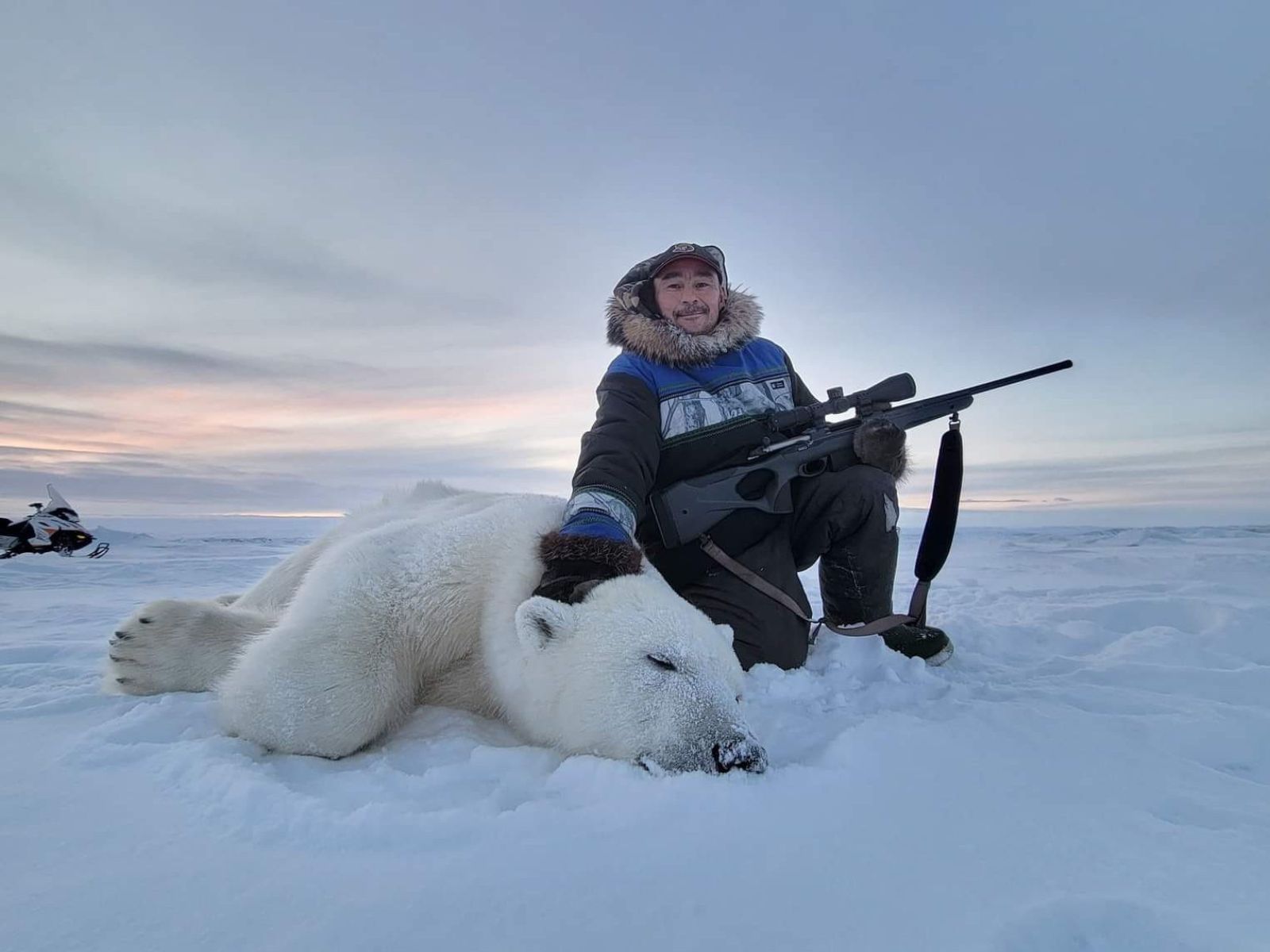
I believe that trophy recreational hunting is a relic of the past. The era of the “great colonization” is long gone, but the habits of “killing and displaying” remain. Quite recently, I wrote in a piece that, according to statistical data (expert reviews), the number of women is rapidly catching up with men in sport hunting. The total number of “trophy hunters” is also growing, while state economies are confidently keeping course toward developing the industry and increasing economic indicators through the slaughter of the last inhabitants of wildlife.
One naturally wants to ask: what is the reason for such a celebration of life? It looks strange in the context of the fact that, according to modern scientific data (meta-studies by world scientists), in just the last 50 years the total number of all animals on the planet has declined by 73%. So instead of preserving wildlife and the last populations, people rushed to finish off what we still have left?
In fact, psychologically all this is explained very easily. I have often come across similar descriptions in books by well-known psychologists, especially those who work with social engineering. So, when something becomes scarce, the “scarcity effect” is triggered in society (it is usually called the “scarcity principle”) — people begin to perceive the object as disappearing and rare, and accordingly its subjective value rises. Not because the object has physically become more valuable, but because the number of people who want to possess it has increased.

But if we are talking specifically about rare animals and trophy hunting, then a more precise term here would be the “anthropogenic Allee effect.” This is, in fact, a situation where rarity does not reduce exploitation but, on the contrary, pushes it forward: the rarer the species or individual outstanding animals become, the higher their value to trophy hunters. And so they begin, with all their might, to rush to finish off the last animals. And this literally provokes the species into an inevitable vortex of extinction. There are very many scientific studies about this, with specific data and observations by scientists.
So the whole problem is that around such “rarities” huge masses of people begin to gather, people who start striving by any means to appropriate them for themselves. To possess them and to demonstrate them to others. A simple truth: the person who kills the last elephant on the planet will one day go down in history as a scoundrel, of course, but a vain one, and he will definitely be remembered. And those who are now killing rare elephants will be able to show photographs to their grandchildren, telling stories like: “Look, children, I managed to go to hot Africa and kill one of the last elephants on the planet.”
Of course, scoundrels. But it is very bad that these scoundrels are, as a rule, wealthy, educated people occupying high places in the social institution. I wrote earlier in a piece, just the other day, that according to experts’ calculations, the image of the modern trophy hunter is men and women over 40 with higher education. It is precisely they who now run businesses, are inside the system of state administration, and therefore have all the necessary levers to lobby for even greater killing of animals.
They have clubs, ratings, their own circles. Safaris are organized for them; this is a whole separate world, separated from the ordinary average citizen. And when an ordinary person begins to climb into the “higher strata of society,” he too wants to show everyone that he can possess something rare, kill the biggest beast, go hunting with wealthy trophy hunters, draw closer. And then — connections, personal experiences, opportunities for further growth.
The other day I published photographs on social networks where, among others, there was Elena Proklova together with her daughter, with weapons in their hands next to the corpse of a young bear. She herself once published that photograph on the internet long ago. Proklova herself is a popular actress, she hosted programs on Channel One, many people know her.
I came across her interview with the publication “TV Guide,” which was published in the federal outlet “Arguments and Facts” back in 2013. I want to quote an excerpt.
“E.P.: — By the way, in 2012 we finally completed the ‘African six.’
“TV Guide”: — And who is included in this ‘six’?
E.P.: — Elephant, lion, leopard, crocodile, hippopotamus, and buffalo — for hunters it is very solid to have such a set of trophies as we do. We have animals that received gold medals. Hunters have special organizations that weigh and measure trophies.
While hunting an elephant, we would set out at 4 in the morning, walk over mountains and valleys, not just until the second sweat, but until the forty-second. Not only does the elephant have to be found, it also has to be the right size, with the right tusks. We wanted the tusks that we would bring home to be something we could show our children and be proud of, what hunters we are. Our result was tusks weighing 50 pounds, that is 25 kilograms. As of today, that is a good trophy; there have long since not been such elephants as there used to be, when tusks were as tall as a man.
Hunting crocodiles is very difficult. It is one of the most cautious animals. The crocodile lies on the bank, literally touching the water with two paws, and it is always on alert. If you do not bring it down the first time, it falls into the water, and that is it — you cannot get it out of there anymore. Not to mention that you have to hit the ‘crocodile smile’ — a place 3 by 5 cm. And Andrey shot from a distance of 115 m — from the other side of the river... After each such trip I fall in love with my husband all over again. Hunting is, after all, a very masculine occupation. I am proud of my husband.
“TV Guide”: — And did you yourself ever try hunting?
E.P.: — Yes, I have a bear, a moose, a boar, and smaller animals as well.”
This woman was born back in 1953; she is already elderly. She showed journalists in her home walls covered with the corpses of wild animals. And this is only one example of how the “upper circles” live. The same is true of director Nikita Mikhalkov and other famous people. Sport trophy hunting is not just entertainment, but an opportunity to demonstrate to others one’s title: “I am not like everyone else, I have boyar blood in me.”
But I do not like discussing people. In fact, I wanted to highlight precisely the quote from Proklova’s interview, where she openly tells what trophy hunting looks like from the inside. There she went with her husband to kill animals in Africa because they very much wanted to destroy the big five of rare species. But ordinary animals do not suit them, so they deliberately searched for the largest elephant with enormous tusks. Precisely because those tusks are later needed to demonstrate the kind of power a person possesses. And the mention that there are clubs which check all this, weigh it, and “reward” with rankings those trophy hunters who suddenly turned out to be cooler than the rest. That is how the circles inside the elite learn about one another: at a chance meeting, one minister will say to another trophy hunter, “Hey, was that you who shot the 350-kilogram lion last year? I saw you in the rankings, let’s exchange phone numbers, maybe we can go shoot together.” That is how you got connections, contacts, and respect.
It was important for me to convey this to you, to show it from direct lips. Because lately a huge number of bills are being adopted by officials, precisely those same lobbying circles, and they justify trophy hunting supposedly by saying that it is an investment of money into state economies for species protection, and they also claim that they kill only weak and sick animals, animals that “would have died soon anyway.”
And here it is important to understand:
- The entire meaning of trophy hunting is precisely to kill the most seasoned, strongest, largest, and most beautiful animals. That is, the justifications being promoted are simply an outright lie. But even if it were so, nature itself will decide who survives and who is destined to die. An old lion will produce offspring one last time, passing on strong genes. A mountain goat incapable of producing offspring will protect females from wolves, females that will later bear young, and this will restore the population. A sick elephant will die in the savannah and become prey for numerous insects, birds, and beasts, thereby ensuring their survival.
- While studying economic indicators in some countries where trophy hunting is developed, I did not find anywhere data showing that the money reached nature protection. Almost everything remains in the hands of the operators organizing “turnkey safaris,” and the leftovers settle in the pockets of local officials. This is also confirmed by numerous scientists studying the problem.
I definitely believe that all of this is a lie. They simply cannot justify trophy recreational hunting by anything else, so they invent reasons by which the necessity of killing animals could be substantiated. Especially rare endangered species.
And right now in Russia we are seeing an entire bill by which animals listed in the federal and regional Red Books want to be called “objects of extraction,” and the right to shoot them is to be transferred to legal entities and entrepreneurs. Usually these are the owners of hunting grounds. That is, the legalization of trophy hunting of endangered animal species is simply underway; high-ranking “members of elite clubs” in power have been seeking this for a very long time.
A blow to genetics.
And now I want to briefly tell you about the most destructive consequence of trophy hunting. I had to study a huge number of scientific papers by international groups of scientists in order to understand the problem and разобраться in it. So, trophy hunting strikes first and foremost at the genetic heritage of wild animals.
Look.
Trophy hunters deliberately search for the best and strongest individual animals, the very ones that pass strong genes further on within populations. More than that, it is precisely such animals that have already proven their viability, hold territory, participate in obtaining food, and make the greatest contribution to reproduction and the survival of the young. Let us say that when such individuals are killed in wolf packs, scientists recorded a decline in reproduction, puppy survival fell, and further on this almost always led to the disintegration of packs.
Subsequent broods in populations become weaker, genetically weak. Say, in mountain sheep, observations showed a significant decline in the genetic quality of horns after 30 years of intensive hunting, while in African elephants the average length of males’ tusks fell by about 25
Support the fight!
The hardest thing in our time is to remain independent from government and business! All activities are carried out independently. Stand with us and support our Mission to protect wildlife.
I want to support!Get involved
On an ongoing basis, we launch public initiatives together to protect wildlife and achieve real change. Join this work and help change the world for the better.
Explore the initiativesTFET Concept
We are working to transform the global protected-area system — Territories of Full Ecological Tranquility (TFET) must be created. Wildlife needs refuges from human pressure! This is one of the key paths out of the planetary ecological crisis and toward preventing further ecosystem collapse.
Learn more
