
Despite the intensified information blockade, we managed to generate public backlash against draft regulation (draft resolution) No. 165677, “On Approval of the Rules for Taking Wildlife Objects Listed in the Red Data Book of the Russian Federation,” which the Ministry of Natural Resources submitted for review in late February 2026. In essence, this is the legalization of trophy hunting for endangered species — something that high-ranking trophy hunters in power have been pushing for over many years.
Rare animals would be allowed to be shot, and the right to shoot them would be transferable to legal entities and entrepreneurs. Every killing would be called “taking,” which is strictly a hunting term, and the right to shoot would be transferred to legal entities and entrepreneurs. Put plainly: those who are directly interested in profit — businesses — would be allowed to “take” rare animals listed in the Red Data Book of the Russian Federation.
Under normal conditions, even if it is absolutely necessary to shoot a Red Data Book animal in the most extreme case, this should be done by specialized state experts under the supervision of scientists — not by business. Under the cover of “exceptional cases,” officials would simply begin issuing businesses the right to shoot, and those businesses would, for money, bring in wealthy trophy hunters.
I think the scheme is obvious to every reader: this is practically a direct legalization of trophy hunting under the guise of “forced measures.”
Few people know that this is exactly what influential lobbying groups within the government have been seeking for years. And what they are now trying to legalize through the new draft regulation is a continuation of this large-scale, long-running campaign to expand the killing of rare animal species.
Now I will give you a chronology of events showing how, year after year, a lobbying campaign by influential figures has been advancing the right to kill animals listed in the Red Data Book.
In 2016, Eduard Bendersky, president of the Mountain Hunters Club, sent Deputy Prime Minister Alexander Khloponin a letter requesting five permits to take the Putorana snow sheep (a Red Data Book species) in exchange for 15 million rubles for the protection of this subspecies. Khloponin instructed the Ministry of Natural Resources to “support and prepare a pilot project,” but Rosprirodnadzor later refused to issue the permits because of massive public outrage.

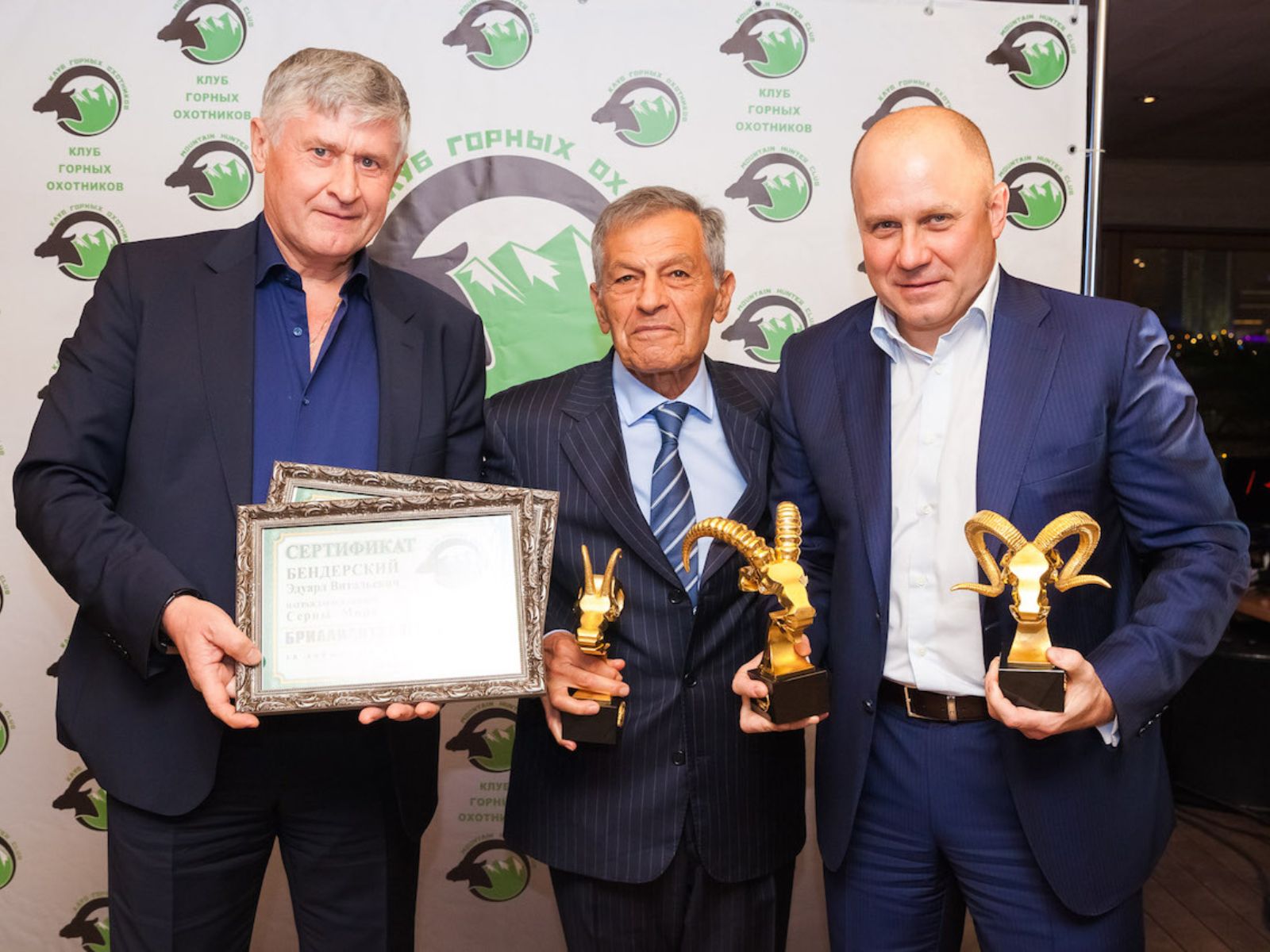
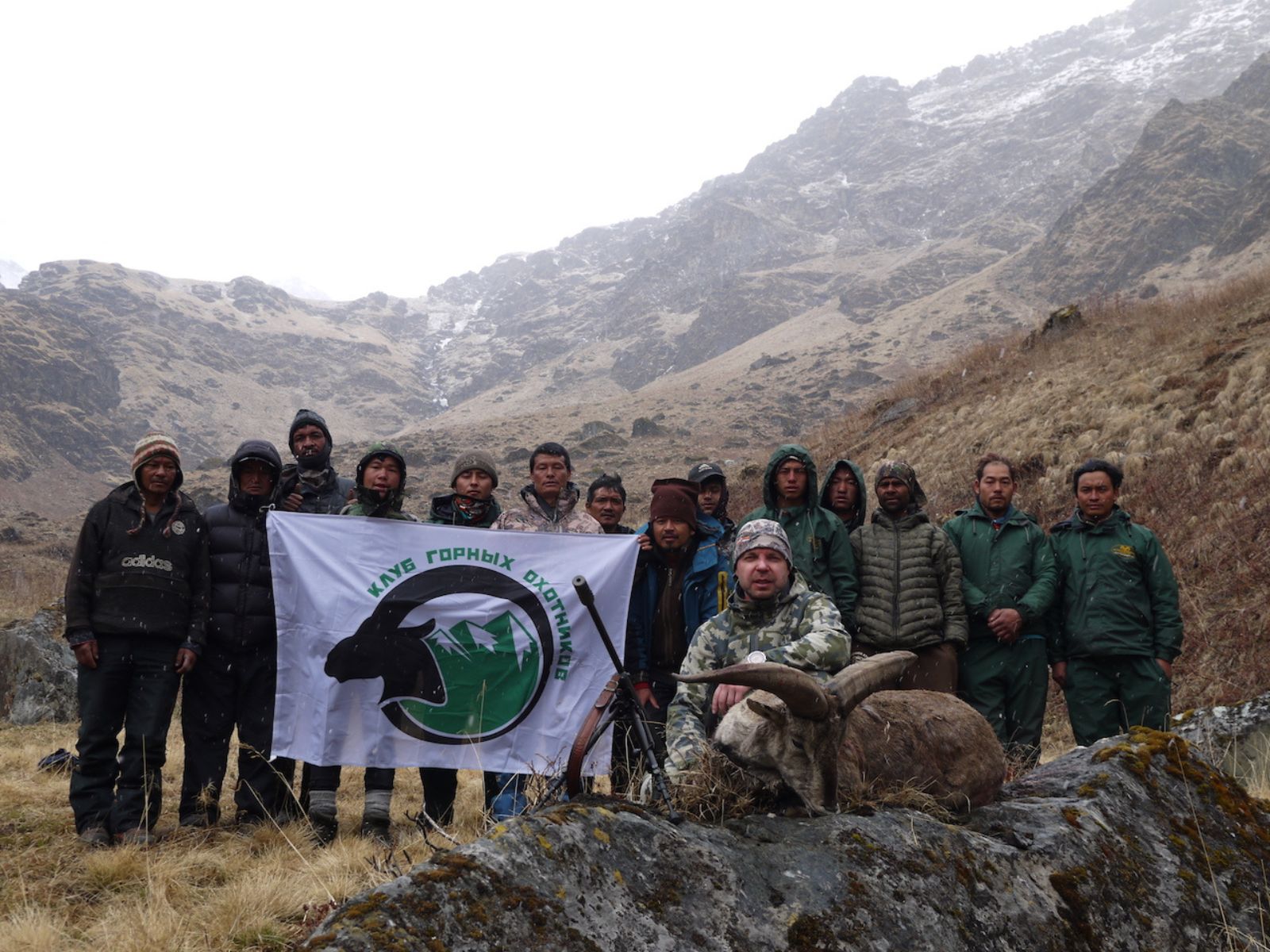
Those who do not know should understand that the Mountain Hunters Club brings together high-ranking officials and very wealthy businessmen who travel around the world to kill animals “for trophies.” They quite literally tried to buy the right to kill some of the rarest animals, and at that moment they were personally backed by the Deputy Prime Minister himself — which speaks to the scale of the lobby’s influence.
In June 2017, the “Mountain Hunters Club” again proposed allowing the shooting of six Putorana sheep from the Red Data Book and was even prepared to transfer 30 million rubles to the Putoransky Nature Reserve for protection. They were upset that they had failed to push these killings through, so they decided to offer more money. In addition, in order to “cut off” public outrage, they wanted to justify the killings supposedly through scientific interests.
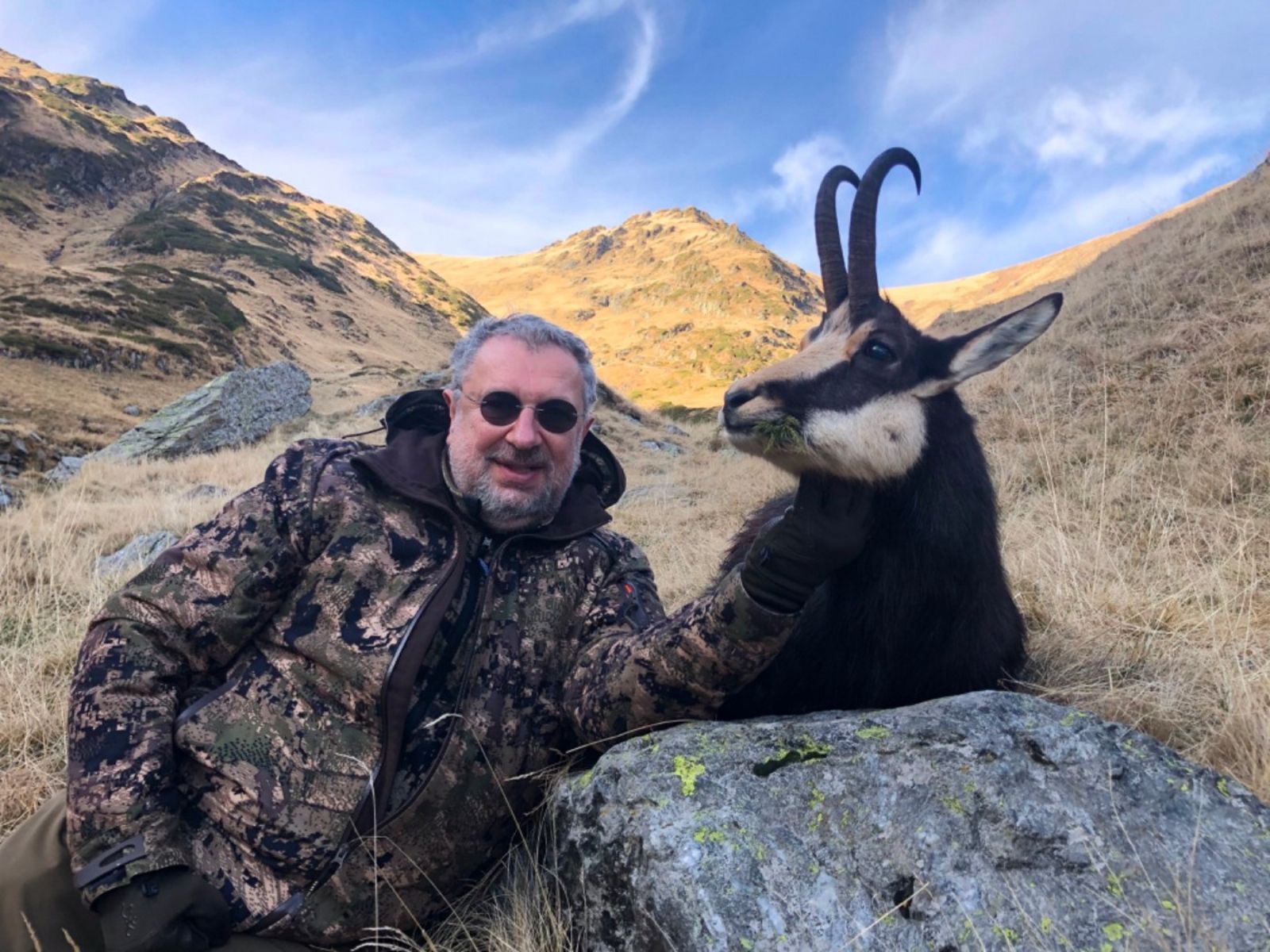
In 2018, State Duma deputy Vladislav Reznik (also a presidium member of the Mountain Hunters Club) sent the Ministry of Natural Resources a proposal to “consider the advisability” of legalizing trophy hunting of Red Data Book animals. He referred to foreign practices where the proceeds are used for species conservation. The proposal caused a public outcry, which helped prevent the legalization of the killing of rare species.
In 2020, the Ministry of Natural Resources tried to remove several endangered animal species from the new edition of the Red Data Book. In other words, they simply wanted to delete species from it. Scientists and the public intervened, and once again, after a scandal, the Ministry of Justice refused to register the Ministry’s order. At that stage there was a temporary “half-victory”: officials were required to additionally coordinate the lists of rare animals with scientists.
In that same year, 2020 (on April 23), deputy Reznik proposed revising the methodology for compiling the Red Data Book by replacing “scientific data” with state monitoring data when assessing the risk of species extinction. Pay attention to this: SCIENTIFIC DATA was deliberately being replaced with “monitoring,” the very same justification that they are now trying to push through in the new draft regulation.
I will quote the newspaper Kommersant from 2020:
“A conflict has again arisen around the Red Data Book. State Duma deputy Vladislav Reznik proposed using state monitoring data instead of scientific data to assess the extinction risk of animals, plants, and fungi. This is not Mr. Reznik’s first initiative concerning the protection of endangered species. Earlier, he proposed legalizing trophy hunting of Red Data Book animals. Environmentalists and scientists fear that in this way officials will be able to manipulate the data so as not to assign rare status to animals of interest to hunters.”
Why were they trying to introduce this? The answer is simple: this “monitoring” would make it possible to inflate population numbers and remove species from the Red Data Book. For trophy hunting, as you have already guessed.
In December 2020, the State Duma adopted amendments to the laws “On the Animal World” and “On Hunting.” From August 1, 2021, the direct ban on shooting Red Data Book animals was removed: the wording “the taking of wildlife objects listed in the Red Data Book is not permitted” gave way to the caveat “in exceptional cases.” In other words, instead of an absolute ban, the law allowed the shooting of Red Data Book species for monitoring, population control, and other purposes. This was the most devastating blow to Russia’s Red Data Book.
The amendments entered into force on August 1, 2021. As scientists noted, there was now “no direct ban anymore”: in practice, the killing of rare animals was permitted “in exceptional cases,” although formally it still required approval from Rosprirodnadzor. At the time, we tried to influence the situation, but laws do not have retroactive force, and once they are passed, naturally no one will repeal them. That is how the system works.
Then, on July 28, 2023, the Ministry of Natural Resources published for discussion a new draft of the rules for the “taking” of Red Data Book animals. The document allowed them to be “taken” “for conservation,” “for monitoring,” “for the protection of human life,” and so on (“taking,” according to the hunting law, means both capture and shooting). A new clause was added on “preventing the suffering of sick or injured animals” — and it was precisely for this reason that they were trying to pass the amendments, because it would create an opening to kill animals whenever officials decided that “the animal needed to be relieved of suffering.”
At that time, we managed to push the issue into major media outlets, and they reported that the Ministry’s draft stood behind a hunting lobby — in particular, the “Mountain Hunters Club,” whose presidium includes former officials and deputies passionate about trophy hunting. Among the club’s members are deputy Reznik, former deputy minister Vladimir Melnikov, former Putin adviser Sergei Yastrzhembsky, and others.
Incidentally, back then draft laws were introduced under the names of their authors, so it was possible to understand who initiated them. Now they remain behind the scenes, publishing drafts in the name of government agencies. For example, simply “the Ministry of Natural Resources,” and that is all.
Then, on September 24, 2024, an updated version of draft regulation No. 148661 appeared on the portal of regulatory initiatives (from the Ministry of Natural Resources of the Russian Federation), likewise providing for the “taking of wildlife objects listed in the Red Data Book of the Russian Federation.” They tried to expand the possibilities for killing rare species even further. We managed to stop that draft thanks to the tremendous work of the entire environmental community of Russia.
And now we come to draft regulation No. 165677, which we are fighting against. What exactly are they doing with it, and why are they adopting it if they had already pushed through the killing of rare species “in exceptional cases” earlier?
The reason is that, under public pressure, lobbying groups within the government could not fully and openly push through direct killings. So for a long time they weakened the Red Data Book in small steps, gradually. Now, with the new draft regulation, they are turning the law into a concrete working procedure.
Before, there was only a general rule — “allowed in exceptional cases.” Now they are specifying exactly who issues the permit, how it is processed, how it is entered into the register, how notifications are sent through electronic services, and so on. It is precisely in the new draft regulation that the right to shoot is transferred to businesses (legal entities and entrepreneurs). In other words, this is now a wide-open legal lane for specifically large-scale trophy hunting of rare species under the cover of “good intentions.”
Animals are becoming “game to be taken,” the right to kill is granted online to businesses, and reporting will only have to be submitted within 60 days after the animal is killed. That is enough time to fend off public backlash if there is an outcry, cover tracks, or falsify documents if necessary.
In addition, the new draft regulation directly legalizes lethal methods “for monitoring.” This is one of the main emphases in the document. Access is also being actively expanded to regional Red Data Books, not only the federal one. This creates an additional lever for the hunting lobby, allowing them to use uneven practices in places with the weakest oversight.
I will sum it up: this new draft specifically creates a legal architecture for the commercialization of mass killings of animals listed in the Red Data Book.
I think you now understand the problem more deeply. Right now we have managed to break through the information blockade and raise public resonance — now we must secure the withdrawal of the draft from consideration.
At the end of this article, I will quote the publication Versiya.ru from 2018, when all this lawlessness began. At that time major media outlets were still not afraid to speak openly about the problem.
“At the same time, the Ministry of Natural Resources of the Russian Federation prepared a new edition of the Red Data Book as well, from which, at the whim of officials, more than 100 species of animals and plants were supposed to disappear. Among them were the common and grey seals, the Atlantic white-sided dolphin, the white-beaked dolphin, the grey dolphin, the harbour porpoise, the pygmy killer whale, the northern bottlenose whale, the beaked whale, and the humpback whale. As Nikolai Gudkov, the Ministry’s press secretary, stated, ‘these species do not permanently inhabit Russia, their protection is carried out worldwide, therefore it is excessive to include them in the Red Data Book of the Russian Federation.’ Iron logic, isn’t it? In other words, other countries protect them, so we may calmly destroy them...
It is precisely members of that same VIP ‘mountain hunters’ club who will lay their heavy hand on this, including deputy Reznik. Moreover, the latter is already the holder of the honorary ‘Mountain Five’ prize. To receive it, one must kill a Caucasian chamois, a Siberian ibex, a snow sheep, and Dagestan and Kuban tur. Some of these animals belong to endangered or rare species. Yet besides Reznik, this entire assortment of victims is also found in the collection of, for example, former head of the Ust-Orda Buryat Autonomous Okrug and former State Duma deputy Valery Maleev.”
Let us keep fighting, Allies. Do not retreat a single step.
© PAVEL PASHKOV
Support the fight!
The hardest thing in our time is to remain independent from government and business! All activities are carried out independently. Stand with us and support our Mission to protect wildlife.
I want to support!Concept of TFET
The world is going through the sixth mass extinction of species; in just the last 50 years, humans have destroyed about 73% of all animals on the planet. We are experiencing a real environmental collapse on a planetary scale. It is urgently necessary to establish Territories of Full Ecological Tranquility (TFET) — we are trying to achieve a complete overhaul of the existing protected areas system.
Learn moreTake action
Take part in our public project to support wintering birds during the frosts — tens of thousands of people have already stood up to protect
Learn moreShare this material!


