I very often hear from people who deny the existence of environmental problems that Russia is a vast country with a low population density. Therefore, they argue, nature cannot truly be destroyed and there is no real threat. Such excuses are often voiced even by people within my own circle who show little interest in how the connectivity of biological systems actually works, yet actively construct theories claiming that environmental problems cannot exist.
I recently published an article about how gold-mining companies in Siberia and the Russian Far East poison tens of thousands of kilometres of rivers every year. This is an enormous catastrophe that has been continuing for a long time and remains completely unresolved. Local residents have tried to resist, but what chance do they have against the interests of major corporations and the officials connected to them? They will simply be crushed by force.
This problem is highly revealing because it demonstrates that even a localised impact on individual ecosystems can damage vast territories. River ecosystems are destroyed, animals die, while all terrestrial ecosystems depend on rivers: forests are sustained by them, and animals from the Russian Taiga come to them to feed. Ecosystem degradation then spreads along the chain, affecting every interconnected link. Ultimately, the rivers flow into the seas, poisoning and killing life there as well.
In reality, this is very simple to understand and does not even require an advanced knowledge of complex biological systems. It is enough to compare nature with the human body, in which rivers perform the function of veins and arteries. I am certain that everyone understands what the consequences would be if poisonous substances were pumped through them. Nature works in exactly the same way: when you release poison into its river-veins, you kill the entire living organism, including the most remote areas of land and ocean.
Russia is indeed the largest country in the world, covering approximately 17.1 million km², with a population density of around 8.9 people per km². However, when it comes to environmental problems, the size of the territory itself is not the decisive factor. What matters above all is connectivity: where river sources, primary — genuinely ancient — forests, floodplains, wetlands and animal migration routes are located, and how matter and energy are transferred between ecological communities.
The cores of biological systems also play an extremely important role — areas where biodiversity is concentrated. These are the very refugia, the sanctuaries of wild nature, whose protection I constantly emphasise in my work. Human interference with even a small number of the links mentioned above alters hydrological regimes, increases the risk of wildfires, disrupts species migration and causes many other consequences.
Any claim along the lines of “there is plenty of land, therefore nature cannot truly be destroyed” is fundamentally unscientific. Even if you fly over Siberia and see vast expanses of forest, this does not mean that there are no environmental problems or that everything is fine. Human beings are small, and their understanding of the scale of wild nature is often reduced to a primitive formula: “one tree is large, and ten trees already make a forest.”
Today, wild natural territories have already been torn into pieces. They are literally isolated fragments of once-living and continuous ecosystems. According to scientific data and global research, only around 9.7% of the world’s terrestrial protected-area network can currently be considered structurally connected. This includes strict nature reserves and other protected natural areas. Even these have been fragmented, which demonstrates that genuinely effective nature protection at the state level does not, in practice, exist anywhere in the world.
The fragmentation of natural territories reduces biodiversity by approximately 13–75%. This means that even without considering any other drivers of environmental destruction, fragmentation alone already delivers a catastrophic blow. When people divide nature into isolated areas, all of its key functions are disrupted — from biomass accumulation to nutrient cycling.
This is exactly what I am talking about: even if you see what appears to be a large forest area, that territory may already be functionally weakened.
Let us take rivers as an example. To an ordinary observer, a river basin may seem like a collection of independent bodies of water: “here is a lake, there is a river, and over there is a stream.” This is often how people perceive them. In reality, however, a river basin is a vast branching network whose historical and present-day connectivity determines which species are able to survive within the system. The more complex the system, and the more branches and extensive areas it contains, the greater its species diversity. In science, this is referred to as disproportionately high beta diversity.
Consequently, any impact on river headwaters — where runoff is formed, water begins to flow, and temperature regimes and mechanisms of biotic regulation develop — leads to the degradation of all ecosystems downstream.
This applies to forest clearance in mountain ecosystems, the gold mining I mentioned at the beginning of this article, and any other form of human interference in the core areas of biogeocenoses.
The same applies to forests. In science, the value of an old-growth forest is not determined solely by the area of tree cover. It is officials and businesspeople who calculate the “area of future timber” and multiply it by the “volume of future profit.” But a living biological system consists of a local microclimate, stable populations of sensitive species, habitat continuity and many other critically important factors.
The supposedly empty spaces people refer to when speaking about the enormous size of the country do not protect nature from industrial pressure. Vast road networks cut through terrestrial ecosystems. Pipelines, power lines, riverbed developments, clearings and many other forms of infrastructure are also built there. All of this fragments wild nature into isolated sections, destroys ecosystem connectivity, drives continuous degradation and causes the extinction of species whose habitats are being destroyed.
On top of all this come constant wildfires that burn through everything alive. After some time, the taiga may appear green again, but in reality the ecosystems have been destroyed, and their recovery requires an enormous amount of time.
Do you remember, for example, the extreme wildfires of 2019–2020 in Russia? At that time, the entire Siberian Arctic was engulfed in flames. According to a 2024 study entitled “Significant Transboundary Health Impacts of Arctic Wildfire Smoke,” those fires affected half of the total area burned there during the previous four decades.
I will show you satellite images of the Russian Taiga. This is what Siberia looks like in remote regions where people cannot see the true scale of environmental destruction. This is what so-called “responsible business” and the bureaucracy serving its interests are doing to our natural heritage.

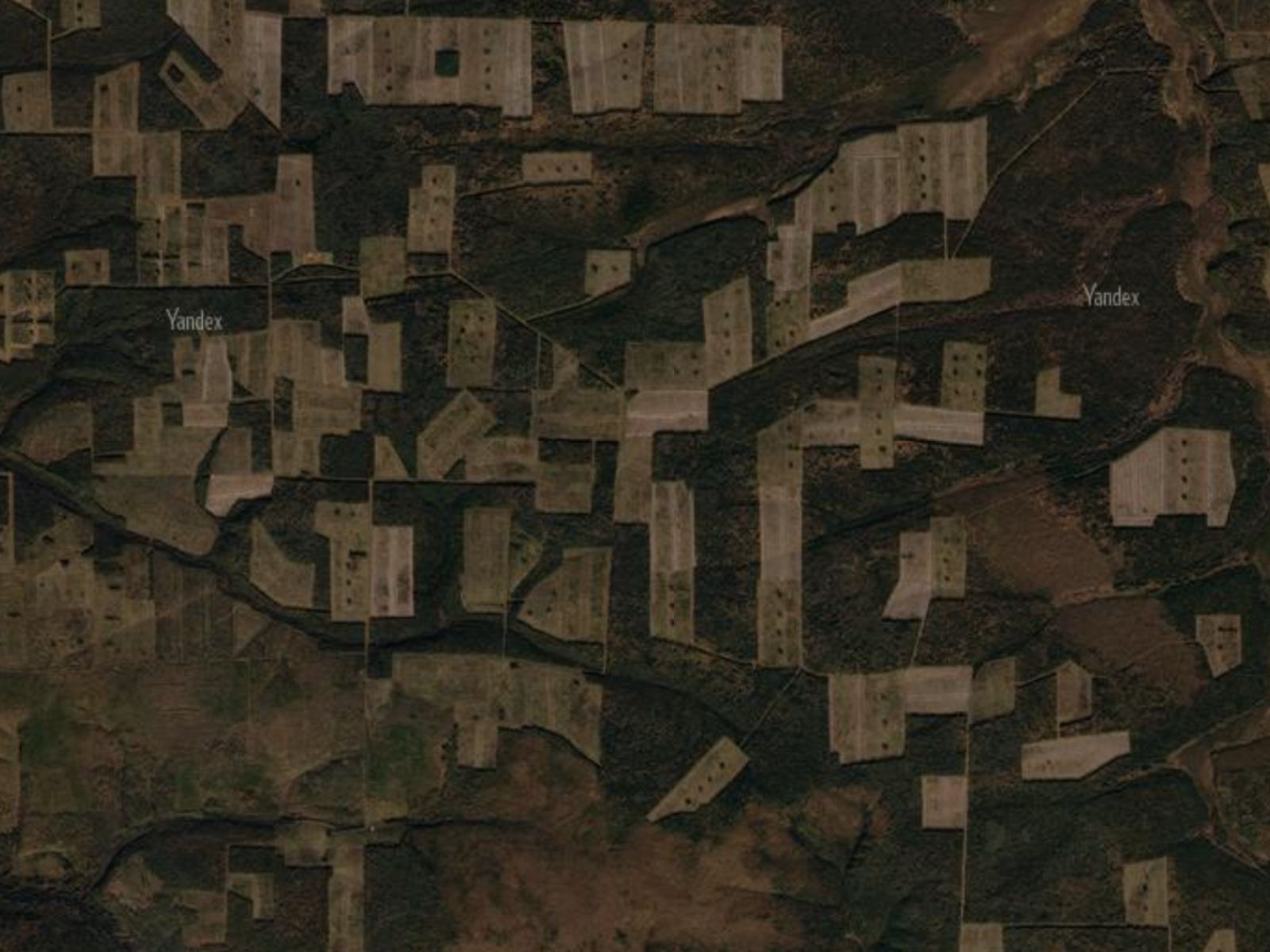
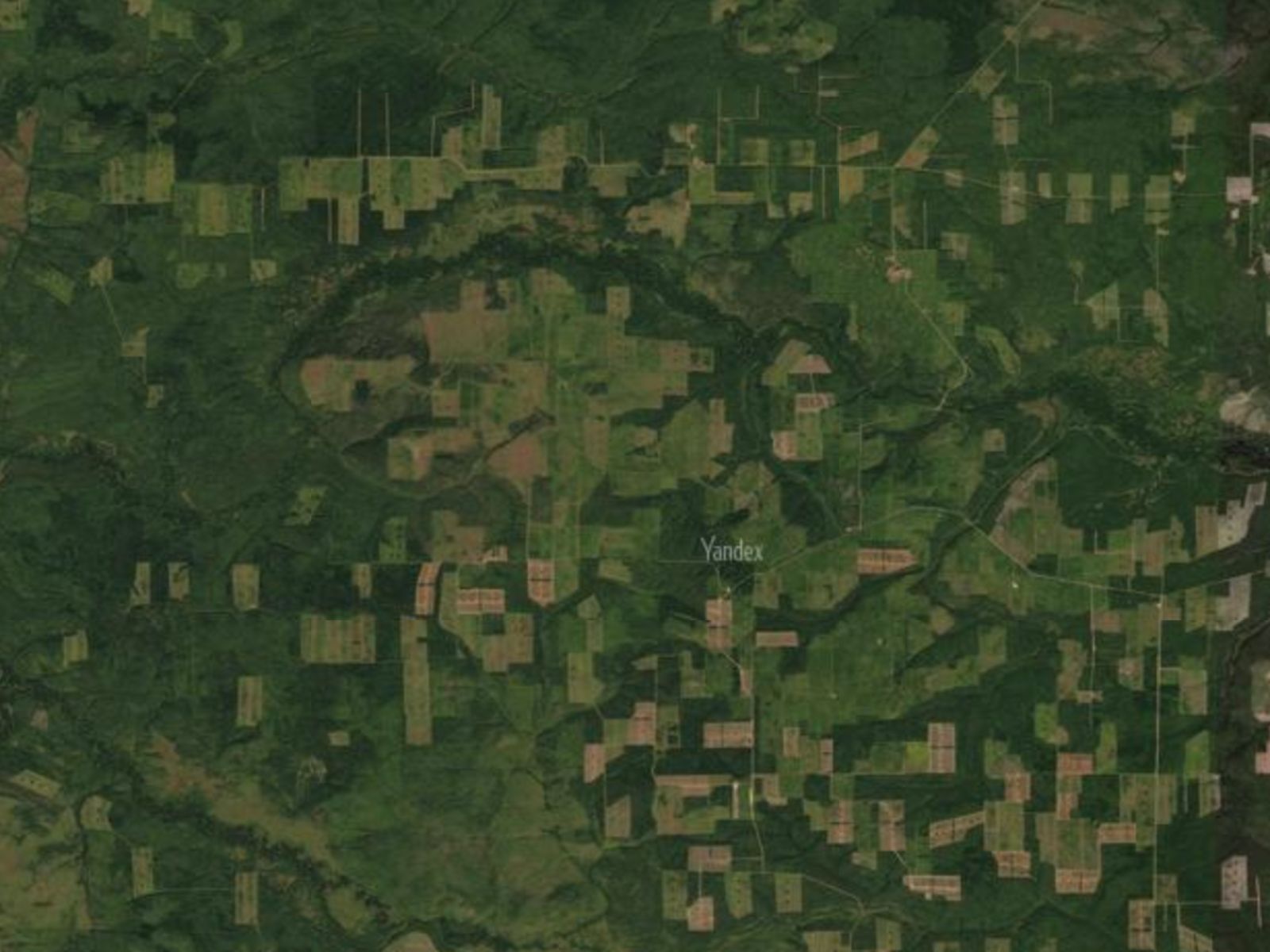
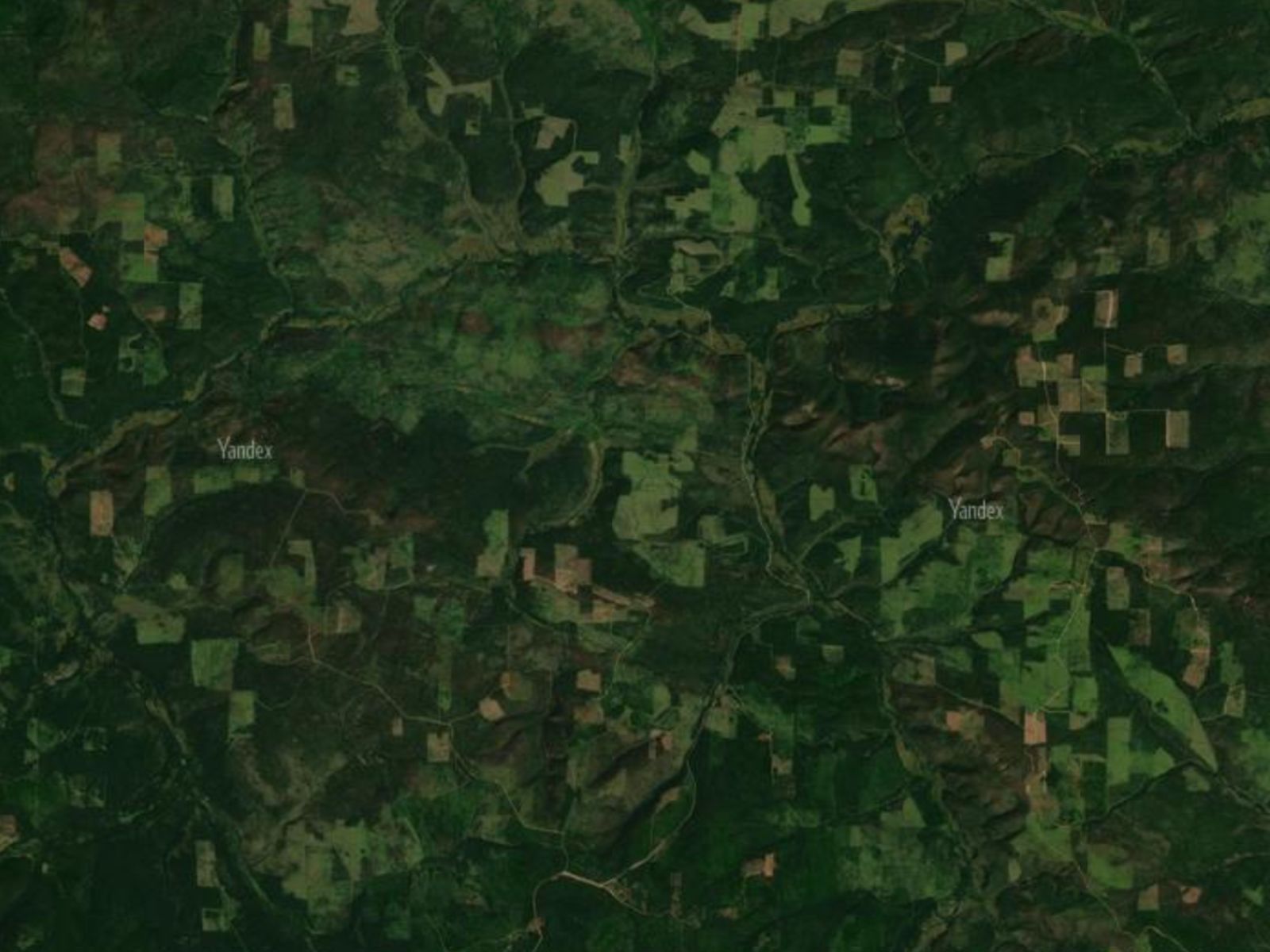
There is another major and important study, published in 2001 — twenty-five years ago. Even then, Russian experts presented alarming data on the condition of the country’s forests. The study is entitled “Intact Forest Landscapes of the European North of Russia.”
By the beginning of the twenty-first century, large areas of wild taiga in European Russia had effectively already been destroyed: intact forest landscapes occupied only 13.8% of the forest zone. In the southern regions of the taiga zone, no large intact forest areas remained at all.
The last large forest landscapes survived mainly in the Far North, among wetlands, forest-tundra zones, mountainous areas and low-productivity watersheds. They were saved not by effective state protection, but by the fact that they were difficult for “big business” to reach.
Most tragically, the authors of the study classify at least three quarters of the forests of the European taiga as secondary forests. In other words, these forests developed after logging, fires, land clearance and other forms of human disturbance. Truly ancient forests and primary ecosystems have been reduced to small fragments surrounded by human-altered landscapes.
The authors also point out that on 87% of intact forest territories, trees grow so slowly that sustainable industrial forest restoration is simply impossible. Any commercial intervention in these biogeocenoses cannot be compensated for later. It is merely a one-time extraction of natural capital for the sake of immediate profit.
Another particularly interesting point is that the experts state that commercial development of more than half of the remaining wild forest landscapes may have been economically unprofitable. On 56% of these territories, timber reserves amounted to no more than 100 m³ per hectare. Once the costs of road construction, machinery and timber transport were taken into account, the destruction of these forests may not even have had a convincing economic justification.
I will discuss this in greater detail in future articles. For now, I simply wanted to explain clearly why the claim that “if a country is large, the destruction of nature is impossible” is an absolute deception in which, unfortunately, many people sincerely believe.
It is, I would say, a primitive and infantile understanding of the world: there are few people and a great deal of land, therefore the destruction of nature does not exist.
It does exist. And the situation is extremely serious.
The situation was already catastrophic in the 2000s, when scientists and experts were still unafraid to speak openly. Today, it is even worse: they are tearing apart the last remnants of what remains, with no regard whatsoever for the future of our children. And apparently, nothing is capable of restraining their appetites.
Open a satellite map of our country and try to find genuinely large, undamaged areas of wild nature — without roads cutting through them, heavy industry or commercial development. Then assess the areas you find in the context of the regions and the country as a whole: how isolated they are, what surrounds them on every side, how they are connected to other similar areas across the country, and whether they are connected at all.
I believe the problem will then become much clearer.
Let us continue the struggle for Life!
© PAVEL PASHKOV
Support the fight!
The hardest thing in our time is to remain independent from government and business! All activities are carried out independently. Stand with us and support our Mission to protect wildlife.
I want to support!Get involved
On an ongoing basis, we launch public initiatives together to protect wildlife and achieve real change. Join this work and help change the world for the better.
Explore the initiativesTFET Concept
We are working to transform the global protected-area system — Territories of Full Ecological Tranquility (TFET) must be created. Wildlife needs refuges from human pressure! This is one of the key paths out of the planetary ecological crisis and toward preventing further ecosystem collapse.
Learn more
