
Comrades! This autumn, we openly stood up for the protection of Russia's bears, sending thousands of appeals to government authorities, thoroughly examining the 'bear invasion' issue, and studying a vast array of scientific research. On October 21, Sergey Ivanov, a member of the relevant Federation Council committee, officially confirmed receiving a huge number of letters in defense of the bears — we were heard, and our materials and statements reached all levels of the management system.
This is very good! Once again, we have proven that unity allows us to SPEAK and send signals 'from the ground': this is the right reaction from society — we are capable of identifying problems, determining 'pain points,' and establishing dialogue with the authorities. A normal, healthy reaction of the living organism of our State!
Alongside us, leading figures and scientists of Russia, experts, and organizations stood up for the bears. I am simply obliged to acknowledge and thank them for publicly addressing the issue and defending the bears.
The Bear Welfare Fund 'Bear World' sent official appeals on October 8 to the Minister of Natural Resources Alexander Kozlov and the Governor of the Krasnoyarsk Territory Mikhail Kotyukov. They demanded a refusal to increase quotas, extend hunting, and simplify the permit system without independent scientific assessment.
Nikita Ovsyannikov is a Doctor of Biological Sciences, a zoologist, and a bear specialist. In October, he co-authored an expert article with Sergey Kolchin in support of the foundation's position. The scientists explained why mass hunting does not eliminate the reasons bears approach populated areas.
Sergey Kolchin is a Candidate of Biological Sciences, a zoologist, and a bear researcher. He co-authored the expert material in October. Together with Ovsyannikov, he warned about the consequences of expanding hunting, including injuring animals and hunting for commercially valuable derivatives.
The Animal Defenders Alliance is a regional branch in Izhevsk. On October 26–27, it opposed legislative amendments in Udmurtia that would allow commercial hunting of brown bears. Activists demanded the initiative be withdrawn and pointed out the issues of landfills and deforestation.
Maria Vorontsova is a biologist and former head of the Russian office of the International Fund for Animal Welfare (IFAW). On November 1, in an interview with the media, she questioned the accuracy of bear counts and warned of the ecological consequences of mass culling. She suggested protecting forests, eliminating landfills, and preventing conflicts.
Mikhail Karpachevsky is a Candidate of Biological Sciences and an expert in the "Forest Standard" system. On September 29, he stated that directly reducing the population is unlikely to be the right solution. He emphasized the ecological importance of large predators and the need for scientifically based comprehensive measures.
- Evgeny Kokhonov is a scientist at the Biological Institute of Tomsk State University. On October 1, in an official publication by TSU, he explained that bears venture out due to food shortages, fires, logging, and landfills.
And many others.
And also each of you, comrades! All who have openly stood up and spoken out about the issue.
Now to urgent and important news: on Friday, November 13, 2026, the Russian Ministry of Natural Resources announced the cancellation of existing regional limits on the hunting of brown bears, setting a maximum extraction standard of 30% of the recorded population in each region. Previously, I remind you, hunting organizations demanded the complete removal of bear hunting limits in the regions, and we opposed this: to prevent bear hunting without limits. This would have been a disaster for the population under any "localism" in the regions.
But thanks to public support, your statements, appeals, and the backing of leading experts in bear protection, the Ministry of Natural Resources set a bear hunting limit of no more than 30% in the country's regions.
I should note that this is not the upper limit of hunting, but the MAXIMUM number of bears that can be hunted overall. This figure already existed in regulatory norms, so nothing drastically strict was adopted.
Therefore, undoubtedly, for such chaotic times and societal fatigue (only a few are protecting nature now), this is already a significant victory — at least we managed to fend off the potential legalization of UNLIMITED bear destruction.
The Ministry of Natural Resources also stated that the bear population is about 308,000 individuals, and there were 87 registered conflicts with humans over the year (according to the ministry's data).
Now I want to publish a small investigation, step by step showing how the problem developed and why we stood up for the bears. I always tell my readers that any problem should be considered systematically, broadly, and historically. Any intervention in the complex processes of biological systems must be precise, scientifically validated, and supported by independent environmental assessments. A biogeocenosis is a COMPLEX SYSTEM, and any mismanagement or thoughtless decision can lead to serious problems.
What we see, the chronology of the problem:
In 2014, all media outlets were talking about a "bear invasion," with 166 attacks on people recorded in a year. This coincided with the approval of the Hunting Industry Development Strategy until 2030. It included a directive to utilize at least 60% of the approved bear hunting quotas. Simultaneously, it was planned to increase the estimated value of hunting animals to 550 billion rubles, and hunting industry products to 120 billion rubles. So, there was both a "bear invasion" and the approval of a shift towards developing the hunting industry with interests worth hundreds of billions.
On June 2, 2016, the Prosecutor General's Office officially reported mass illegal bear extermination. "Kommersant" published the content of the Prosecutor General's appeal to the government. Prosecutors provided information about the reduction in the brown bear population from 225,100 in 2015 to 143,700 in 2017 and suggested considering its inclusion in the Red Book of Russia. At the same time, the Ministry of Natural Resources reported a completely different number for the same year 2017 — 245,100 individuals. The discrepancy amounts to 101,400 animals.
July 19 — September 19, 2018. The FSB seeks to increase responsibility for bear smuggling. Amid the illegal export of derivatives, the FSB proposes special regulation. By government decree No. 1107 dated September 19, 2018, brown and Himalayan bears are included in the list of strategically important resources for the application of Article 226.1 of the Criminal Code of the Russian Federation. Thus, the main security agency of our country, ensuring the safety of the State, stands up for the protection of bears following the General Prosecutor's Office.
February 3, 2020. International scientists question the official population figures. A study on brown bear attacks in Russia from 1932 to 2017 is published in the scientific journal Wildlife Biology. The authors compare conflicting Russian estimates with the International Union for Conservation of Nature (IUCN) estimate — about 100,000 brown bears — and warn of the need for cautious use of official statistics.
July 24, 2020. The Ministry of Natural Resources extends hunting calendar opportunities until December 31. Order No. 477 establishes the autumn-winter hunting period for brown bears from August 1 to December 31. The hunting season includes a time when some bears are already in their winter dens. Hunting organizations had been pushing for this for many years, and we opposed it, but in the first month of winter, bear hunting was officially legalized. After the New Year, the ban remained in effect for the time being.
November 26, 2021 — June 30, 2022. Scientists discover a link between attacks and forest development, while an expert estimates the population significantly lower than the official figures. A study in Animal Conservation shows that in Siberia, the number of people affected by bears had no statistically significant connection with the estimated animal population, but was related to road density and the spread of cedar forests. On June 30, 2022, biologist Sergey Pazhetnov, in an interview, estimates the Russian population at approximately 120,000–130,000 individuals. This expert assessment significantly differs from the official one. Thus, scientists explicitly state that bear attacks ARE NOT RELATED TO POPULATION GROWTH, identifying the reduction of cedar forests and the fragmentation of forest areas into small plots as the cause.
But already from May 24 — June 20, 2024, the Ministry of Natural Resources attempts to extend the bear hunting season until the end of February. The agency publishes a draft order allowing hunting up to February 28–29, during the hibernation period. The project receives 9,599 negative ratings and over 700 negative reviews. Following public resistance, the Ministry of Natural Resources abandons its development. We all fought against this madness together with the entire environmental community of the country!
May 2025. The head of the largest hunting association transitions to the Ministry of Natural Resources. Tatyana Aramileva, who led the Rosokhotrybolovsoyuz since 2013, is appointed director of the Department of State Policy and Regulation in the Field of Wildlife Protection, Use, and Development of Hunting Management at the Ministry of Natural Resources of Russia. The association officially announces the appointment by May 28, 2025.
February 12, 2026. The Ministry of Natural Resources presents a new strategy for the development of the hunting industry. Deputy Minister Murad Kerimov presents to the deputies the draft Strategy for the Development of the Hunting Economy until 2035. One of the scenarios involves the intensive development of the sector. The Ministry of Natural Resources points to 1.4 billion hectares of hunting grounds and highlights the achievements of the previous period. The strategy of new "intensive development" has only been proposed, not yet adopted.
Already by July 13, 2026, international monitoring confirms the reduction of Russia's intact forests. According to updated data from the World Resources Institute, from 2000 to 2025, Russia lost the status of intact forest landscapes on approximately 53 million hectares. In my project "Russian Taiga," using the cartographic database, I provided a more accurate figure—53.2 million hectares—and proposed a model for predicting further fragmentation of intact forests. What does this mean? Tens of millions of hectares of integral ecosystems for the habitat of large predators like bears have been reduced! These are scientifically confirmed data. Their habitat has been torn to shreds. And the process of destruction continues.
On September 1, 2026, a scientific study records the large-scale fragmentation of Siberian forests by roads. A study on Central and Eastern Siberia was published in Nature Ecology & Evolution. From 2000 to 2023, the length of roads in the studied area increased from 172,521 to 275,288 kilometers—by 102,767 kilometers. The fragmentation index of intact forests increased 4.3 times. This means it is documented and SCIENTIFICALLY confirmed that the wilderness is massively fragmented and in a dire state! The latest scientific research.
And this coincides with the beginning of a repetition of what happened in 2014: in Russia, all media outlets start writing about a 'bear invasion,' and we've also noted that the internet is flooded with fake news about bears approaching people. So, alongside the real problem, someone was actively stirring up the informational background. This was confirmed by government bodies, the Ministry of Internal Affairs in the regions, there are legal precedents, and even the Ministry of Natural Resources confirmed the fact of informational provocations.
On September 10, 2026, the Russian Hunting and Fishing Union, the very organization whose head began managing the Department of Hunting at the Ministry of Natural Resources, officially requested permission for winter hunting and the removal of bear hunting limits. In letter No. 113, signed by the acting president of the association, Alexander Sitsko, the Union addressed Minister Alexander Kozlov. The organization proposes excluding the brown bear from the list of limited species, extending the hunting season until February 28, and changing the permit process. I should note that the letter explicitly states the goal — the development of amateur and sports hunting of the brown bear. In a published comment, Sitsko also advocates for den hunting and monetary rewards for hunters.
During this time, we sent appeals to the Ministry of Natural Resources with arguments and scientific facts about habitat destruction, as well as stating that there were no abnormal bear attacks on people this year. Later, on September 16, 2026, the Ministry officially confirmed our statements: the agency reported that typically 20–30 attacks occur annually in Russia, and it did not recognize the 2026 situation as abnormal.
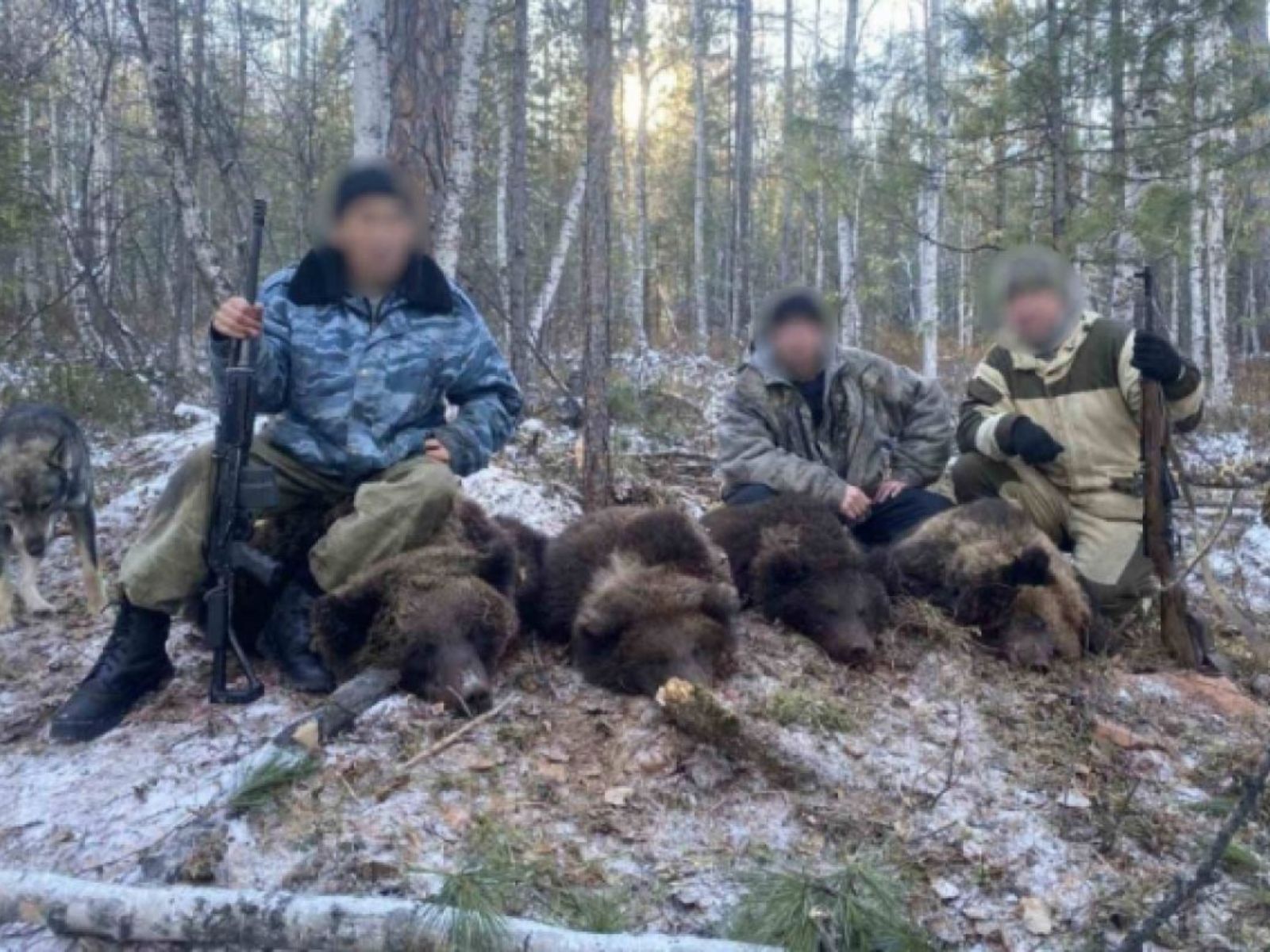
But the regions have already started racing to increase bear culling. Thousands of bears were killed at once. Then the issue began to escalate; for instance, on September 16, 2026, the Irkutsk region returned to the 60% target from the 2014 strategy. The governor signed order No. 454-r on measures to reduce the bear population. The approved roadmap included proposals to the Ministry of Natural Resources to require hunting users to achieve at least 60% of the hunting quotas. And the next day, on September 17, 2026, Buryatia raised the issue of exporting bear paws and bile to China. The chairman of the People's Khural committee, Semyon Matkheev, publicly stated that Chinese buyers previously paid up to 50,000 rubles for a large specimen, primarily purchasing paws and bile. Deputies intend to investigate the reasons for the decline in demand and discuss exports. Simultaneously, the head of Burprirodnadzor, Marina Damdinova, reported that the regional bear population had decreased by 3% over the year, and the agency did not observe a sharp increase in the population.
Subsequently, on October 27, senators directly called on the Ministry of Natural Resources to expedite work on the Hunting Economy Development Strategy project until 2035. By November 3, it became known about the Irkutsk region government's project: 25,000 rubles for a culled bear and another 25,000 for the disposal of its remains. The total possible payment is up to 50,000 rubles per animal. Other regions also began to pay bonuses from budget funds.
- And so, on Friday, November 13, 2026, the Ministry of Natural Resources announced the cancellation of regional limits and a standard of up to 30% for bear hunting. The new model allows for the maximum permissible removal of brown bears up to 30% of their recorded population in each region. The justification includes approximately 308,000 bears, more than 12,000 reports of encounters with humans, 87 attacks, and 36 fatalities since the beginning of 2026. Simultaneously, more than 80 million rubles of federal co-financing for measures to remove conflict animals is being discussed. Again, I must clarify that 30% is the upper limit of the standard, not a directive to destroy such a portion of the population.
Now let's summarize our brief investigation.
In 2017, the General Prosecutor's Office reported data on 143,700 brown bears, while the Ministry of Natural Resources for the same year reported 245,100. The difference is 101,400 animals. Meanwhile, an international scientific publication in 2020 provided an IUCN estimate of around 100,000. In 2022, biologist Sergey Pazhetnov mentioned 120,000–130,000. In 2026, the Ministry of Natural Resources claims the population has approached 308,000.
In my opinion, this clearly demonstrates the scale of the problem of lacking real data on the bear population in Russia. At the same time, Alexander Sitsko himself, the head of the association demanding expanded hunting, publicly admits: "Our numbers are subjective estimates, nothing more."
And now the Ministry of Natural Resources allows for the removal of 30ºsed on regional estimates.
These are entirely objective questions, and society has the right to receive answers: where is the independently verified population count? Where is the unified methodology, the permissible error, the information on reproduction and the state of individual populations? If we do not reliably know how many bears remain in the wild in Russia, on what scientific basis does the Ministry of Natural Resources determine that it is permissible to destroy up to 30% of their population?
Furthermore.
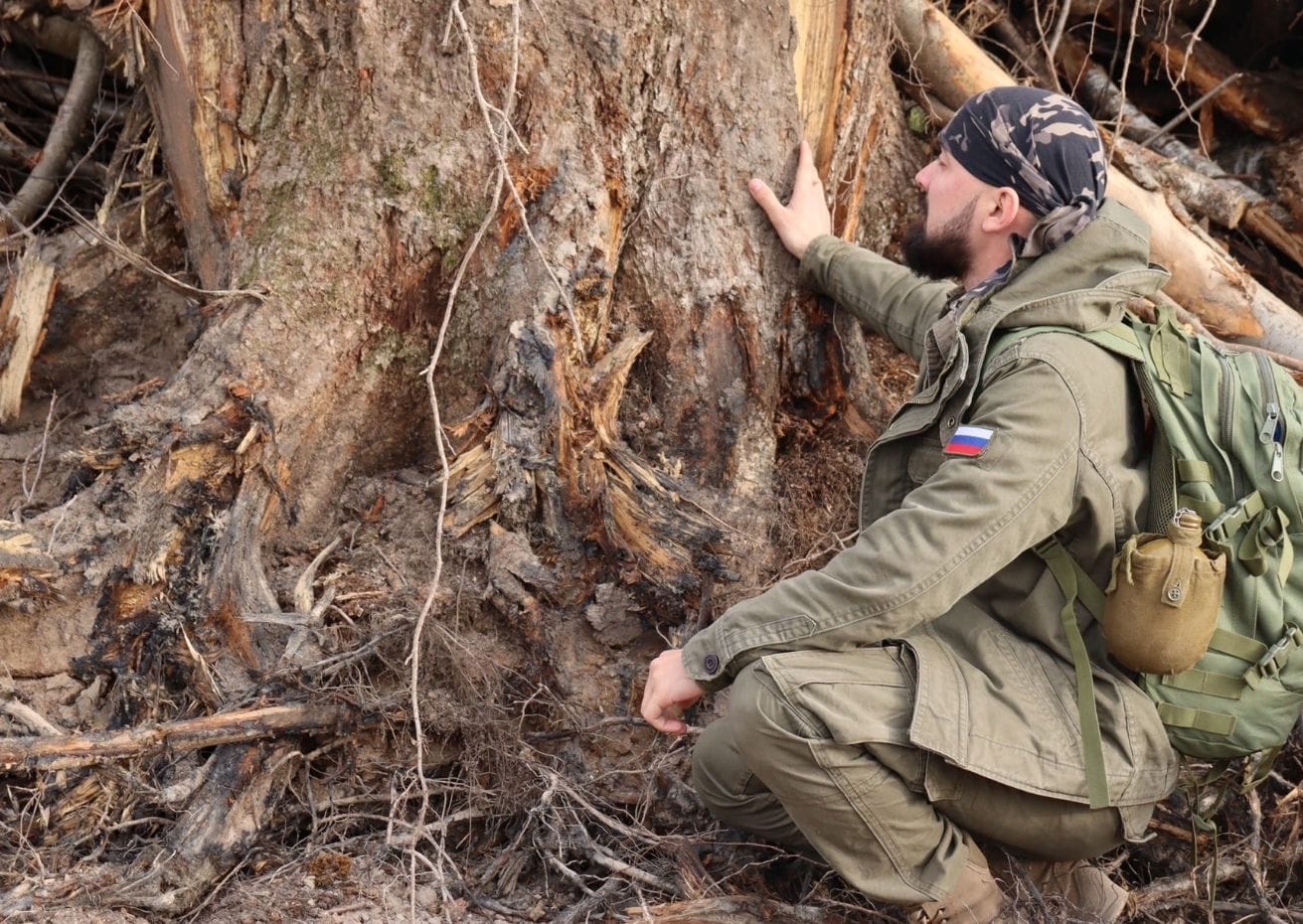
Why is the destruction of cedar forests not taken into account, along with the data from Russian scientists indicating that in the Far East, 9 out of 10 cedars have already been cut down, leaving at most 10%? What about scientific research on the reduction of minimally disturbed forest areas in the country by 53 million hectares, the abnormal forest fires of recent years, and the fragmentation of wildlife into pieces? What about the fact that the number of fragments has increased 4.3 times?
And also: there is scientific data confirming that the killing of adult bears further provokes female bears with cubs to approach humans. When the cubs grow up, we face the so-called 'bear invasion.' Why has no one conducted an analysis and scientific research on this problem on a national scale? There is a significant likelihood that linear killings of bears lead, after some time, to the emergence of a synanthropic population and an increase in conflicts.
And of course, I want to remind you that in 2018, law enforcement agencies, the FSB of Russia, and the Prosecutor General's Office stood up for the protection of bears: they highlighted the real scale of the problem, reported on the catastrophic illegal killing of bears, and even proposed including them in the Red Book.
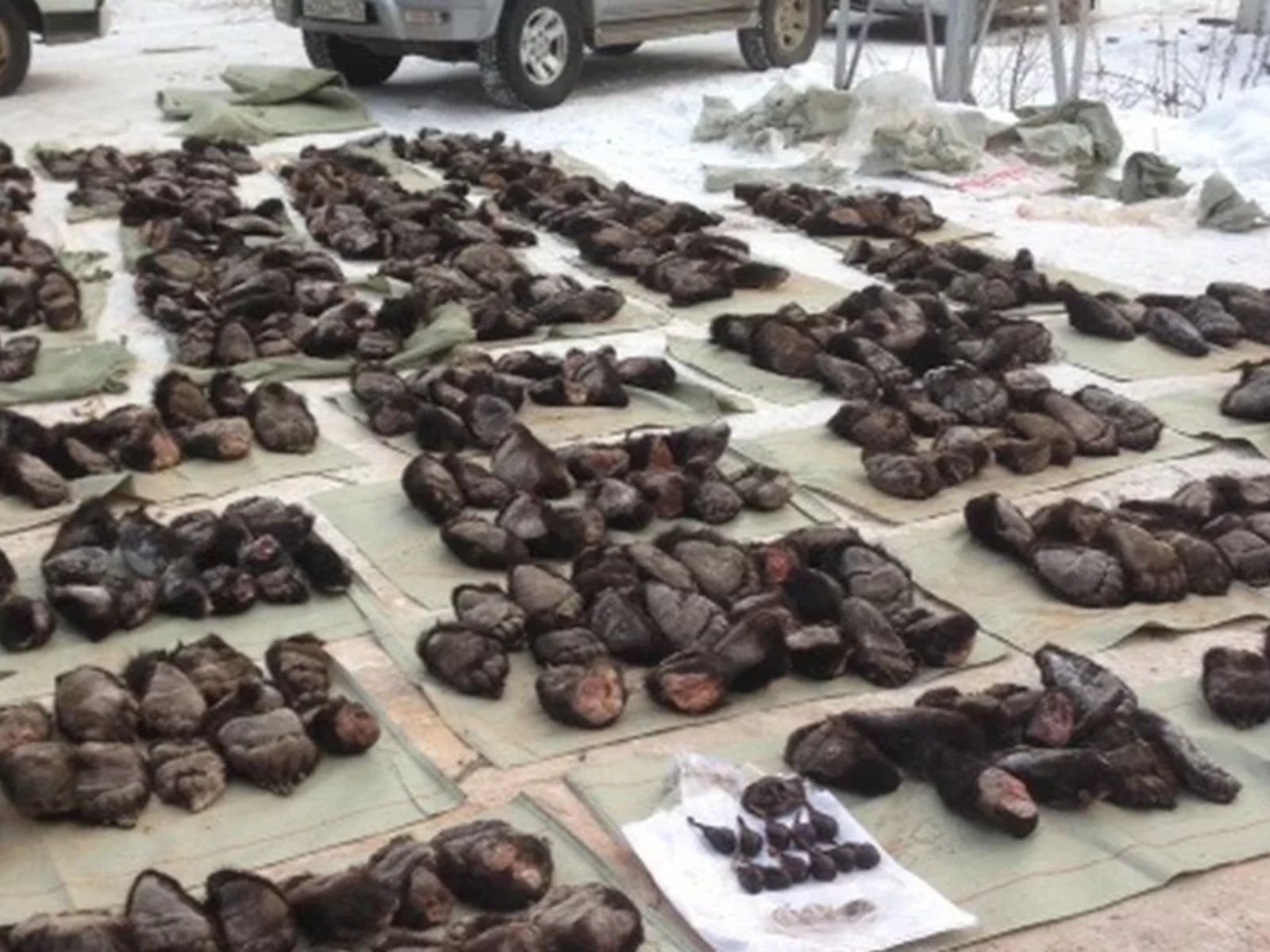
Where is this data? Where is the data on the illegal killing of bears? And why have regions started to complain en masse about restrictions on the export of bear paws to China, when the Federal Security Service of our country previously opposed this?
After all, they were all speaking correctly. They provided accurate assessments! I trust the data provided by the security agencies and generally believe that the issue should be addressed by the Accounts Chamber of the Russian Federation, as the country's leading auditor, in conjunction with the FSB and the Prosecutor General's Office.
Updated data is already available on the Russian Taiga project page. I launched my independent project with a permanent analytical center on the issue of forest destruction in Russia. I consider this extremely important work.
Also, my conclusions about the bears are as follows:
No one knows the bear population in our country, and there is no data on this.
The emergence of bears is partly triggered by the linear killing of adult males in past years, the appearance of young bears, which the females taught to live in proximity to humans. This data is available in scientific works.
The emergence of bears is also triggered by large-scale forest fires, the fragmentation of the wilderness into pieces, the reduction of cedar forests and the food supply in general, as well as the abnormal growth of roads, which have isolated fragments of the wilderness from each other.
- Meanwhile, we are witnessing an abnormal reduction of minimally disturbed forest areas across the country, and the process of habitat loss for large animals is continuing right now.
I call for a rigorous scientific review of all these arguments and reiterate our position: any intervention in the wilderness must be careful and targeted. These are complex biological systems with millions of feedback loops, formed over thousands of years.
Comrades! We continue our fight for Life. I remind you that all projects are carried out by our own efforts, without political lobbying, without commerce, without advertising. Everything you see is my private activity, independent research work, each project, each action.
Therefore, we do what we can, what is within our power. I cannot influence everything, but if we act together, the chances for positive changes are much greater.
© PAVEL PASHKOV
Support the fight!
Your support makes it possible for me to continue my independent work. I run these projects independently of government and business. Stand with me and support my mission to protect wildlife.
I want to support!Ancient Forest
I launched an independent project to protect Russia’s forests — an analytical research center focused on the scale of destruction of intact forests, wildfires, and the pressures threatening wildlife populations.
Explore the projectTFET Concept
I believe the global protected-area system must change and Territories of Full Ecological Tranquility (TFET) must be created. Wildlife needs refuges from human pressure! This is one of the key paths out of the planetary ecological crisis and toward preventing further ecosystem collapse.
Learn more